Sintered Stone vs Quartz vs Marble: Villa Kitchen Countertops
When a villa kitchen is being drawn, the countertop is often the last material to be signed off and the first to be regretted, because three options get quoted against each other and the real differences sit below the price line. The sintered stone vs quartz debate has a practical core: sintered stone is a fired ceramic with no resin in it, rated for direct hot cookware at 2,000 °F or higher with 0% water absorption, while quartz is a resin-bound engineered stone that is cheaper, more uniform and rated to about 150 °F near the burner. Marble, the third option, buys the vein pattern and gives back resealing every six to twelve months. Which one ends up in the kitchen depends on where the surface sits, what it will be cut with, and how the order gets specified from China.
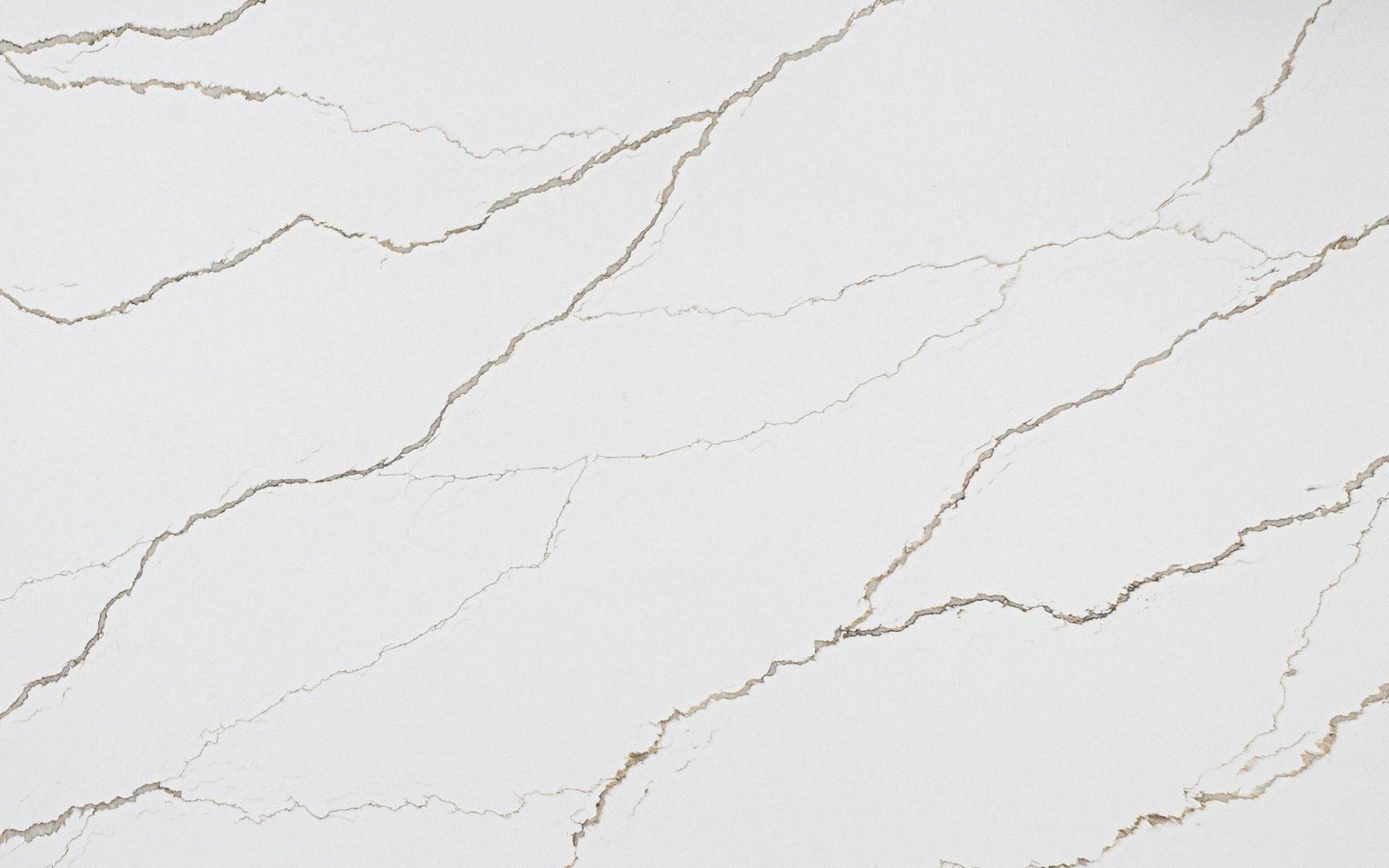
The Three Materials in One Table
Start with what each material actually is, because the names on a catalog do not always mean the same thing in different factories. Sintered stone is a ceramic slab: raw minerals are ground to powder, pressed under high pressure and fired above 1,000 °C, with no resin binder, so the colour and density run through the full thickness of the panel. Quartz is an engineered slab: ground natural quartz crystals make up the body and 5 to 10% resin binds it, cured under pressure, which is why every slab of a given model looks the same. Marble is natural metamorphic stone cut from quarried blocks, and each slab carries a vein pattern that no other slab repeats.
| Criterion | Sintered stone | Quartz | Marble |
|---|---|---|---|
| Heat resistance | 2,000 °F+ direct cookware; 1,200 °C in testing | rated to about 150 °F; trivet at the cooktop | 300 °F; a hot pan can scorch |
| Scratch resistance | resists knife marks on the surface | highly resistant | softer; wears over years of daily use |
| Stain resistance | 0% water absorption; wine and coffee wipe off | 0.5% absorption; stain resistant | 2-3% porous; acids etch the surface |
| Porosity and sealing | non-porous, never sealed | resin-bound, never sealed | 2-3% porous, reseal every 6-12 months |
| UV stability | no colour fade | resin yellows within 1-2 years in direct sun | stable indoors |
| Max slab size | large format, up to about 3.2 m × 1.7 m | super-jumbo 3,500 × 2,000 mm | varies by quarry cut |
| Typical thickness | 12 mm and 20 mm full body | 20 mm (2 cm) and 30 mm (3 cm) | 30 mm standard, 20 mm available |
| Maintenance over 30 years | $0-300 | no sealing; 15-25 year service life | $6,000-15,000, resealing included |
The table reads like one material wins every row, and on raw performance that is roughly fair. The reasons quartz still takes most villa kitchens are the ones the table does not show. Quartz is the least expensive of the three because it is manufactured, the pattern is consistent from slab to slab, and every local fabricator in the destination country has installed it, which keeps the installation risk down. In the older quartz vs marble countertop argument, quartz won on maintenance and marble won on looks; sintered stone enters that argument and claims both, which is why the three now get quoted against each other on the same spec sheet. Sintered stone sits between quartz and marble on price and is the new material the local installer may not have templated before. Marble is the most expensive and the only one that needs ongoing care, which is why it is specified where the owner wants the pattern to be the statement and the air conditioning does the rest of the work. The numbers in the table come from a 2026 fifteen-criteria comparison of the three families, and the same figures drive the zoning logic in our flooring guide for new villas: the material wins in the zone its weaknesses do not reach.
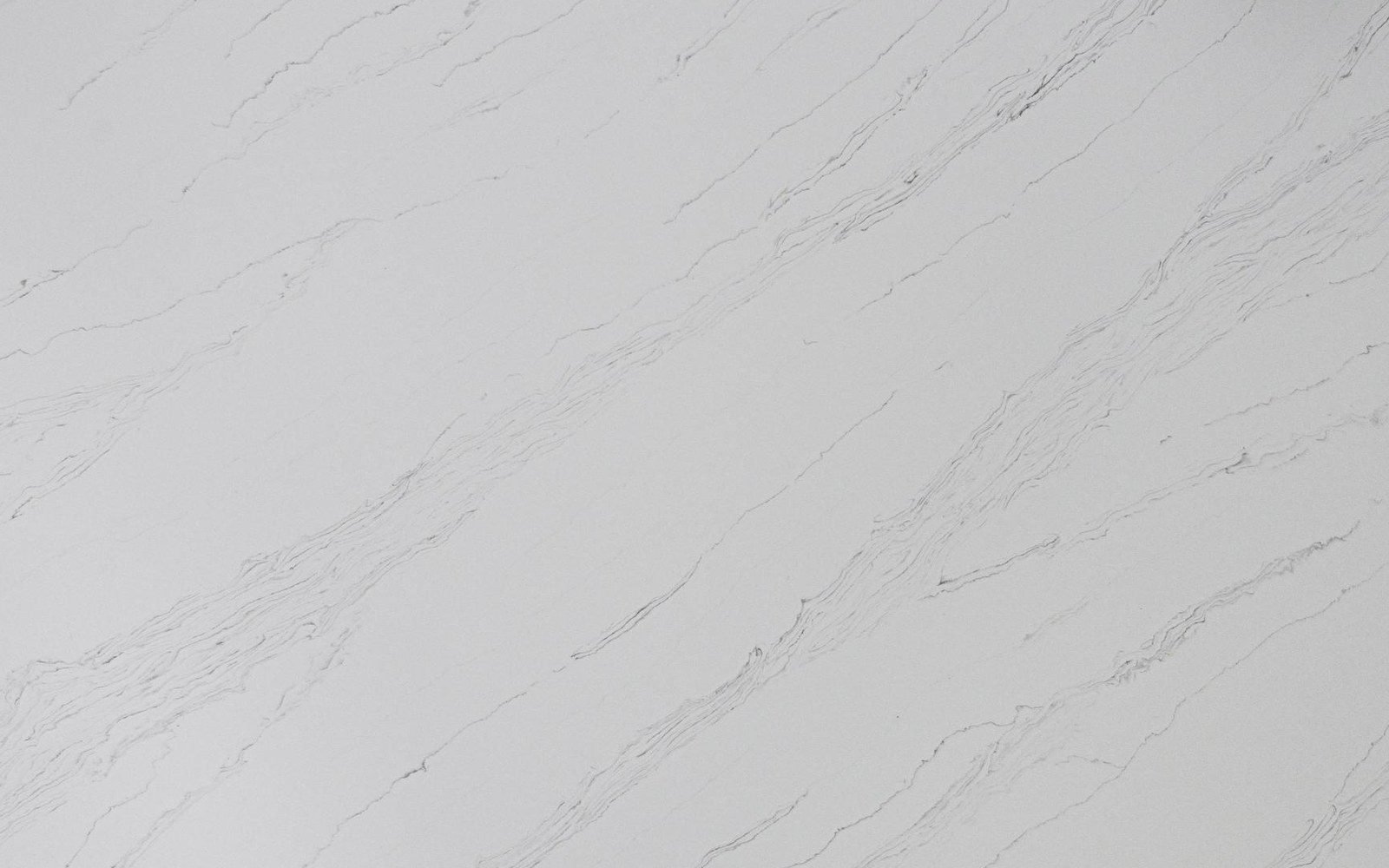
Thickness and Edge Detail
Kitchen countertop thickness is the first number in the spec, and it is not one number. Sintered stone ships in 12 mm as the standard slab thickness and in 20 mm full body for commercial counters, islands and vanities; the weight difference is about 30 kg per square metre at 12 mm against roughly 54 kg at 20 mm, so a 20 mm island is a structural decision, not just a looks decision. Quartz is ordered in 20 mm (2 cm, about 13 lb per square foot) or 30 mm (3 cm, about 20 lb per square foot): the 3 cm panel carries overhangs on its own, the 2 cm panel needs edge support on any overhang past about 300 mm and chips more easily under heavy use. Marble follows the natural-stone convention of 30 mm standard with 20 mm available.
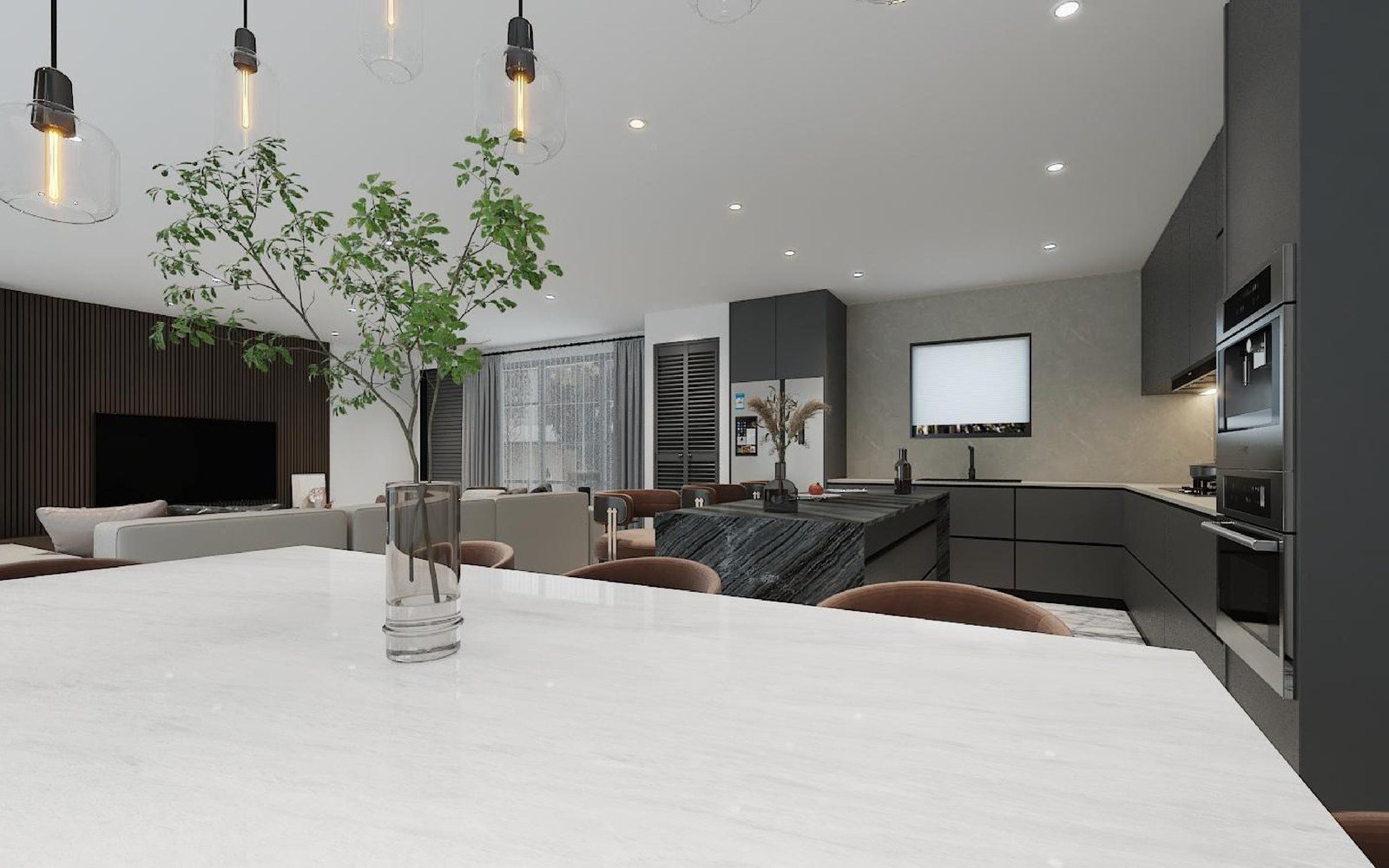
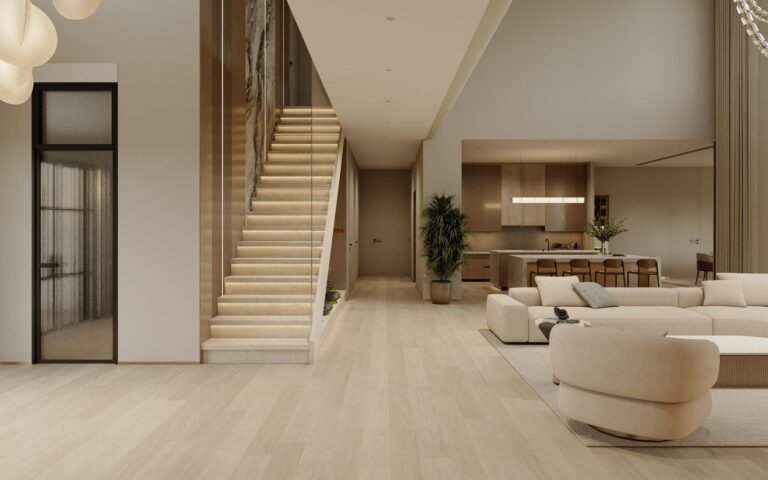
The thickened edge is where these thicknesses meet the design. When an island or a waterfall side has to read as a full 3 cm edge but the panel is 20 mm quartz or 12 mm sintered stone, the fabricator glues a matching edge band to the face, and the band is called edge buildup in the trade. It works, it is cheaper than a full-thickness panel, and it is also where failures show up: the buildup line is a seam on the vertical face, and on a busy island it is the first place a chip or a colour shift announces itself. The kitchen rendering above shows the setup: a 20 mm-class stone island with a full-height waterfall side, which in a real order is either one thick panel or a face panel plus buildup, and the quote line for it should say which one it is, because the cost changes with edge buildup, waterfall sides, sink cutouts and backsplash height in the same direction.
The undermount sink is the second edge decision. A sink mounted below the surface takes its load out of the slab, and the honest rule from fabricators is that mechanical fixing is a must: epoxy studs around the sink flange, clips on wingnuts, a silicone bead, and wood bracing or a cleat in the cabinet. Adhesive alone, which some installers reach for to save a step, is how an undermount pulls away from the stone a few months in. On 12 mm sintered stone or 20 mm quartz, the area around the sink and the cooktop is also where the panel wants support brackets under the counter, because that is the geometry with the longest unsupported span.
Seams and Cutouts
Stone is heavy. Engineered and natural benchtop stone runs to about 20 lb per square foot, and a typical 10-foot slab weighs in the neighbourhood of 1,000 lb. That weight is why the seamless U-shaped run is a fantasy: one piece long enough to wrap both walls would have to be carried through a doorway it was not sized for. The practical pattern is two or more pieces with epoxy-bonded seams, and the seam placement is done before the template, not after.
A seam that lands near the cooktop or inside an appliance gap is a seam nobody sees, because the object on the counter occupies it. A seam at the middle of a blank run is the one photographs. The other seam lever is the pattern itself: in a strongly veined model every seam is a visible break in the vein, while in a low-veining model like the white quartz slab above, an epoxy seam set against a busy background is close enough to disappear at arm’s length. No seam is invisible, and a fabricator who promises invisible seams is selling a pattern trick rather than a joint. Islands are the one place a run can go truly seamless, if the island dimensions fit one slab: that is a design decision made on the drawing, before the slab is cut.
Cutouts change the equation. A cooktop and a sink both remove a chunk of the slab, and what was a continuous panel becomes a frame around openings, which is less stiff than the solid piece. The workable rules: plan the cutout radii on the template instead of letting the saw decide; keep seams away from the edges of cutouts so a joint is not carrying load at a weakened corner; use mitered corners on waterfall islands so the vertical face and the top meet at 45 degrees with no exposed edge band at the outside corner; and leave movement joints on long spans, because a stone run 6 m long that is fixed dead to the substrate at both ends is a run that cracks. Large-format slabs cut the seam count in the first place, which is part of why quartz now ships in 3,500 × 2,000 mm super-jumbo and sintered stone in panels up to about 3.2 m.
Sintered Stone vs Quartz: Heat, Oil and Everyday Abuse
The daily abuse test is where the sintered stone vs quartz question actually gets decided, because the ratings live in the fine print. Three inputs: a hot pan, a dark liquid, and a knife.
Hot pan. A sintered stone countertop takes a pan straight off the burner; the material is rated to 2,000 °F or higher in the comparison data and to 1,200 °C in the manufacturing specification, and it does so without thermal shock because there is no resin to soften and no glaze to crack. Quartz is rated to about 150 °F, which is below the temperature of a pan that has finished a sear. The resin does not burn off in one incident in most cases, but a repeated direct hit is how a white ring or a dull patch appears on an otherwise perfect counter, which is why quartz kitchens are specified with a trivet or a mat at the cooktop, full stop. Marble sits in between at 300 °F: it survives most pans, and it still scorches under a dry, very hot one.
Oil and dark liquids. On the surface this is a wash: all three materials wipe clean with soap and water, and none of them wants a sealant the way a wood top does. Under the surface the numbers differ. Sintered stone is at 0% water absorption, so coffee, wine and olive oil sit on top until they are wiped. Quartz at 0.5% behaves the same in practice. Marble at 2-3% porosity drinks a red wine spill that stays on the counter for twenty minutes, and it has a second problem the other two do not: acid. Lemon juice, vinegar and citrus cleaners etch the polished face, leaving a matte patch that polish can take back but that comes back with the next squeeze of lemon. A marble kitchen is a kitchen where the family has agreed that the lemon goes on a plate.
Knives. Sintered stone resists knife marks on the surface, which in practice means light scoring that is not visible in normal light. Quartz is highly scratch resistant in the same sense. Marble is the odd one out: it is softer than both, and a decade of direct cutting leaves a patina of fine scratches that some owners like and some do not. If the household cuts on the counter, the cutting board is not optional in any of the three cases; it is just more optional in the ceramic and the engineered stone.
UV is the fourth input, and it is the one that separates sintered stone from quartz permanently. The resin in quartz yellows within one to two years under direct sun, which is why quartz belongs in shaded interior runs and never on a sunlit breakfast bar or an outdoor kitchen, while sintered stone shows no colour fade in the same exposure and is the material the comparison matrix points to for outdoor kitchens. Marble holds up indoors, where the UV load is window glass instead of sky.
The honest limit on sintered stone goes in the same spec sheet: it chips at thin edges and at cutouts when the fabrication or the support is poor, and a chip on sintered stone is usually repaired by replacing the piece, not by filling it the way a crack in natural stone can be resinated. The material is tougher in the surface, more brittle at the thin edge. Both facts are true at the same time, and the order should be written assuming both.
Where Each One Wins in a Villa Kitchen
The zoning comes out of the table, not out of preference, and it is the sintered stone vs quartz answer the spec sheet should carry. The main run that touches the cooktop is the sintered stone zone: direct heat, no trivet, no resin risk, and the 20 mm full body takes the sink and cookout cutouts without a support argument. The island is the design zone, and it splits: a statement island in a marble-look sintered stone with a waterfall side, or a 3 cm quartz island where the budget and the installer familiarity matter more than the 2,000 °F number. The prep zone and the secondary runs, the hallway side, the butler’s pantry, are the quartz zone: uniform pattern, low stain risk, the lowest cost of the three, and a material every local fabricator can cut. The bathroom vanity is sintered stone territory for the same reasons as the outdoor logic: moisture, no sealing, no fade under a window, and the comparison matrix puts the luxury primary bath on sintered stone. Marble keeps its one honest zone in a villa kitchen, the feature run where the air conditioning holds, the owner reseals on schedule, and the vein pattern is the point of the room.
The same three materials on floors, walls and stairs follow a different set of rules because traffic and slip change the physics, and the flooring guide covers that split (marble, sintered stone or porcelain for villa floors is the zoning version for ground-level surfaces). For the countertop itself, the full slab range we work with, quartz, marble, sintered stone and granite, sits in the marble and stone catalogue.
How to Specify It in a China Order
The specification is where sintered stone vs quartz stops being a comparison and starts being a fabrication contract. Four layers, in the order they fail when skipped.
Sample first, under the project’s light. A catalog photo is a rendering of a slab, not a slab; the vein scale of a sintered stone marble-look at arm’s length is not what it looks like at 300 mm across a phone screen, and the resin tone of a white quartz shifts with the ambient light in the kitchen. The sample set is one panel per candidate model at countertop scale, held up against the cabinet finish, and the decision is written down with the model number, not the marketing name.
Then the batch. Every model is produced in colour batches, and two batches of the same model are the same the way two vintages of the same paint are: close, and visible side by side on a 12 m run. The order reserves one lot for the whole project, countertop, backsplash, island and the spare, or it holds the remainder for the touch-up. A design that wants mirrored veining across an island says bookmatch in the spec, because bookmatching is a layout instruction the factory executes, not a default.
The spec sheet itself, line by line: panel size and thickness per run, finish (polished is the standard, honed or leathered costs more), edge profile per edge, thickened edge or full body where the island demands it, cutout dimensions and radii for sink and cooktop, sink support type, overhang support, seam positions, mitered corners, movement joints, and the warranty wording. A quote that answers thickness and edge but is silent on cutout radius and sink support is a quote that will price those as extras at the worst moment.
Overage and breakage close the order. The countertop area and the backsplash area are measured separately and added, not estimated as one rectangle; edge profiles consume panel area; and the order carries enough spare to replace one piece if transit or fabrication breaks it, because a 20 mm slab is heavy, it ships in crated racks, and a cracked corner in a container is a fact of the industry rather than an accident. The slab count per piece belongs in the quote as a checkable line, and the packing method, corner bracing, lashing, for the stone is part of the package, the same way numbering and room packing are for the furniture (how we pack and pre-drill a villa interior). The countertop lands on top of the cabinet, so the cabinet dimensions are fixed first, standard depths and the island clearances included, and that is the kitchen cabinet dimensions set the stone is templated against. If the whole kitchen, cabinets, hardware and stone, is one package, the sequencing between the cabinet production line and the stone fabrication line is in the custom kitchen cabinets from China guide, where the stone template is taken against the finished cabinet, not the drawing.
Frequently Asked Questions
Will sintered stone chip on edges?
It can, if the fabrication or the support is poor. The weak points are thin 12 mm edges and unsupported cutouts, which is why islands and sink runs are specified in 20 mm full body with brackets under the counter. A chip on sintered stone is normally repaired by replacing the piece rather than filling it, so the overage in the order exists partly for exactly this.
Is quartz afraid of heat?
Quartz is rated to about 150 °F, which is below the temperature of a pan straight off the burner, so a quartz kitchen uses a trivet or mat at the cooktop as a specification item, not an accessory. Repeated direct heat is how resin burns show up. Sintered stone takes direct cookware at 2,000 °F or higher, and that difference is what decides the main run in most villa kitchens.
Can marble work in a kitchen?
Yes, as the statement surface. Marble tolerates about 300 °F, etches with lemon and vinegar, is 2-3% porous and needs resealing every six to twelve months, with a 10-year maintenance cost in the range of $2,000 to $5,000. If the kitchen is air conditioned and the owner accepts the care, the vein pattern is available nowhere else in the three.
What thickness is right for a kitchen countertop?
Sintered stone runs 12 mm for standard counters and 20 mm for islands, waterfalls and vanities. Quartz is ordered in 20 mm, which wants edge buildup or support on overhangs, or in 30 mm, which carries overhangs on its own. Marble defaults to 30 mm with 20 mm available. The cabinet depth, the sink and the overhang length fix the final number per run.
Can seams be made invisible?
No seam is invisible, and the fabricator who promises one is choosing where you will not look. The workable version is to place the seam near the cooktop or an appliance gap, bond it with epoxy, and pick a low-veining model for that run. An island sized to a single slab goes genuinely seamless, which is a decision made on the drawing.
How much extra stone should we order?
Measure the countertop area and the backsplash area separately and add them, because they are different rectangles. Edge profiles consume panel area, and the order should carry enough spare to replace one piece if transit or fabrication breaks it. The slab count per piece belongs in the quote as a line you can check, not a percentage you are asked to trust.