
Handleless Kitchen Cabinets
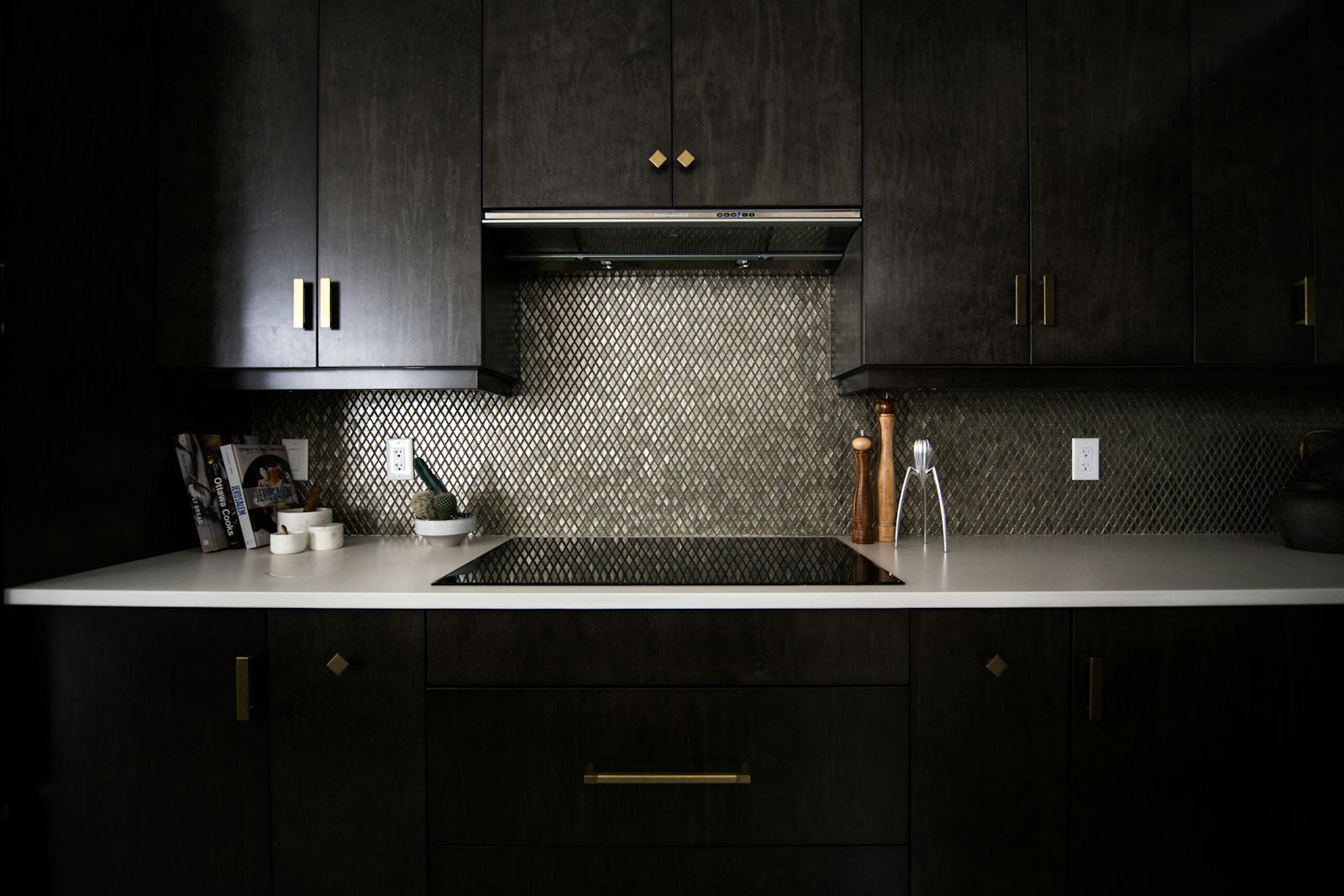
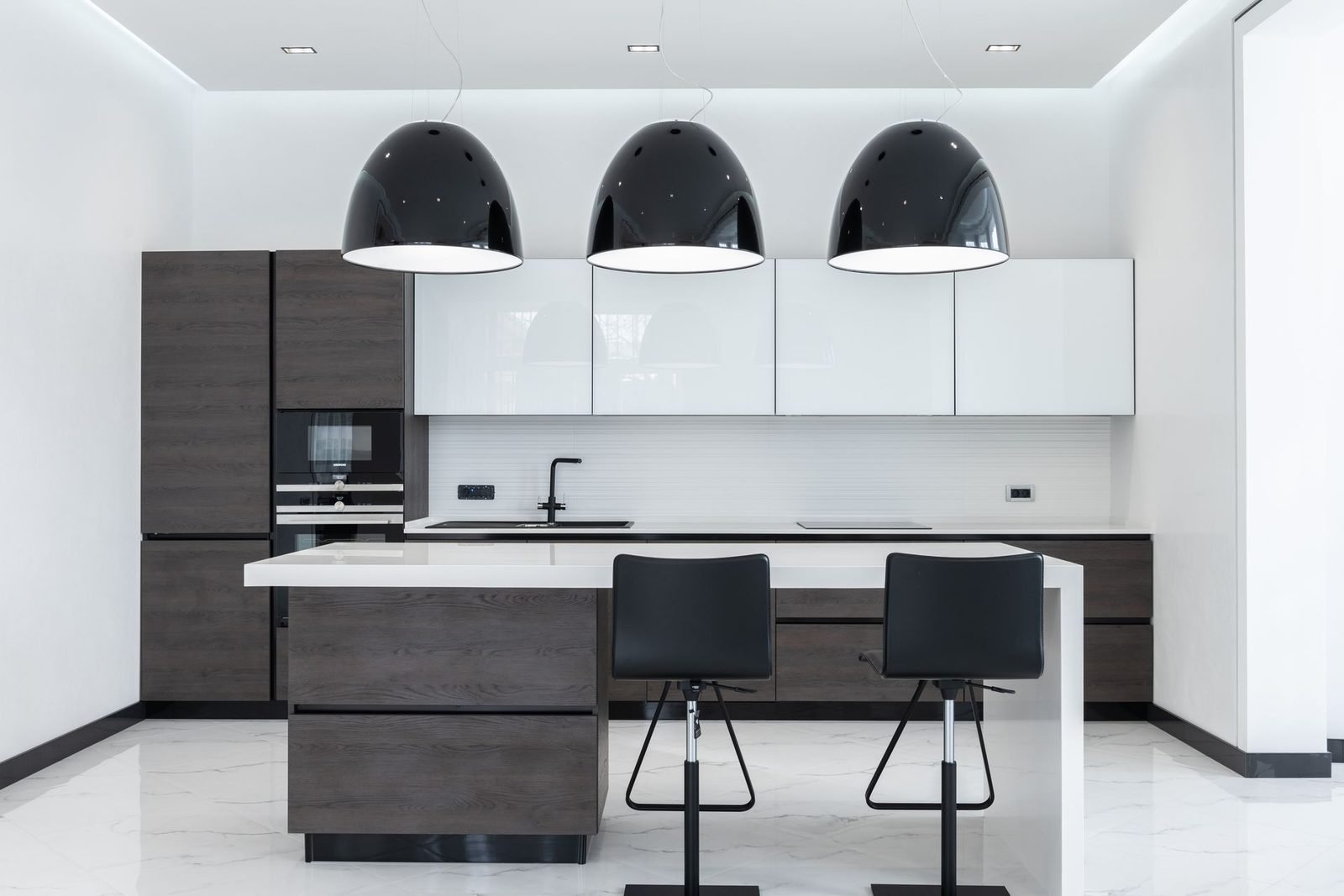
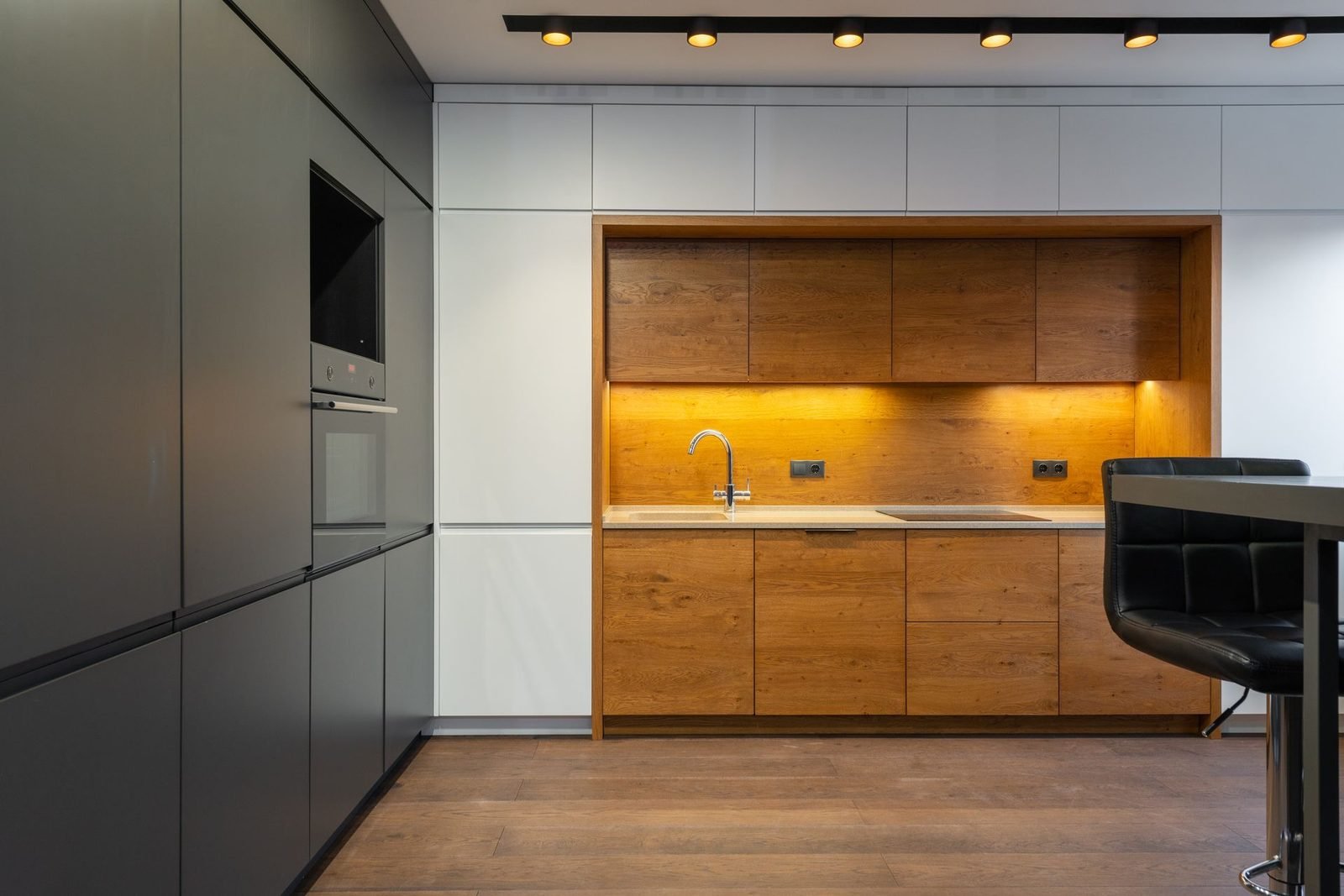
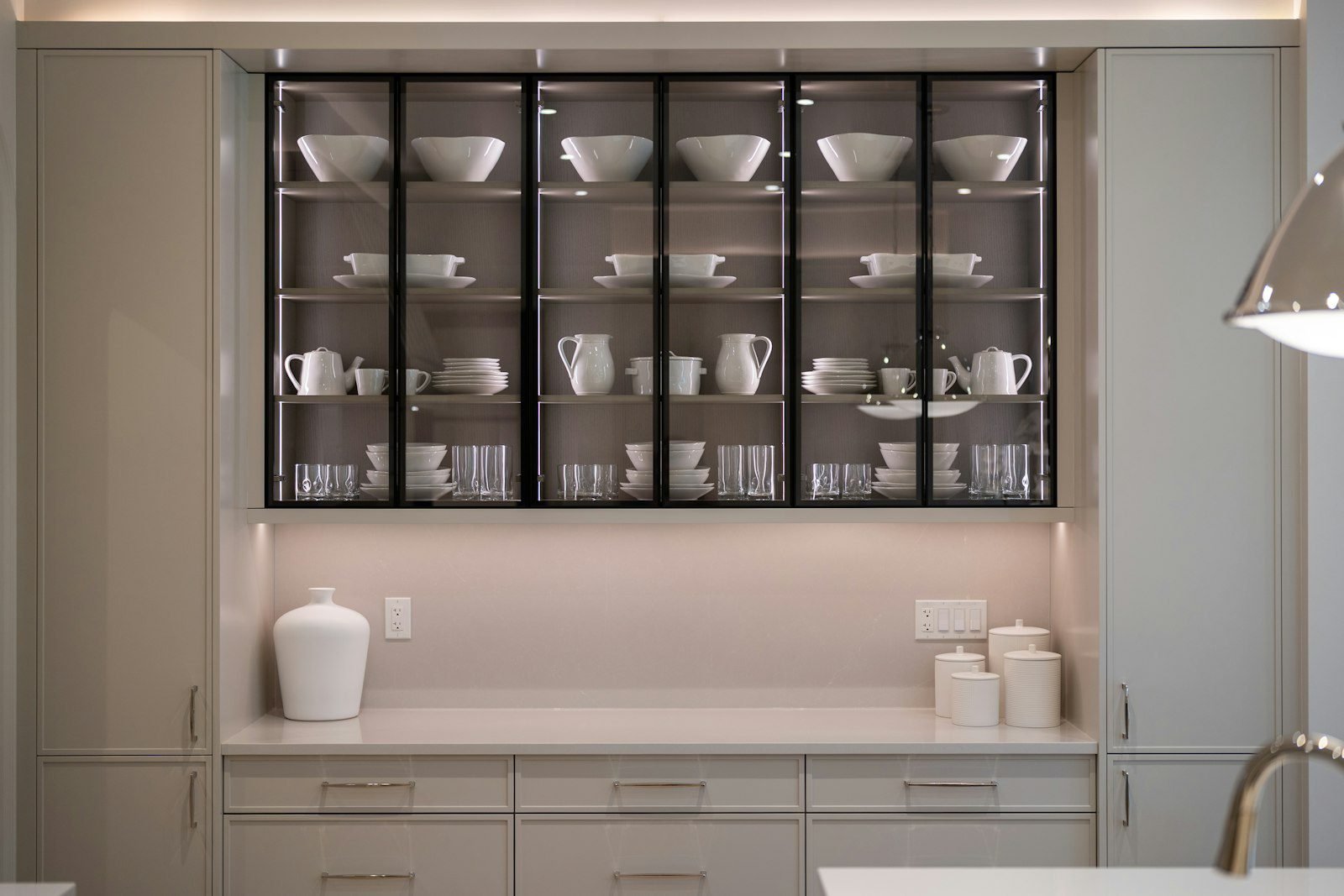
Handleless kitchen cabinets remove every protruding detail from the front — doors open with a push, and the kitchen reads as one continuous surface. At George Villa we produce frameless, handleless kitchens in our Foshan factory: base and wall units, islands and appliance columns with push-to-open fittings, finger-pull or shadow-gap openings, and integrated lighting between sections. Fronts are available in matte lacquer, PET, melamine or wood veneer in any colour you choose. Every unit is drawn to your plan and built from E0/ENF-grade board with European hardware. Send your kitchen drawing and we return production drawings and a quotation within 24 hours.
How Handleless Fronts Open
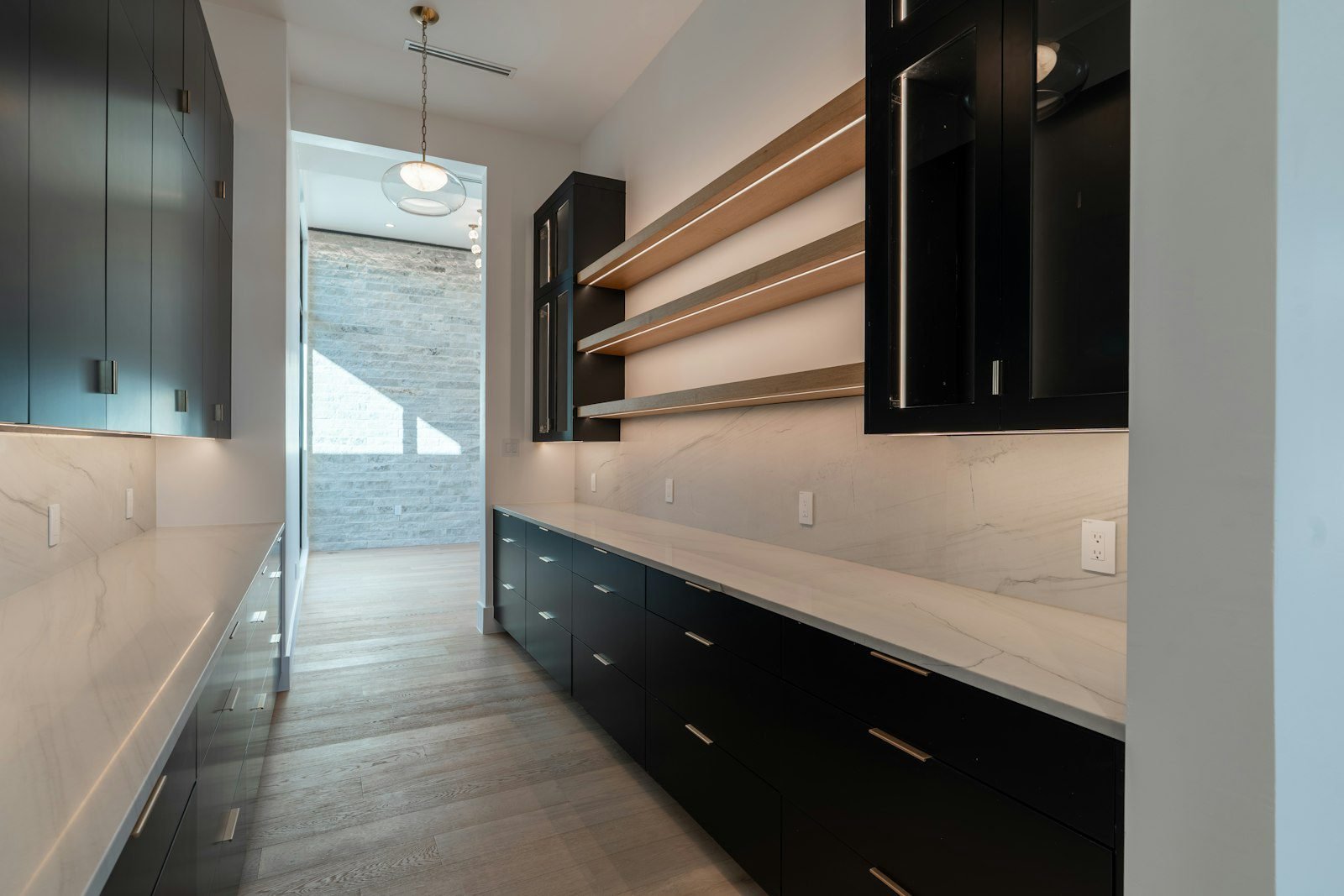
Three systems are used in our handleless kitchens, chosen per section: magnetic push-to-open fitments for base and wall doors, a finger pull or recessed edge on taller units, and a shadow gap of 6–10 mm between fronts that can carry a line of warm LED. All three work with soft-close hardware.
Villas choose handleless for the clean line: no handle to catch on, no hardware shadow across the front, and full-height appliance columns that disappear into the wall. A flat front also wipes down in one motion, and pairs naturally with wood or stone-look fronts.
Technical Specifications
Standard specification for handleless kitchen units. Front colour, opening system per section and lighting are confirmed with your drawing before production.
Full specification
- Opening systems
- Magnetic push-to-open, finger-pull edge, shadow gap — chosen per section
- Front thickness
- 18–22 mm, edge-banded all round for a clean side profile
- Shadow gap
- 6–10 mm recessed gap, optional integrated warm-white LED
- Surfaces
- Matte lacquer, PET acrylic, melamine or wood veneer, any colour
- Carcase
- 18 mm E0/ENF-grade board, 2 mm edge banding
- Hardware
- European soft-close hinges, full-extension runners, 100,000-cycle rating
- Appliance columns
- Full-height columns with ventilation cutouts to drawing
- Drawings
- Per-room numbered assembly drawings and CAD file
Best Surfaces for a Handleless Front
Matte lacquer and PET acrylic are the most-used handleless surfaces: they take any colour, hide fingerprints and wipe clean after cooking. We apply them in a ventilated booth and cure before packing.
Wood-veneer fronts keep the same line warm — oak or walnut, clear or tinted, edge-banded to match. A shadow gap of 6–10 mm, optionally carrying warm LED, finishes the scheme. Most requested handleless schemes:
Handleless Kitchen Examples
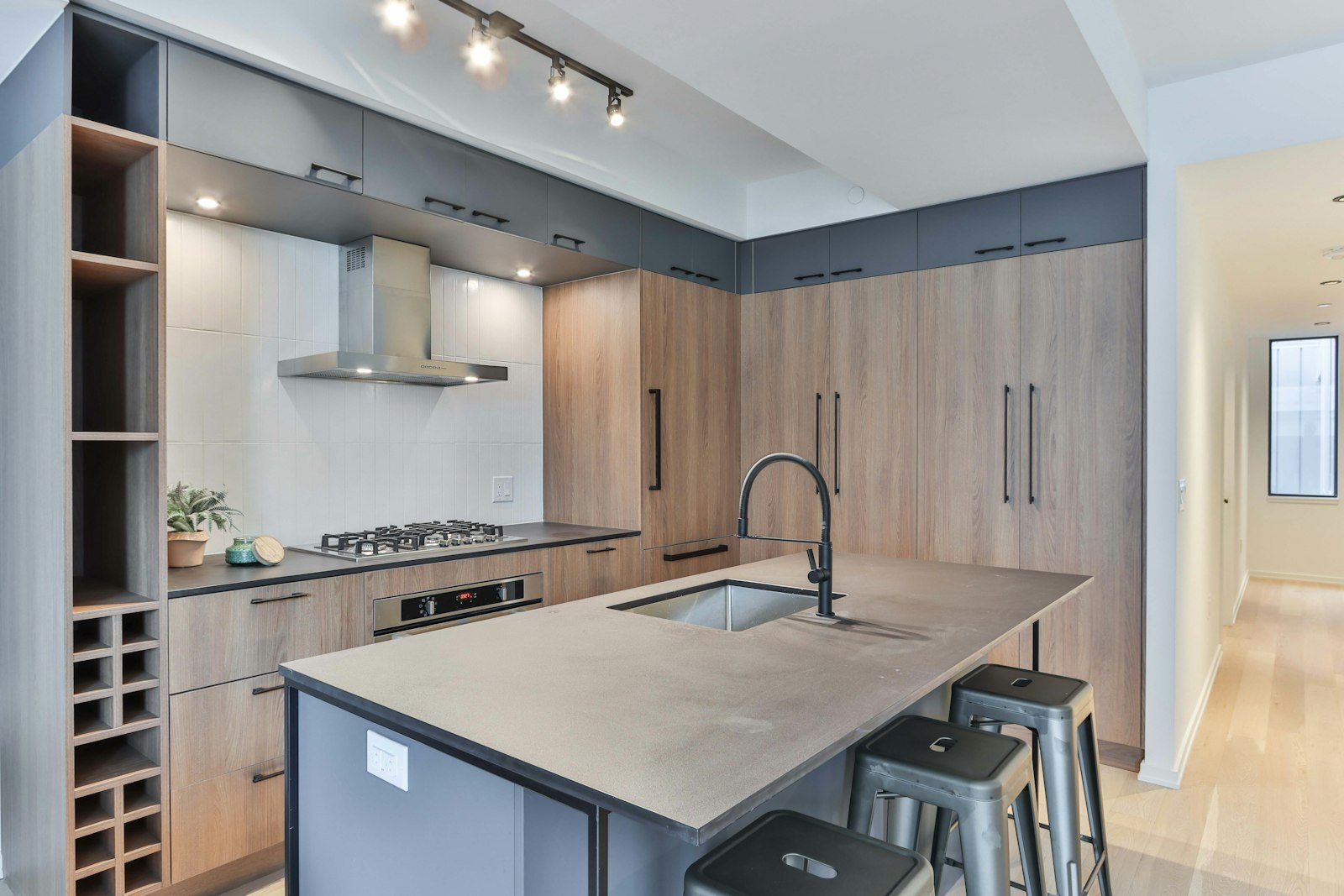
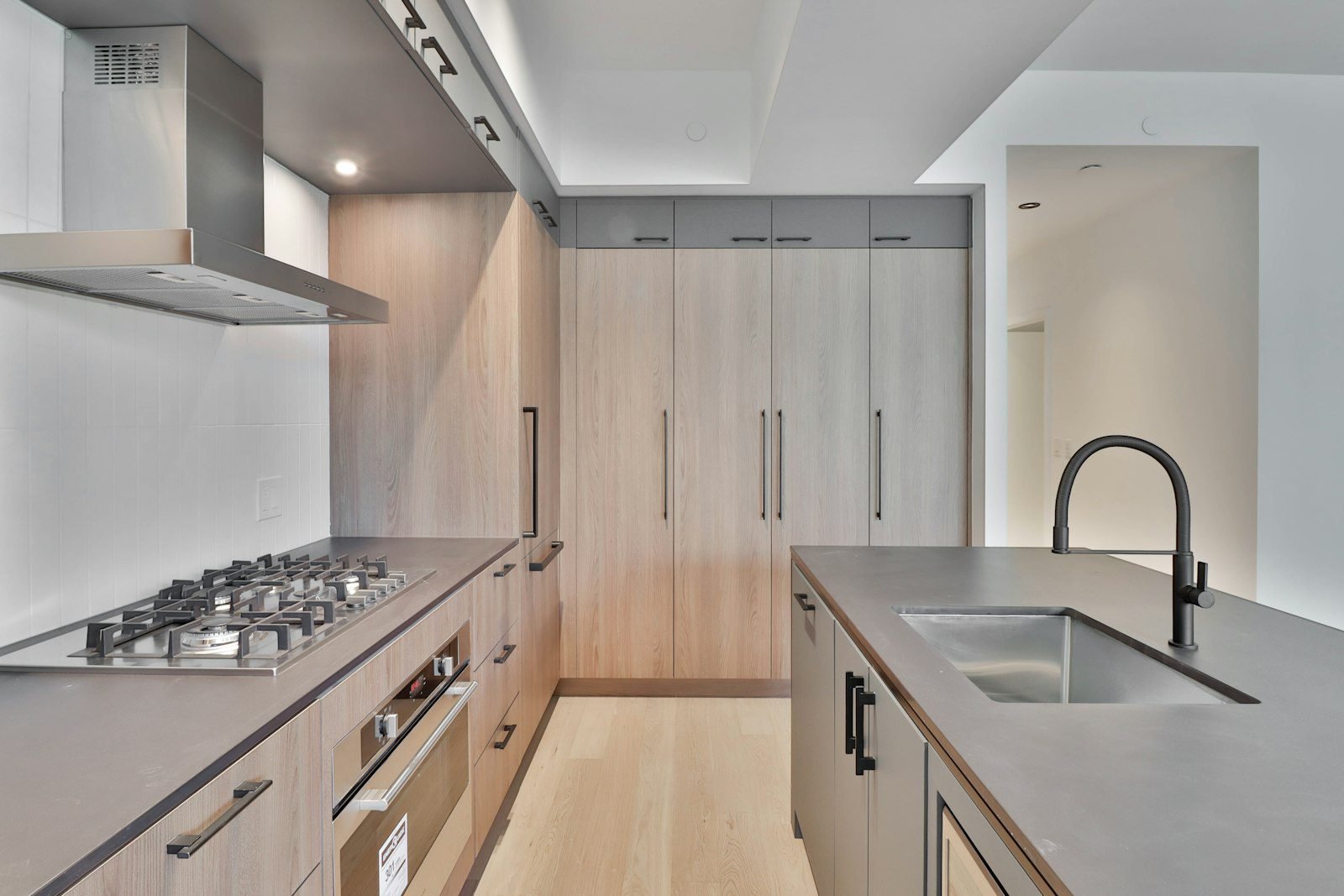
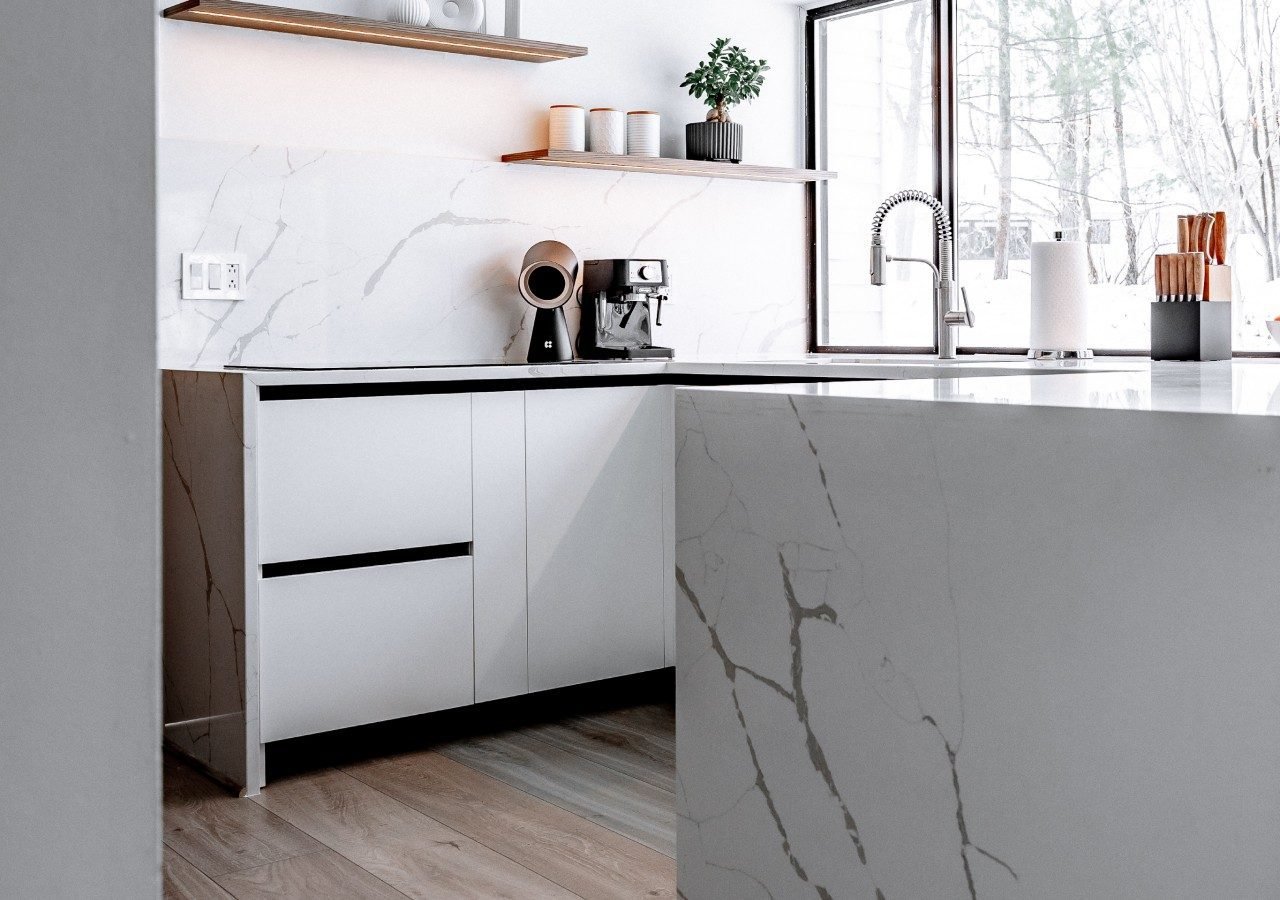
Handleless schemes from completed villa projects and client orders:
Opening Systems Behind a Handleless Front
Four systems cover essentially every handleless project, and each has a different cost, feel and maintenance profile:
Push-to-open
An electromagnetic release that opens the door with a light push — the cleanest result, and the one we specify most. It needs a power connection, which we draw into the cabinet layout.
Finger pull
A routed or chamfered edge that gives the hand a grip. No electronics, no failure point — the right choice for most base and wall units, and our default unless you want the flush look.
Integrated aluminium profile
A slim metal profile set into the door edge, often raw or blackened. It reads as a design detail rather than hardware, and suits the doors the household opens most often.
Tip-up for uppers
Wall and tall units need a tip-up mechanism with a soft-close damper, because a push-to-open on a heavy upper door is a broken hinge in a year. We fit tip-up as standard on any upper over 700 mm.
Tolerances
A handleless run lives on the gaps. We hold the door-to-frame gap at 3 to 5 mm and check the alignment on every door in the factory, because a 2 mm drift is obvious on a flush front.
Hinges and runners
Soft-close hardware comes standard on every door, and runners are rated to the door weight, not a generic spec. The hardware list ships with the project, so replacements are a part number.
What you send
Which system you want per zone — base, wall and tall. We return the tolerance plan and the power layout for any push-to-open run before production.
Handleless vs Shaker — How to Choose
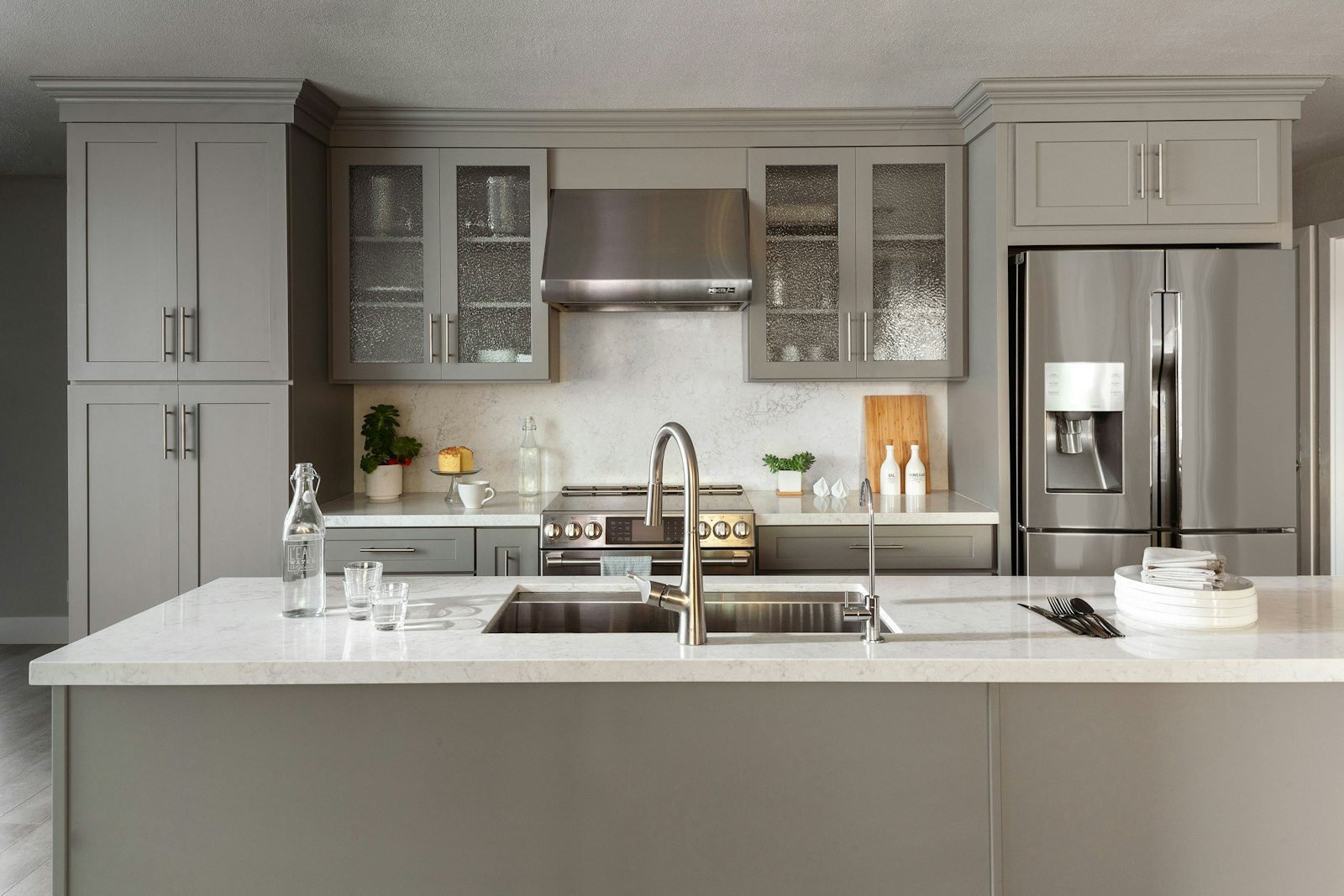
Handleless fronts read modern and minimal; shaker fronts read classic and work in more schemes.
| Handleless | Shaker | |
|---|---|---|
| Look | Flat, continuous front with no visible hardware | Classic five-piece recessed panel |
| Opening | Push-to-open or shadow gap | Cup or bar handles |
| Scheme fit | Modern minimal, appliance-integrated | Traditional, modern or mixed |
| Best for | Modern minimal kitchens | Traditional and mixed-scheme villas |
How Ordering Works
The same four-step process we use for every kitchen — from the first drawing to your loading port:
Step 1: Share Your Floor Plan
Send your villa drawing, room photos or handleless reference images by email or WhatsApp.
Step 2: Confirm Fronts and Openings
Choose surface, colour and the opening system for each section with our team.
Step 3: Approve Drawings and Sample
We return production drawings and a front sample panel before production starts.
Step 4: Production and Transport
We produce, quality-check, crate-pack and ship by sea, rail or road to your country.
Ordering & Delivery Specs
Factory-direct from Foshan, China — the same published numbers on every product page, for easy comparison.
| Order / MOQ | No rigid minimum — orders start from a single room; whole-house consolidation available |
|---|---|
| Factory price | Factory-direct pricing, up to ~30% below retail; interior design fee $5–12/㎡ by area (tiers on the pricing page) |
| Production lead time | 45–50 days standard, varies with project scale and material selection |
| Shipping | FOB / CIF / DDP door-to-door · FCL container consolidation · room-by-room labeling & export packing |
| Origin | Foshan, Guangdong, China — 20 years of export experience |
| Certifications | ISO 9001 · ISO 14001 · CE · SGS · SASO · Intertek |
| Warranty | 2–5 years depending on category |
| Pre-shipment QC | Quality inspection report + container loading photos with every shipment |
Frequently Asked Questions
Do push-to-open doors work on tall units?
Magnetic push-to-open is fitted on doors up to 1200 mm wide. Above that we use a finger pull or a shadow gap so the door still opens with one hand, and everything keeps the same flat front.
Will a handleless kitchen look cold?
Not with the right mix. Wood-veneer fronts, a stone worktop and warm LED in the shadow gaps keep the scheme warm; white-only schemes stay bright rather than clinical.
Can part of the kitchen be handleless and part not?
Yes. Many clients go handleless on base units and keep cup handles on the pantry or larder. We build both systems in the same order with the same board and finish.
What maintenance does a handleless kitchen need?
Matte lacquer and PET wipe clean with a damp cloth. The only moving parts are the soft-close hinges and runners, which we specify to a 100,000-cycle rating.
What surfaces can a handleless kitchen use?
Matte lacquer, PET acrylic, melamine or wood veneer in any colour. The edge is banded all round, so the door profile stays clean from every angle.
How long do the soft-close hinges last?
The running hardware is rated at 100,000 open-close cycles per set. Across a full kitchen at normal daily use, that is decades of service before any part needs replacing.



Ready to Plan Your Handleless Kitchen from China?
Send your floor plan or photos — we return production drawings, opening-system layout and a landed quotation within 24 hours.
Send Your Kitchen PlanView How It WorksKitchen & Wardrobe Overview
Maintained by the George Villa design team — ISO 9001-certified villa interior factory, Foshan, China. Updated September 2026. See how it was delivered — 347 delivered villa projects — or how your order ships door to door.