
Why We Pack by Room: How Flat-Pack Crates Cut Damage and Your Unpacking Time
A flat pack furniture packing decision is the one that decides the freight bill before the freight bill exists. The 2026 freight-desk page for furniture exports puts it in one line: furniture is “volume cargo where the freight bill is decided at the design stage, not the booking” — and a knock-down version of the same piece “routinely ships in a third of the cube,” a difference on a container load that is “far larger than any rate negotiation.” The July 2026 China shipping guide makes the same point with arithmetic: a solid-wood dining table that occupies 3 cubic metres assembled shrinks to about 0.8 when flat-packed — a 73% volume reduction. This guide works that math, then follows the carton through the three places it actually earns its cost: the corner that survives forklifts, the crate that survives a customs wood inspection, and the label that turns unpacking day from a search into a sequence. Every precise number below is tool-verified against a July 2026 shipping guide, a 2026 freight desk page (no publication date, noted), an August 2026 furniture-packing guide, a March 2026 market report on assembly services, and an undated RTA industry guide (noted where used).
The short version: flat-pack is a design decision, not a packing trick; the carton protects corners, not faces; a wooden crate is a specific answer to a specific risk, with a specific wood-treatment rule attached; and packing by room — every carton labelled to the room it goes into, every hardware bag tied to the carton it belongs in — is what converts a container of parts into a villa that assembles itself in order. That last part is the practice described in how we work, and it is the reason the numbered factory process starts at the panel, not at the carton.
In This Guide
- The Math: Flat-Packing Is a Design Decision, Not a Packing Choice
- What the Carton Actually Protects
- When a Wooden Crate Is the Right Answer
- Packing by Room: The Labeling System
- Unpacking Day: Where the Time Actually Goes
- The Flat-Pack Packing Specification
- Frequently Asked Questions
- How much volume does flat-pack (KD) furniture save?
- Is flat-pack furniture safer to ship than fully assembled?
- When should a villa piece ship in a wooden crate instead of a carton?
- What labels should a furniture carton carry?
- Why pack by room instead of by carton size?
- How much do people pay to have flat-pack furniture assembled professionally?
The math: flat-packing is a design decision, not a packing choice
The worked example in the July 2026 shipping guide is the one to keep. A solid-wood dining table ships at 3 cubic metres assembled and about 0.8 cubic metres flat-packed — a 73% volume reduction. At a representative LCL rate of $95 per cubic metre from China to the US West Coast, that single table’s freight drops from $285 to $76, and across 200 tables the ocean-freight saving exceeds $41,000 before anything else in the chain moves. The guide’s wider rule of thumb is more conservative — combining FCL sea freight with KD flat-pack “can reduce shipping volume by 40–60%” — and the freight-desk page’s operational figure, “a third of the cube,” lands in the same band. Three different numbers from three different vantage points, all pointing at the same fact: the packing format is the largest single lever on the freight line.
The same guide is equally clear about when assembled shipping is the right answer, and it gives exactly two exceptions: when disassembly would compromise structural integrity (certain joinery, antique pieces, delicate mechanisms), or when destination reassembly labour costs are prohibitively high. For everything else — the guide says roughly 90% of commercial furniture imports — KD is the economically rational choice, and it carries a packaging standard of its own: 5-ply corrugated cartons with foam inserts, and the instruction manual in the destination language. Two cautions from the freight desk complete the picture. First, flat-pack economics only work at container scale: LCL handling and cross-docking erode the advantage quickly. Second, the volume saving is only as good as the container that receives it — which is the argument of the LCL vs FCL guide and the container-minimum logic in the MOQ article. In a quotation, the packing format shows up as a line you can hold the factory to, and the pricing guide is where that line is read against the number.
What the carton actually protects
The freight-desk page is blunt about how furniture cartons fail, because they do not fail the way people expect. Corner crush is the dominant damage mode, and it comes from cartons rubbing against each other in transit rather than from any single impact. The carton itself is the asymmetry: “strong vertically and weak on the corner,” which is exactly where forklifts and neighbouring cartons hit it. The protection system follows directly. Corner boards go on every panel edge. A stack limit is printed on the carton, because an unlimited stack is how the vertical strength gets turned against itself. On loading, the stack is interlocked and the voids filled so nothing can slide — a static load that cannot migrate cannot crush anything.
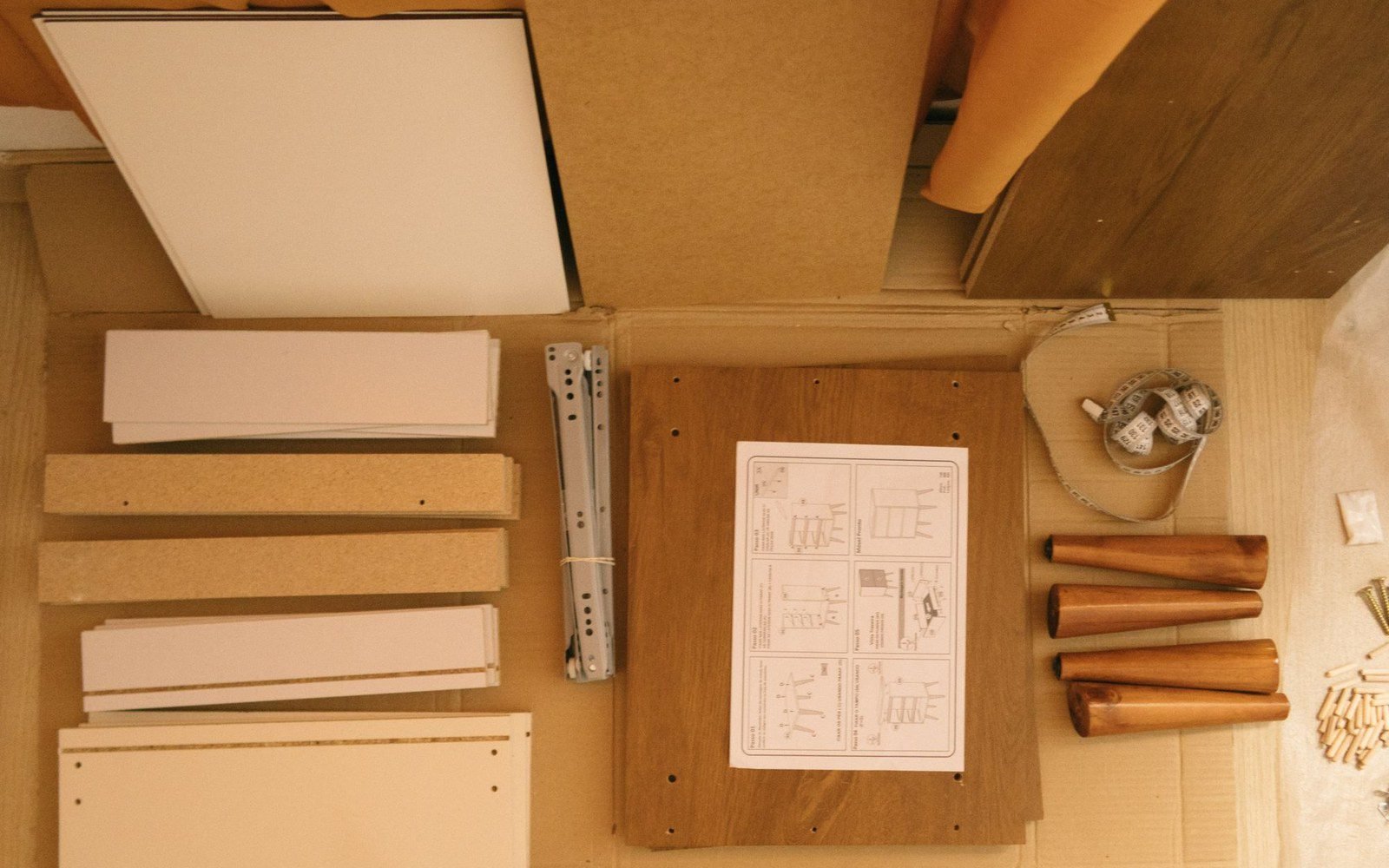
Inside the carton, the rule that most prevents claims is the one about hardware: the fixings go in a bagged, numbered pack inside the largest carton, not loose in a corner where they can separate from the panels they belong to. The August 2026 packing guide adds the label vocabulary the cartons carry — Keep Dry, This Side Up, Do Not Stack, Team Lift, Mechanical Lift, Fragile, Center of Gravity — and its own correction: labels communicate handling instructions but do not replace structural packaging. A “Do Not Stack” label, it points out, does not guarantee the carton will never be stacked during LCL consolidation; if the piece cannot take the pressure, the frame around it has to be the thing that takes it. That is the LCL end of the equation, where each package must stand on its own — the same reason the LCL vs FCL guide treats consolidation handling as a damage category, not just a cost one.
When a wooden crate is the right answer
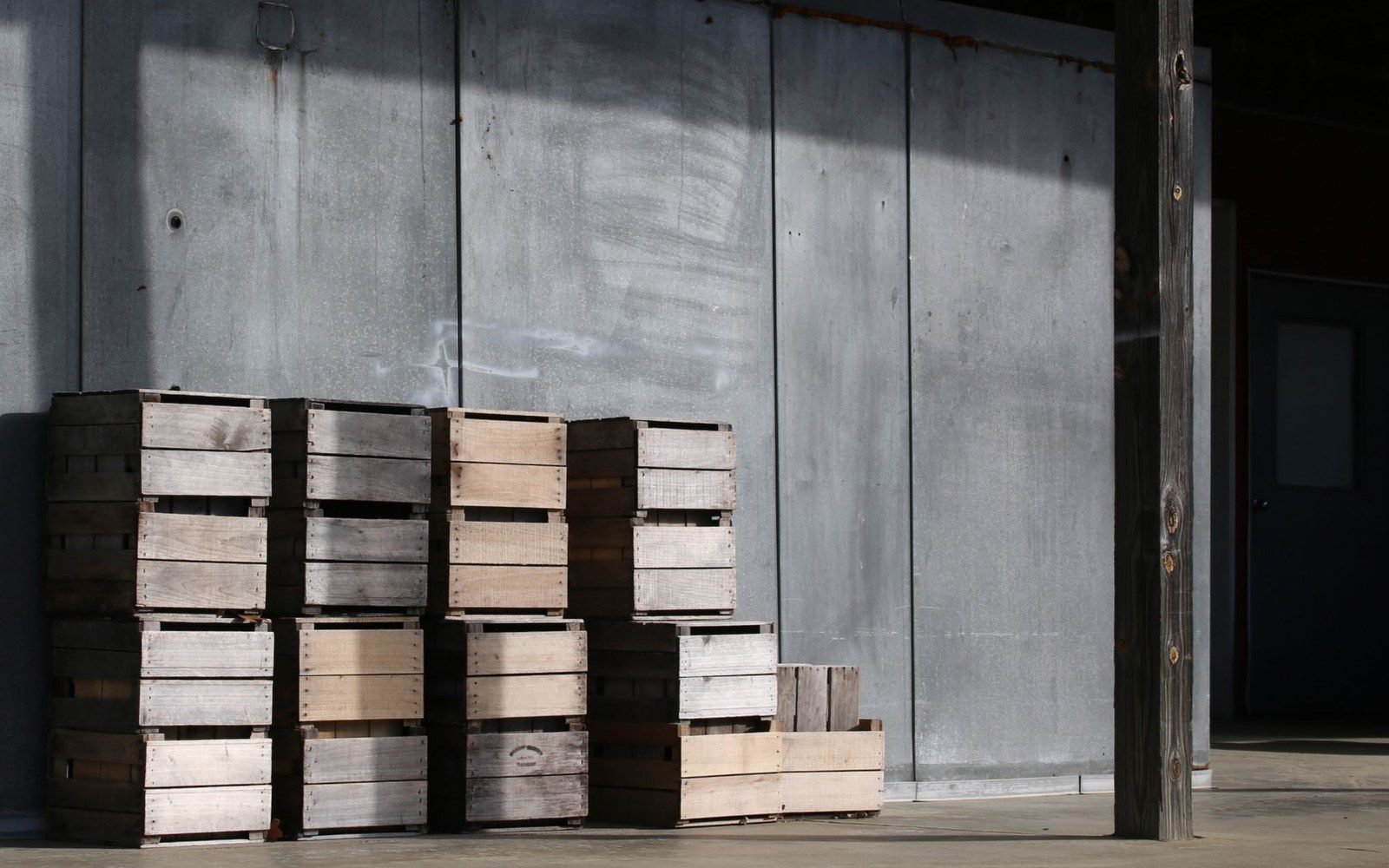
The packing ladder in the August 2026 guide runs from a heavy-duty corrugated carton, through double-wall and reinforced cartons, honeycomb panels and palletized cartons, to a plywood case, a solid-wood frame, or a custom crate — and the choice is driven by the handling environment the piece will meet. An LCL carton travels through consolidation warehouses, stacking and forklifts it did not choose, so it “usually needs stronger independent protection than a floor-loaded piece inside a dedicated FCL container.” Expensive leather, recliner mechanisms, glass accents and anything with protruding parts are the usual crate candidates.
The compliance rule that decides the crate’s material is ISPM 15. Solid-wood pallets, crates, skids and dunnage entering the United States must be pest-free, debarked, treated and marked with the official ISPM 15 symbol — and non-compliant wood packaging may be refused entry, re-exported, treated, or destroyed. The materials generally outside the requirement are the engineered ones: plywood, oriented strand board, pressboard, plastic pallets, metal frames and laminated veneer lumber. That list is the practical design rule: a plywood case carries the protection without carrying the treatment obligation, which is why it is the default villa-export crate. The cost of getting it wrong is the shipping guide’s figure — roughly $300–500 in rework when wood packaging is flagged at the destination — plus the time it takes off the delivery date. Above the crate sits the timber paper trail: the freight-desk page flags EUTR/EUDR timber due diligence as the recurring compliance step for the category, and the shipping guide carries the document list.
Packing by room: the labeling system
The carton protects the piece; the label system protects the day it arrives. Packing by room is the practice where every carton leaving the factory answers to a room, and it has four rules.
Rule one: the room label is on the outside of every carton — kitchen, master, guest one, study — in the largest type on the largest face, so a delivery crew that has never seen the villa can stack the building by room before it enters the house. Rule two: the panels are numbered before they are packed, which is the first stage of the numbered factory process — every panel carries the mark that tells the installer which wall and which height it goes to, so the room assembles in the order the drawings were drawn, not in the order the cartons happen to open. Rule three: the hardware is bagged, numbered and tied to its carton, the fixings-pack rule from the carton section pushed one level down — each bag labelled to the model and the carton it belongs in, because a missing screw in a villa project is not a missing screw, it is a room that stops. Rule four: the instructions travel in the destination language, the shipping guide’s line, so the person assembling in Austin or Perth is reading their own language, not a translation of a translation.
The loading order is the unpacking order in reverse: rooms are stacked so that the first room to be lived in is the last one loaded, and the photograph record from the August 2026 guide — package condition, carton labels, container interior, loading sequence, blocking and bracing, container number, seal number, final door closure — is taken at the factory and becomes the receiving checklist at the villa. That is the same record the pre-shipment inspection verifies before the seal goes on, and the sequence that the nine-stage production run ends with.
Unpacking day: where the time actually goes
The market data says the unpacking side is the growth side. The March 2026 report values the global furniture assembly services market at $11.8 billion in 2025, projected to reach $22.6 billion by 2034 at a 7.5% CAGR — and its stated driver is “the surge in flat-pack furniture sales,” which now account for over 31% of global furniture sales. Surveys the report cites from North American and European markets in 2025 put over 67% of recent flat-pack buyers in the camp that prefers professional assembly to DIY, over concerns of time, physical effort and the risk of improper assembly. The residential segment is 58.3% of that market, and the reason the number exists at all is that flat-pack, by construction, ends with an assembly step — the shipping guide’s phrase is “low damage risk but assembly dependency.”
So the unpacking cost has four blocks, and the packing system attacks all of them. Unloading: a flat-packed panel passes through doors, stairwells and elevators that an assembled piece simply cannot — the August 2026 guide’s “measure the delivery path” step, exterior doorway to turning space. Sorting: with room labels on every carton, sorting is zero — the crew opens room by room, in the order the villa is handed over. Assembly: numbered panels and tied hardware bags turn the assembly into a lookup, which is what the RTA industry guide means when it says the BOM must be controlled to “prevent missing or incompatible components” — the missing-hardware complaint is the classic flat-pack failure, and IKEA’s integrated lesson is that dimensions, materials, packaging and assembly are designed as one system, because “a low factory price can be offset by inefficient cartons, difficult assembly, damage, missing hardware or high return rates.” Disposal: the guide’s DDP checklist is the reminder that unpacking, assembly and packaging removal are not automatically included in a delivered price — confirm the service in writing, because “white glove” has no universal definition. A room that was specified properly packs properly, and the walk-in closet specification guide is where that starts for the biggest room in the package.

The flat-pack packing specification
Everything above in one sheet — the specification a factory can price, a forwarder can check, and a villa can be assembled from.
| Element | Standard | Rule behind it |
|---|---|---|
| KD volume | 73% in the worked example (3 → 0.8 CBM); 40–60% general (FCL); “a third of the cube” at the freight desk | design-stage decision |
| Carton | 5-ply corrugated + foam inserts; double-wall for LCL | handling environment |
| Corner protection | Corner boards on every panel edge | corner crush is the dominant damage mode |
| Stack limit | Printed on the carton | strong vertically, weak on the corner |
| Stow | Interlocked stacks, voids filled | a load that cannot slide cannot crush |
| Hardware | Bagged, numbered, in the largest carton; each bag tied to its model and carton | missing-part prevention |
| Handling labels | Keep Dry / This Side Up / Do Not Stack / Team Lift / Mechanical Lift / Fragile / Center of Gravity | communication, not structure |
| LCL reinforcement | Load-bearing frame where stacking pressure is possible | labels are not guaranteed at consolidation |
| Crate | Plywood case / solid-wood frame / custom crate for LCL and high-value | the outer-package ladder |
| ISPM 15 | Solid wood treated and marked; plywood/OSB/plastic/metal outside the requirement | US entry |
| Timber paperwork | EUTR/EUDR due diligence | export compliance |
| Moisture | Dry before packing; desiccant, never sealed-in damp | ocean-cargo condensation |
| Room system | Room label on every carton; panels numbered; loading order = reverse of living order | unpack by room |
| Instructions | Destination language, tied to the room’s hardware | assembly dependency |
| Record | Photos: condition, labels, interior, sequence, container no., seal no., door closure | receiving + insurance claims |
Hold any packing specification against that table, line by line. Where a line is missing, that is the line that becomes a claim at the destination — and where a line deviates, that is the deviation to price, because every one of them is a number the freight bill or the unpacking day will eventually collect.
Frequently asked questions
How much volume does flat-pack (KD) furniture save?
The July 2026 shipping guide’s worked example: a solid-wood dining table at 3 cubic metres assembled ships at about 0.8 cubic metres flat-packed — a 73% reduction, and at $95 per cubic metre the table’s freight falls from $285 to $76. The guide’s general rule of thumb for FCL shipments is 40–60%, and the freight-desk page’s operational figure is “a third of the cube.” All three are the same fact from different vantage points: the packing format is the largest single lever on the freight line.
Is flat-pack furniture safer to ship than fully assembled?
For the journey, usually yes: lower shipping volume, better container utilization, easier carton handling, less risk of protruding-part damage, more stable stacking, and lower unit freight — the August 2026 guide’s flat-pack list. The trade is at the destination: assembly is required, hardware can be lost, the instructions must be accurate, and incorrect assembly can lead to damage or returns. The shipping guide’s summary is the honest one — low damage risk, but assembly dependency.
When should a villa piece ship in a wooden crate instead of a carton?
When the handling environment does not deserve trust: LCL consolidation, where the package must stand on its own through stacking and forklifts; high-value or glass-accent pieces; and anything with mechanisms or protruding parts. The outer-package ladder runs from 5-ply carton through double-wall and honeycomb to plywood case, solid-wood frame or custom crate. For US entry, solid-wood packaging must carry ISPM 15 treatment and marking, while plywood, OSB, pressboard, plastic and metal fall outside the requirement — which is why the plywood case is the default villa crate.
What labels should a furniture carton carry?
The standard set from the August 2026 guide: Keep Dry, This Side Up, Do Not Stack, Team Lift, Mechanical Lift, Fragile and Center of Gravity — plus the printed stack limit, the room label, and the panel/hardware numbering. The guide’s correction is the important half: labels communicate handling instructions but do not replace structural packaging. If a carton cannot take stacking pressure, the frame around it must be the load-bearing structure, because a label does not guarantee LCL handlers will read it.
Why pack by room instead of by carton size?
Because the unpacking cost has four blocks — unloading, sorting, assembly, disposal — and room labels zero out the sorting block: the crew opens room by room, in handover order. Numbered panels and hardware bags tied to their cartons turn assembly into a lookup, which is the BOM-control point that prevents missing-hardware claims. And a loading sequence that is the reverse of the living order means the first room you live in is the first one you open.
How much do people pay to have flat-pack furniture assembled professionally?
Assembly is now a measured market, not a side hustle: the March 2026 report values furniture assembly services at $11.8 billion globally in 2025, projected to $22.6 billion by 2034 at a 7.5% CAGR, with residential holding 58.3% of the share. The same report’s 2025 North American and European surveys put over 67% of recent flat-pack buyers in the camp that prefers professional assembly over DIY. If your quote includes installation, that market is the benchmark for what the service costs when you buy it separately at the destination.
Send us your room list, and we will return the packing plan — carton count per room, the crate decision for the fragile items, the hardware pack count, and the unpacking sequence your installers will actually follow.