Ship Furniture to Australia: Compliance, Labels and the 18-28 Day Timeline
Australia is the destination where a villa container can be perfectly packed and still sit at the port — not because the goods are wrong, but because the paper and the marks are. This article walks that lane using a real project: a private two-storey modern villa in Australia, 450m², fully customised from our Foshan factory and shipped as a room-based flat-packed package (the project page carries the full room scope, client requirements and the on-site division of responsibility). The regulatory and rate facts below come from a July 2026 China–Australia shipping guide (dantful, updated 2026-07-31) and a July 2026 Guangzhou–Australia trade-service report (2026-07-04) — the trade-service figures are industry-side accounts, clearly marked as such, not government publications.
The short version: shipping furniture to Australia in 2026 is a documents-and-marks problem before it is a freight problem. Wood packaging must carry an IPPC mark that matches the phytosanitary certificate word for word, the fumigation certificate must be uploaded to Australia’s system 24 hours before loading, and the port spot-check regime tightened in late 2025. Get those four things right and the lane is straightforward: 18–28 days at sea, 0–5% duty plus 10% GST. Get them wrong and the case the trade-service report opens with is your case — a wooden furniture container from Huangpu to Melbourne held for 17 days, detention and inspection fees eating 13% of the order’s profit, because the IPPC mark’s coding did not match the Australian system.

The project: two floors and the twenty spaces it covered
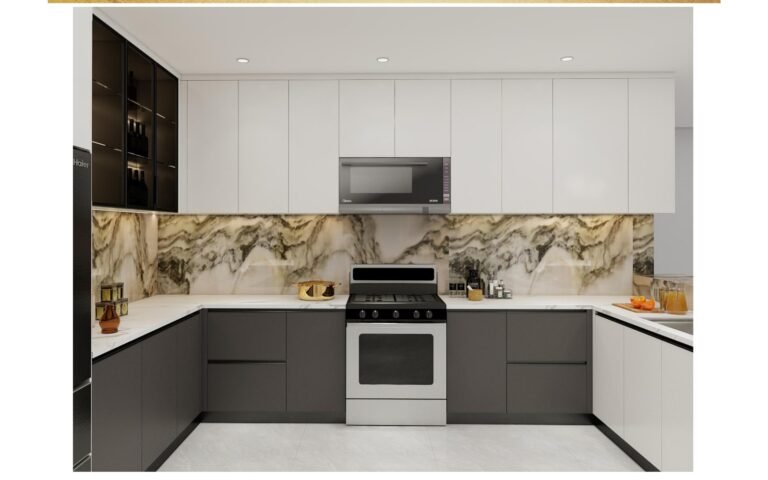
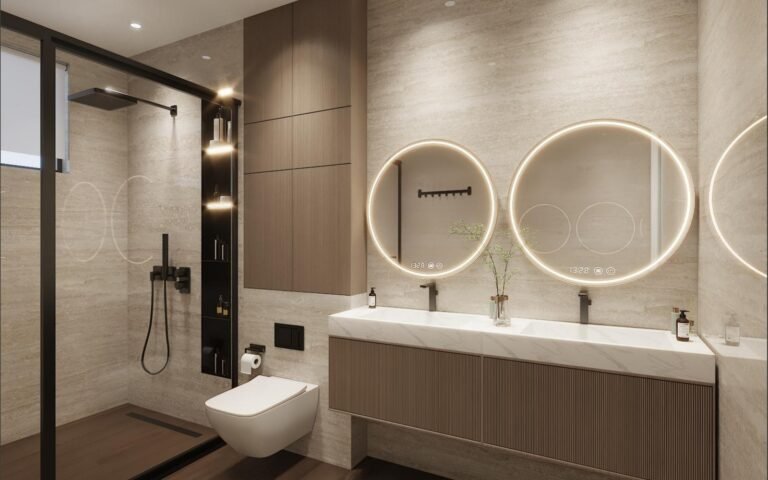
The villa was planned across two floors. The first floor carried the public program — foyer, living room, dining room, kitchen, pantry, a study that doubles as bedroom five, a guest bathroom, a cabana and garage storage. The second floor carried the private program — a loft, hallway, the main bedroom with its dressing area, three bedrooms, three bathrooms, a walk-in closet and the laundry. Twenty different spaces, each with its own furniture, cabinet, storage and material requirements, all in one coordinated modern style.
That list is the actual hard part of an Australian villa export, because it is what has to survive three systems at once: the production line (every panel cut, every hardware pack built to the room list), the container (every item packed, protected and identified so it can be distributed on site), and the border (every mark and every document correct before the ship leaves China). The project’s own challenge notes are blunt about the fourth one: a full villa order includes so many furniture items, panels, hardware packages and accessories that after overseas delivery they can become difficult to identify unless room-based labels, item codes and hardware-package organisation are done before loading, not after. The next two sections cover the border; the labels section covers the identification system.
Why Australia is the compliance-heavy lane
Australia runs one of the strictest biosecurity import regimes in the world, and it tightened on this lane recently. The trade-service report dated 2026-07-04 describes the current position: Australia’s Biosecurity Amendment Act 2025, in force from the fourth quarter of 2025, brought “penetrating inspection” of incoming wooden packaging, bamboo and rattan products and goods containing plant-derived material. On the same lane the port inspection queue reportedly extended from 3–5 days to 8–12 days, and the report’s striking statistic is that 72% of the problems were not real defects — they were certificates that looked fine but the Australian system did not recognise.
Three mechanisms drive almost all of the friction. First, the four-document interlock: the fumigation certificate must form a chain with the phytosanitary certificate, the packing list and the bill of lading — a mismatch in any one of the four breaks the chain. Second, the DAWE update of February 2026 to the import conditions for wood packaging material: the IPPC mark must carry the treatment company’s registration number, the treatment date and the treatment code, and that information must match word for word the “additional declaration” field of the phytosanitary certificate. The report notes a shipment was reworked because the date was written “2026-03-15” while the Australian system only accepts a format like “15 MAR 2026”. Third, the MICOR system (Australia’s imported-commodity information system), which requires the fumigation certificate to be uploaded electronically 24 hours before loading; the system then matches certificate number, treatment-company qualification and IPPC coding, and the status must read ACCEPTED — not PENDING — before the vessel sails.
Two port-level numbers from the same report frame the risk: the spot-check rate for Asian-origin wood packaging at Sydney is about 18%, while Brisbane runs as high as 35% for first-time importing suppliers. For a villa order — typically a first-time supplier relationship, one big container, full wood packaging — that is not a background probability, it is the planning case.
The packaging rules that actually get containers held
The rules that stop shipments are physical, not bureaucratic. The trade-service report’s inspection section lists three checks Australian inspectors actually run. Moisture content: wood packaging above 20% moisture can be judged unqualified even when fumigation is valid, on the ground that damp wood breeds mould. Mark legibility: inspectors check the IPPC mark with a magnifier; a blurred or faded mark is invalid, and the remedy is re-fumigation or destruction — which is why compliant fumigation warehouses use UV-resistant ink and run a wear test after spraying. Container interior: insect eggs or soil residue on the container wall can get the entire container judged contaminated and returned; the standard defence is a video of the empty container at loading, proving it was clean before packing.
The material strategy is where a China factory has real leverage. ISPM-15 applies to solid wood packaging — pallets, crates, skids, dunnage — while plywood, OSB, chipboard, plastic and metal are out of scope entirely (the same distinction dantful’s 2026 guide makes for US-bound cargo). For a villa order that mixes engineered-wood casework with solid-wood crates, the report’s practice is to fumigate and mark the solid-wood packaging only and issue a non-fumigation declaration for the engineered-board components — compliant in both directions, and cheaper than treating everything. Two product-level notes complete the picture: Australia’s National Construction Code carries formaldehyde-emission limits for composite wood in furniture (per dantful’s 2026 compliance table), and the Biosecurity Act’s treatment requirement for rattan, bamboo and cane is the reason any outdoor-furniture content in an Australia order gets its own packaging review — this villa’s cabana furniture qualified.
The pre-shipment inspection routine is where these checks are physically done: the container video, the mark verification and the moisture sample all belong in the loading-day checklist, before the seal goes on.
Labels and the room-based marking system
The project log for this villa records its biggest operational risk in one line: two dozen rooms, one container, and a delivery date the local install team could not move. A villa is not a trade order of forty identical items. Every room has its own layout, its own hardware set, and its own “this panel joins that one” dependencies, so the labelling system had to do the work that a warehouse normally does for you. Four rules did the work.
First, every carton carries the room name in full — “MASTER BEDROOM”, not “MB” and not “R4”. The crew that unloads and places items in Australia works from the box face, not from our packing list, and an abbreviation that is obvious to the packing team is noise to an installer on day two.
Second, panel numbers live inside the carton, item codes live outside. The outside code identifies the furniture set — “kitchen island, carcass set 2 of 5”; the inside numbers identify individual boards and which set they join. That split keeps the unloading crew, who move whole sets, from ever needing to read board-level detail, and keeps the assembly crew with exactly what they need.
Third, every hardware bag is tied to the exact carton that uses it, bagged by room and by set. A missing bag of cam locks is a job that stops mid-installation and a site visit that cannot be scheduled from China.
Fourth, assembly instructions travel in the destination language, folded into the set carton rather than the master carton.
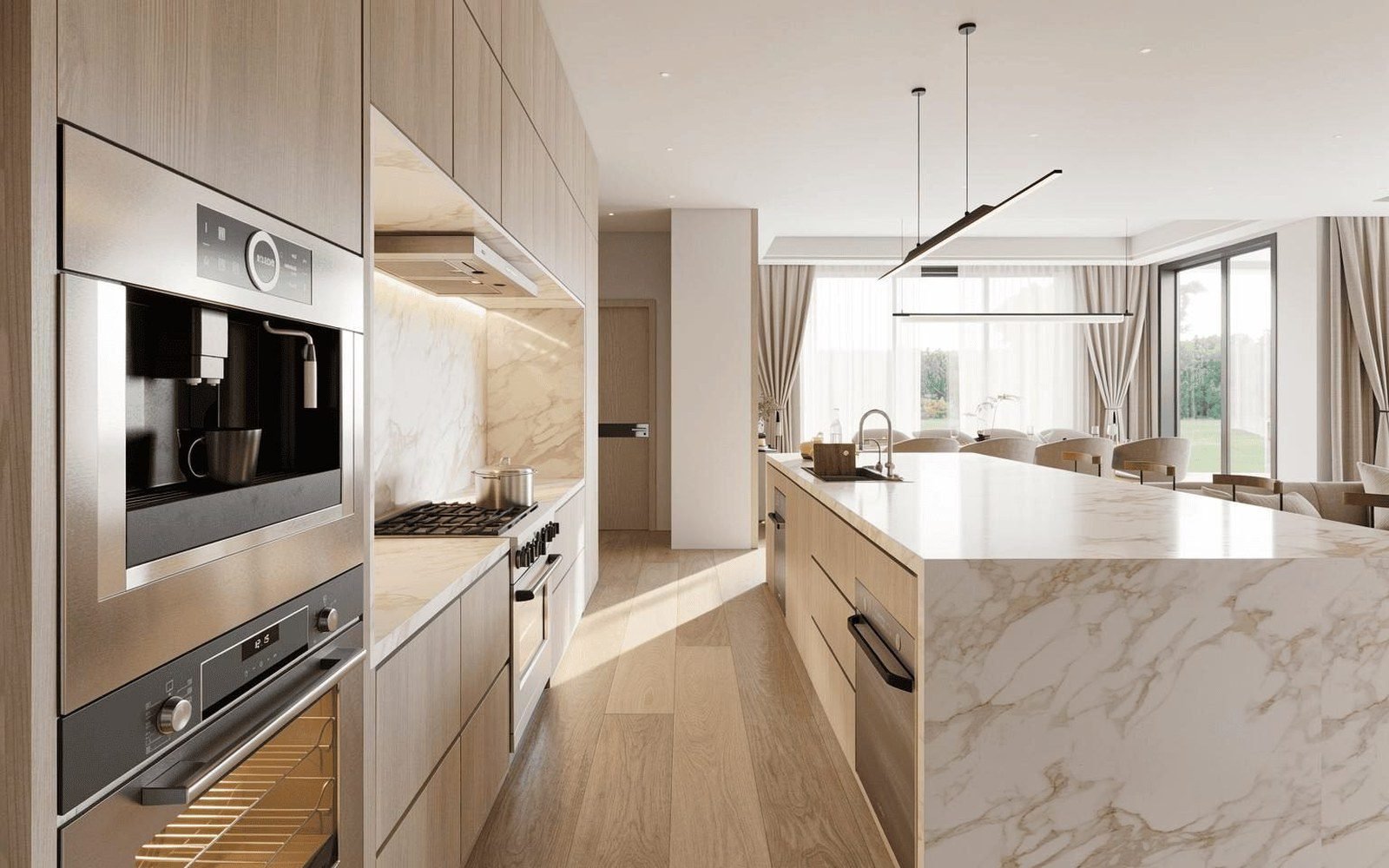
These are the same disciplines that the flat-pack packing standard describes at the carton level, and they connect upstream to how the factory numbers and stages a villa build — the numbering system behind a whole-house villa interior is what makes “carcass set 2 of 5” a real, traceable thing rather than a hope. Room-based labels were the fourth recorded challenge on this project, and the reason they stayed a challenge until the packing week is simple: they are the only part of a 450m² build that the buyer’s own team reads first, and a labelling error is the one error that is most expensive to fix on site.
The route: Nansha to the East Coast ports
The July 2026 shipping guide puts China-to-Australia transit at 18–28 days by sea, and that is the middle of the number — not the whole one. A villa project needs two to four weeks of buffer at each end: the pre-loading compliance window on the China side, and the inspection queue on the Australian side described above. When you book the vessel, plan the project as an eight-to-ten-week lane, not an eighteen-day one.
On the freight side, the guide’s 2026 Q2–Q3 figures are:
– FCL (full container): $1,200–$4,000, with the spread driven by box size on the lane. A villa package is almost always FCL — this project filled a container across two floors of rooms — so the relevant number for buyers is the top of that range, not the floor.
– LCL (less-than-container): $50–$100 per CBM, with a practical minimum around 1 CBM or $130. LCL is the right tool for a sample case or a late room addition; it is the wrong tool for a whole house, where per-CBM cost, handling risk across multiple consolidators, and the single-container compliance model all work against it.
The same guide covers the west-coast case — Fremantle/Perth deliveries run the same compliance logic, with the transit range shifting by a few days.
The port choice deserves its own paragraph because the spot-check math from the trade-service report is port-specific: Sydney at about 18%, Brisbane at as much as 35% for first-time importing suppliers. That is not a reason to avoid Brisbane; it is a reason to know which port your install crew is based on before you choose the discharge port, and to budget the 8–12 day inspection window accordingly. A villa’s install crew is local by definition — the shipping decision should follow the crew, not the other way around.

The mechanics of what a villa FCL booking contains are laid out in the LCL vs FCL comparison, and the day-by-day countdown once the container is booked is in the sea freight timeline post. Both feed into the full shipping guide, which is the page to hand a buyer who wants the whole picture.
Duties, GST and the landed numbers
The border cost has two components, and they behave differently. Import duty on furniture runs 0–5% depending on the product classification, and Australia’s 10% GST sits on top of it at the border. A 2026 freight estimate (blshipping, 2026-01-09) prices the combined border cost at roughly 15% of goods value — that is the number that belongs in a budget line, not “5% duty”, because the GST is the larger piece of the two.
Two practical consequences follow. First, the duty band works at category level, so a villa BOM that mixes cabinetry, stone, glass and ironmongery should be classified line by line with a broker before the quote is final; rolling the whole container into a single “furniture” classification is how landed cost quietly drifts. Second, the combined rate is an estimate that moves with classification and with exchange rates, so the budget line should carry a tolerance band rather than a point number, and the final figures should be confirmed with a broker at the time of shipment.
The interior design pricing guide shows how this border line sits inside a whole-house budget, and it is the page where buyers should sanity-check that their factory quote, their freight quote and their broker’s duty estimate are all speaking about the same goods value. A villa is priced in dozens of line items across four product families, and the border is the one line item that nobody on the design team will check for you — so it should be the one with the widest tolerance and the latest confirmation.
What happens on arrival
On the Australian side, the sequence is fixed: the fumigation certificate is already in MICOR with an ACCEPTED status (uploaded before loading, as described above); the container is discharged; the shipment enters the port’s inspection queue — the 8–12 day window from the trade-service report; and, for most shipments, it is cleared and released without a penetrating inspection. The number that matters for project planning is the queue, not the inspection itself: the queue is paid in site days, and it lands on the install crew’s schedule.
The trade-service report documents the worst case on this lane: a shipment held for 17 days while documentation was reworked and re-verified, against a queue that was already double the pre-2025 norm. Seventeen days on a villa project is not an abstract delay — it is the install crew standing idle on site, or a handover date slipping by a fortnight. The report’s own analysis is the reason this article leads with paperwork: 72% of the problems on the lane were certification and documentation issues, not physical defects in the goods.
After release, responsibility divides in a way the project page states plainly: final site measurement, local compliance and installation are the local team’s work, and the factory’s obligation ends at the discharged, documented container. That division is deliberate, and it is the part of the Australia lane that buyers should agree in writing before production starts. The Australian Modern Villa project page carries the note as published — and it is the template for how that responsibility line should be written into a contract, because the queue risk above is a planning fact, and the responsibility line is a legal one.
The Australia export specification checklist
Everything above in one sheet — the specification a factory can price, a broker can classify, and a villa can be cleared from:
| Item | Rule / Target | Why it matters |
|---|---|---|
| Solid-wood packaging | ISPM-15 treated and branded; composites exempt | Applies to crates, pallets and dunnage — not to the furniture itself |
| IPPC mark | 3 elements word-for-word match with the phytosanitary certificate | DAWE’s February 2026 rule; a mismatched mark is a documentation failure |
| Phytosanitary certificate | Issued before loading, uploaded to MICOR 24h ahead | Late upload leaves the status PENDING when the vessel sails |
| MICOR status | Reads ACCEPTED, not PENDING, before sailing | The single check that gates everything downstream |
| Date format on documents | “15 MAR 2026” style, not ISO | The system rejects other formats — a documented rework trigger |
| Four-document interlock | Invoice, packing list, fumigation and phytosanitary certificates all agree | Any mismatch surfaces at inspection, not at booking |
| Wood packaging moisture | 20% or below on sampled packaging | Above that, a penetrating inspection fails the packaging |
| Mark durability | UV-grade ink, checked after sea exposure | Faded marks read as unmarked at the wharf |
| Container interior video | Recorded on loading day, before the seal | The evidence baseline for any later claim |
| Engineered wood | Within NCC formaldehyde limits | Australia’s building-code requirement for composite panels |
| Rattan / bamboo / cane | Treated per the Biosecurity Act | The 2025 amendment added penetrating inspection for these |
| Transit planning | 18–28 days at sea + 2–4 weeks each end | Budget 8–10 weeks door to door, not 18 days |
| Border cost | 0–5% duty + 10% GST (≈15% combined, 2026 estimate) | Classify line by line with a broker; carry a tolerance band |
| Port risk | Spot-check ~18% Sydney / up to ~35% Brisbane (first-time) | Choose the port with the install crew; budget the 8–12 day queue |
Frequently asked questions
How long does it take to ship furniture from China to Australia?
The July 2026 shipping guide puts sea transit at 18–28 days, and the trade-service report adds 8–12 days of inspection queue on arrival — up from the 3–5 day norm before the late-2025 amendment. Plan the whole lane as eight to ten weeks: a pre-loading compliance window, the ocean crossing, and the port queue. The queue is the planning risk, because it is paid in site days against the install crew’s schedule.
What duties and taxes apply to furniture imported into Australia?
Import duty on furniture runs 0–5% depending on product classification, and 10% GST applies at the border on top of it. A 2026 freight estimate (blshipping, 2026-01-09) prices the combined border cost at roughly 15% of goods value. Because the duty band works at category level, a mixed villa BOM should be classified line by line with a broker, and the final figures confirmed at the time of shipment.
What is ISPM-15, and does it apply to my villa order?
ISPM-15 is the international standard for solid wood packaging — crates, pallets, dunnage. It does not apply to composite furniture itself, which is why a flat-packed villa built from panels and boards is mostly exempt while the packaging that carries it is not. Under DAWE’s February 2026 rule, the IPPC mark on the wood packaging must match the phytosanitary certificate word for word across three elements, and that is the check that has reworked shipments on this lane.
What is MICOR, and when must the certificate be uploaded?
MICOR is Australia’s system for imported-commodity information. The fumigation certificate must be uploaded electronically 24 hours before loading, and the status must read ACCEPTED — not PENDING — before the vessel sails. Documents in the system must use a date format like “15 MAR 2026”; a shipment reworked for writing “2026-03-15” is a documented case from the lane.
How likely is a biosecurity spot check on arrival?
Port-specific, per the July 2026 trade-service report (an industry-side account, not a government publication): about 18% for Asian-origin wood packaging at Sydney, and up to 35% at Brisbane for first-time importing suppliers. The late-2025 amendment added penetrating inspection of wooden packaging, bamboo and rattan goods, and extended the port queue from 3–5 days to 8–12. The right response is not to avoid inspection but to budget it — and to make sure the paperwork that 72% of problems reduce to is already clean.
Who does the final measurement and installation in Australia?
On this project — and as stated on the published project page — final site measurement, local compliance and installation were the responsibility of the local team, with the factory’s obligation ending at the discharged, documented container. That division should be written into the contract before production starts, because the inspection queue makes the arrival date a range rather than a day, and the local crew is the only party who can absorb it.
Planning a villa for the Australia lane? Send us your room list and drawings and we will return the export specification above, filled in: the classification lines for your BOM, the port decision against your install crew’s base, the label plan by room, and the compliance calendar that keeps the container moving.