
How to Read a Bill of Materials (BOM) Before Paying a Chinese Supplier
Before you pay a Chinese supplier for a villa interior, ask for one document: the bill of materials (BOM) for your project. A BOM lists every part of the package — each cabinet carcase, door, shelf, drawer, handle and hinge — with its material grade, finish code, dimensions, hardware and quantity. It is the contract between the drawings you approved and the crates that will actually arrive. Read it properly and you catch most disputes before the deposit leaves your account. Most problems between overseas villa owners and Chinese factories are not quality problems; they are specification problems, where the BOM said one thing, or nothing at all, and the factory built what it thought you meant.
This guide walks through a villa interior BOM line by line — what each column means, where substitutions hide, how quantities and units create surprise costs, and the ten-point check to run before paying. The method works whether you are buying a single kitchen or a full multi-room package, and it pairs directly with our villa interiors sourcing guide for the wider workflow.
In This Guide
- What a Complete Villa Interior BOM Should Contain
- Reading the Material and Finish Codes
- Hardware: The Line Item Most Often Under-specified
- Quantities, Units and What’s Left Off the List
- From BOM to Production: How the Numbers Actually Get Used
- A 10-Point BOM Review Checklist Before You Pay
- Frequently Asked Questions
What a complete villa interior BOM should contain
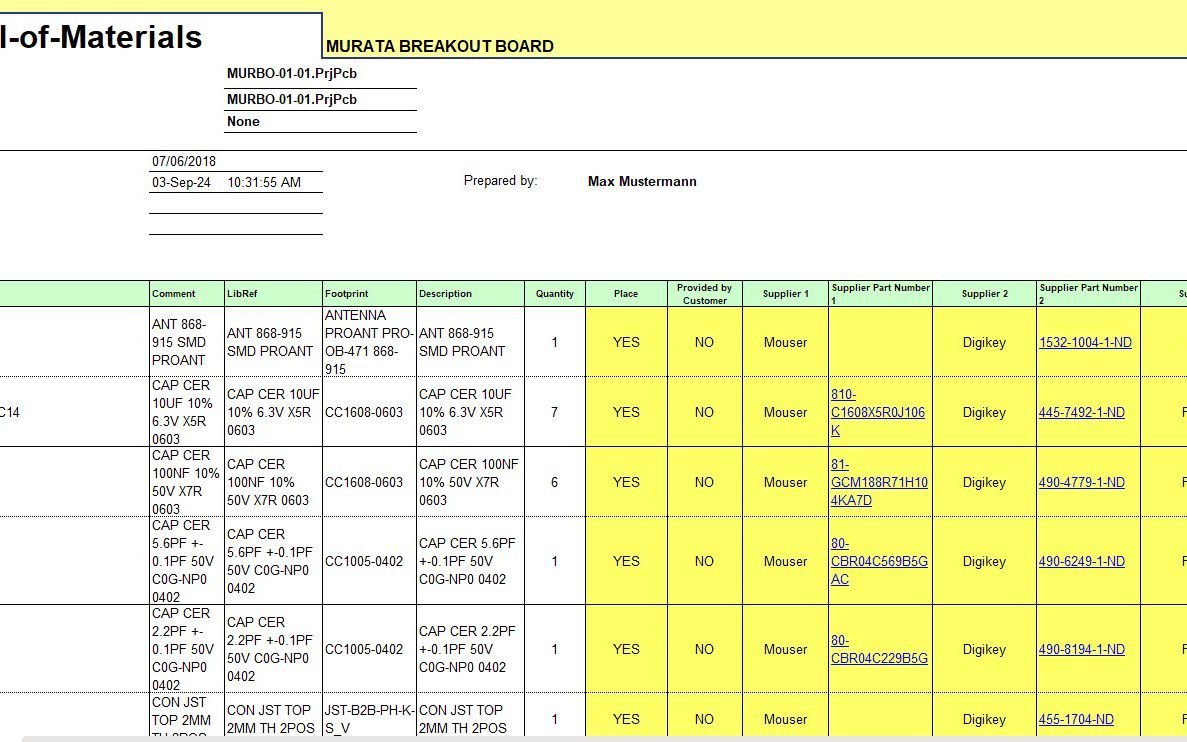
A quotation tells you what something costs; a BOM tells you what it is made of. For a villa interior package the BOM is the master parts list: every panel, door, shelf, drawer, leg, handle and hinge across the whole project, each with its own part number. If the document in front of you only lists rooms and lump sums, you are holding a quotation, not a BOM, and you will not be able to audit production against it later.
| Column on the BOM | What it tells you | Why it matters |
|---|---|---|
| Part number | Unique ID for each part | The same number later appears on crate labels |
| Description | What the part is | Kitchen base, wardrobe door, island side panel |
| Material + grade | Board core and emission class | Plywood E0 vs MDF — durability and compliance |
| Finish code | Surface specification | HPL, melamine or lacquer, plus the exact colour |
| Dimensions (mm) | Size of each part | Catches drawing-vs-production mismatches early |
| Quantity + unit | How many, measured how | Per set, per linear metre or per m² — units decide price |
| Hardware | Brand, model, function | Soft-close hinges, stainless runners |
| Unit price / subtotal | Cost per line | Shows exactly where your budget goes |
Two habits of a professional BOM: every part carries a unique number (the number that will later appear on the crate labels), and every line states its material and finish explicitly instead of referring to a generic “standard specification.” If a line says “material per drawing,” treat that cell as empty. The whole point of reading the document is to make sure nothing important is left implied.
Reading the material and finish codes
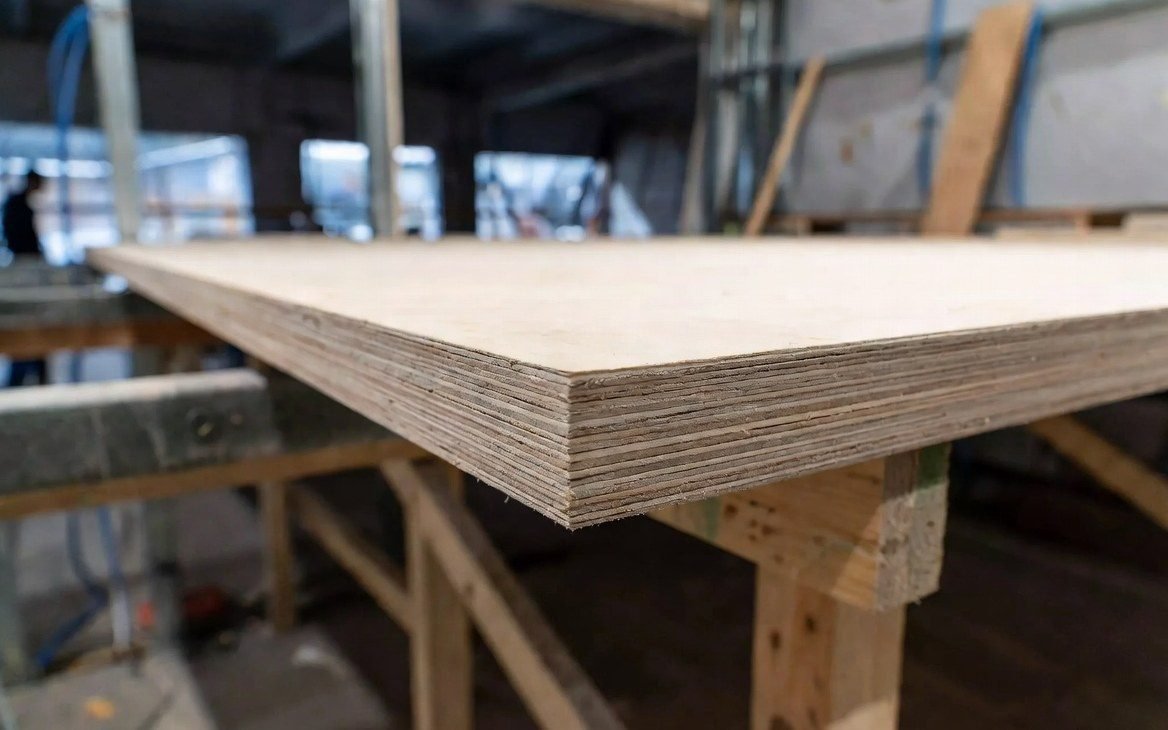
The material column is where substitution risk hides, because two boards can look identical in a photo and behave completely differently after a year of humidity cycles. Start with the core: carcase panels are usually plywood or MDF, and the BOM should name which one for which part rather than using a single blanket material for everything. Doors, where warp resistance matters most, are the lines to check first.
Next, the emission class. Boards are graded by how much formaldehyde they release. Under China’s GB/T 39600-2021 board standard the classes are E1 (≤0.124 mg/m³), E0 (≤0.050 mg/m³) and ENF (≤0.025 mg/m³); for packages bound for the United States, boards must meet the TSCA Title VI limits of 0.05 ppm for hardwood plywood, 0.09 for particleboard and 0.11 for MDF. A BOM that says “E0 board” is checkable. A BOM that says “high-grade board” is not, and the difference between those two phrases is usually the difference between a smooth project and a dispute.
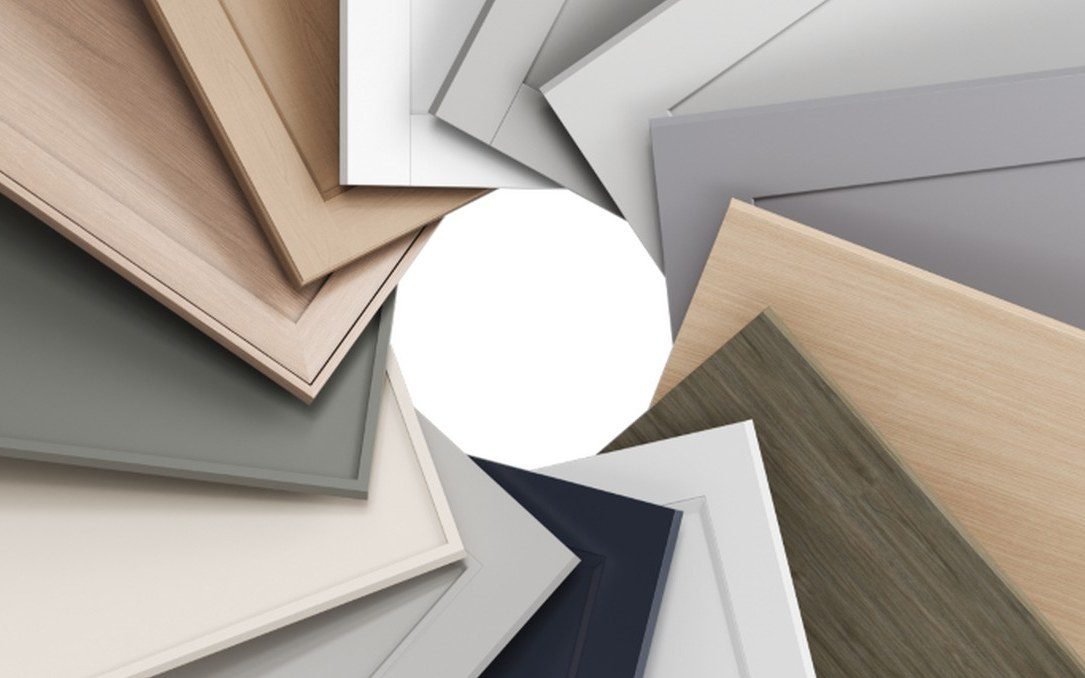
Finally, the finish code: a short code that references a sample you confirmed. If you are choosing between HPL, lacquer and melamine, the code is what locks your choice to each part — our finish comparison covers how the three behave in a villa. On humid or coastal projects, look for the moisture-rated core and the corrosion-resistant hardware specified on the same lines, so the two decisions stay tied together instead of drifting apart — the same logic that drives our Fiji island package.
Hardware: the line item most often under-specified
Hardware is where BOMs go thin, because it looks like a detail. A line that simply says “hinge, stainless” tells you almost nothing: no brand, no model, no opening angle, no soft-close function, and no count per door type. On a full villa package the hardware can run to hundreds of pieces, and the difference between a quality soft-close hinge and an unbranded one is felt every time a drawer opens, for the next ten years.
Read hardware the same way you read boards: brand and model named per position, function stated (soft-close, full overlay, 110° or 165°), and a quantity that matches the door count on the same page. For coastal or high-humidity projects, the BOM should specify corrosion-resistant stainless grades explicitly, since hardware is one of the first things to fail in salt air.
The single weakest clause in most documents is “or equivalent.” An “equivalent” chosen by the factory is a substitution you approved before you ever saw it. If a supplier insists on keeping that wording, it is the one line item most worth pushing back on, in writing, before the deposit moves.
Quantities, units and what’s left off the list
Check the units before you check the prices. Villa interiors mix units, and the mixing is where budgets quietly slip: cabinet runs are often priced per linear metre, open shelving or wall panelling per square metre, and complete fitted units per set. A BOM should state the unit on every line, and the totals at the bottom should reconcile with the sum of those lines. If a page of parts is followed by one lump-sum price, you have lost the ability to see where the money is going.
Then read what is not there, which is half the job. Ask one question and keep the answer in writing: “What is explicitly excluded from this BOM?” In villa packages the usual exclusions are stone or sintered stone countertops, glass, mirrors and steel frames, appliance panels, lighting and some ironmongery. None of that is unusual, but an exclusion you discover at the port is one you end up paying for twice. Our pricing guide breaks down how these line items interact with the base quote.
Also check the accessories: plugs, castors, handles, drawer runners and the small connectors that turn five hundred parts into one room. A BOM that lists the furniture but not the fittings is missing the last ten percent of the build — the ten percent an installer notices first.
From BOM to production: how the numbers actually get used
The reason the BOM matters so much is that it is not only a commercial document; it is the production document. The part numbers you are reading get cut, drilled and packed as numbered parts on the factory floor, and the same numbers appear on the crate labels your installers work from on site. If a part turns out wrong, the number is how it gets found, replaced and traced — which is exactly how our Foshan factory runs a villa package, as we detail on our factory page.
That also gives you the right to change control. After the deposit, the BOM should carry a version and a revision date, and any change you request should come back as a written amendment with its effect on price and lead time, not as a chat message. When the package is finished, the final BOM is the checklist you audit at pre-shipment: parts against numbers, finish codes against confirmed samples, hardware against named models, with photos as evidence. A supplier who keeps the BOM current from order to loading is a supplier you can actually hold to their specification.
A 10-point BOM review checklist before you pay
Run this list against the document before the money moves — ten minutes, in order:
- Every part carries a unique part number.
- The board core is named per part — plywood, MDF or otherwise — not one blanket material.
- The emission class is stated: E1 / E0 / ENF under GB/T 39600-2021, or TSCA Title VI compliance for US-bound goods.
- Each finish references a code tied to a sample you confirmed.
- Dimensions are in millimetres and match the approved drawings.
- Hardware lines carry brand, model and function, not just a generic name.
- Units are consistent per line type and the totals reconcile with the lines.
- The accessories and ironmongery list is attached, not implied.
- Exclusions are written out in one visible line.
- The document has a version, a revision date, and both parties’ confirmation.
If a line fails, it is cheap to fix now: one email, one revision. The same line discovered six weeks later, at the container, costs a replacement, a delay and a claim. That asymmetry is the entire reason to read the BOM before you pay.
Frequently asked questions
What is a BOM in furniture manufacturing?
A bill of materials is the complete parts list for a project: every panel, door, drawer and fitting with its material grade, finish code, dimensions, hardware and quantity. In villa interiors it is the document that links the drawings you approved to the numbered crates you receive.
Should I insist on a BOM before paying the deposit?
Yes. The deposit starts production, and the BOM is the only document you can later audit production against. If a supplier cannot produce one, you are buying on trust alone — and trust does not appear on a packing list.
What is the difference between a quotation and a BOM?
A quotation prices rooms or packages; a BOM itemises every part. You can have a fair quotation and a weak BOM at the same time, which is exactly the combination where disputes start.
Which material grade should I specify?
For most villa packages, E0-class boards under GB/T 39600-2021 are a sensible floor, and ENF where indoor air quality is a priority. For US-bound goods, boards must meet the TSCA Title VI limits. State the class on the BOM itself, not just in the chat history.
Can I change the BOM after paying the deposit?
Yes, but the change should come back as a written amendment with its effect on price and lead time. Changes agreed only in chat are the ones that get lost when the production schedule tightens.
How do I verify the finished goods match the BOM?
At pre-shipment: check parts against part numbers, finishes against confirmed samples and hardware against named models, with photos and a packing list as evidence. Our FAQ covers the inspection questions to ask before the container is sealed.


One Comment