Container Loading Optimization: Fitting a Whole Villa Interior into 1–2 Containers
Every villa buyer asks for one container. Most villas need more than one, and the reason is rarely the furniture. It is the packing around it: the cartons, the timber, and above all the stone worktops that cannot be stacked and travel in their own crates.
This article is built on numbers, not estimates. We measured two of our own 2025 packing lists, sheet by sheet, and set the results against the published internal capacities of the containers those packages shipped in. If you are planning a villa order and want to know whether you are buying one container or two, this is the arithmetic that decides it.
The ceiling and the reality
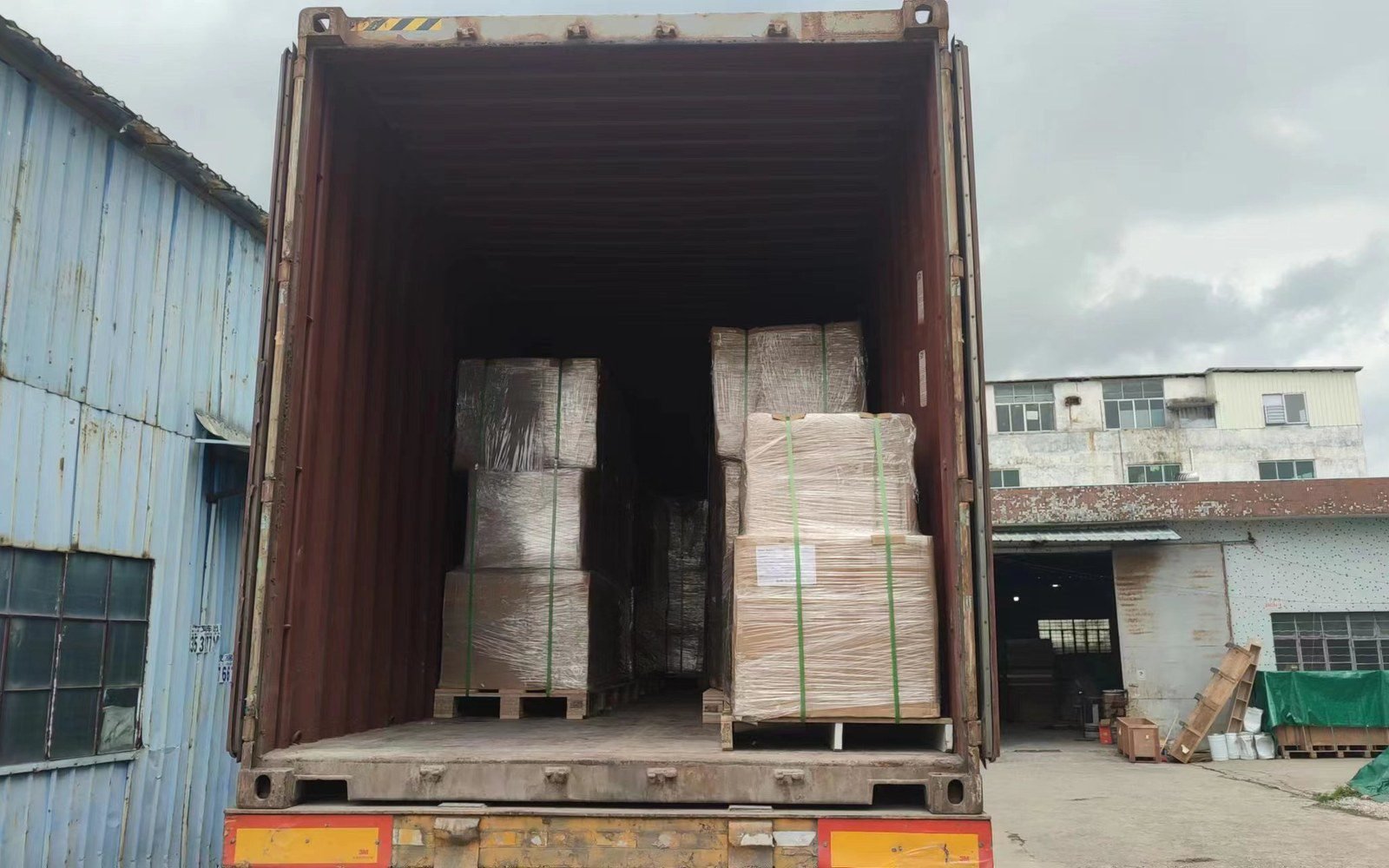
Container capacity is published as a single number, and that number is a ceiling, not a target. Current equipment examples from one major carrier list about 33.2 CBM for a 20ft standard, 67.7 CBM for a 40ft standard and 76.3 CBM for a 40ft high cube (Hapag-Lloyd equipment figures via PackToolbox, updated 2026-10-01).
A 40ft high cube measures roughly 12.03 × 2.35 × 2.70 m inside, with a door opening of 2.34 × 2.60 m and a maximum payload around 28,600 kg (Triplicate, undated). In practice, road weight limits often pull the usable figure down: a 40ft container typically carries around 26,000 to 27,000 kg of cargo before transport rules start to matter (OneBox Container, undated).
Two warnings come with those numbers, and both matter more for furniture than for almost any other cargo.
Cube is not usable capacity. Carton geometry leaves leftover space, door openings reduce usable geometry, and dunnage and load securing consume room (PackToolbox, 2026-10-01). The same source runs a worked example: a 24 CBM shipment is about 72% of a 20ft container, about 35% of a 40ft and about 31% of a high cube. It also answers the question buyers ask most directly: no, you should not plan for 100% volume utilization, because real loading needs tolerance for carton geometry, door clearance, securing and access (ibid.).
Weight can bind before volume. Dense cargo reaches payload limits with empty cube remaining (ibid.), which is exactly what happens with stone and solid timber.
Academic work on container-size optimization has treated a 95% fill rate as the highest practically achievable figure, not a planning assumption (Singapore Management University, container size optimization study, 2016). Our own loading plans sit below that, and the measured data below shows why.
What one villa actually takes
These are measured totals from our own 2025 packing lists, counted sheet by sheet. Each sheet is one room or one unit: the same structure a container is loaded in.
| Package | Scope | Packing sheets | Packages | Measured volume | 40ft HC equivalent |
|---|---|---|---|---|---|
| Project A | Two-storey villa: kitchen with stone worktops, laundry, wardrobes | 17 | 1,012 | 94.77 CBM | About 1.2 containers |
| Project A, kitchen sheet only | Main kitchen run, worktops and hardware | 1 | 562 | 62.56 CBM | About 0.8 of one container |
| Project B | 22-room whole-house package: kitchen, four bathrooms, closets | 23 | 386 | 38.09 CBM | About half of one container |
Two readings of that table are worth sitting with.
First, the kitchen dominates. Project A’s kitchen sheet alone accounts for 62.56 CBM of the project’s 94.77 CBM, two thirds of the entire shipment, for one room. A villa kitchen is not a piece of furniture in a box; it is a small container load by itself.
Second, an all-cabinetry house is dramatically smaller. Project B covers twenty-two rooms and still measures 38.09 CBM, because it contains no stone worktops. The moment a project includes countertops, glass or other flat non-stackable items, the volume curve bends sharply upward.
Where the space goes
Buyers picture furniture volume. What fills a container is package volume, and those are different numbers.
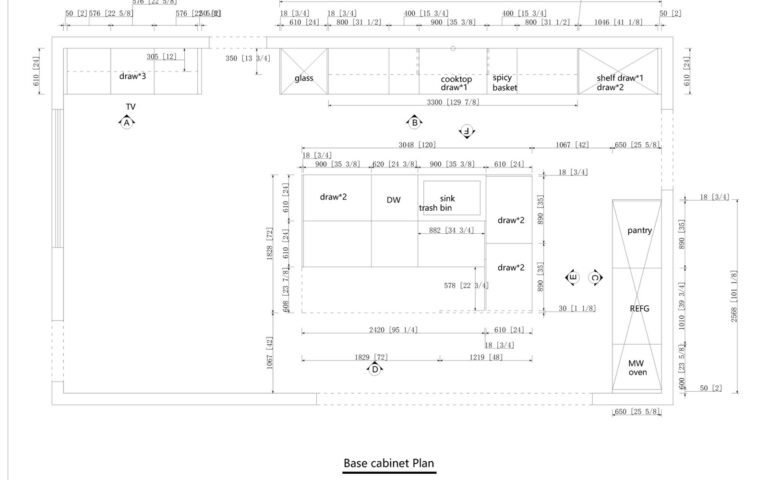
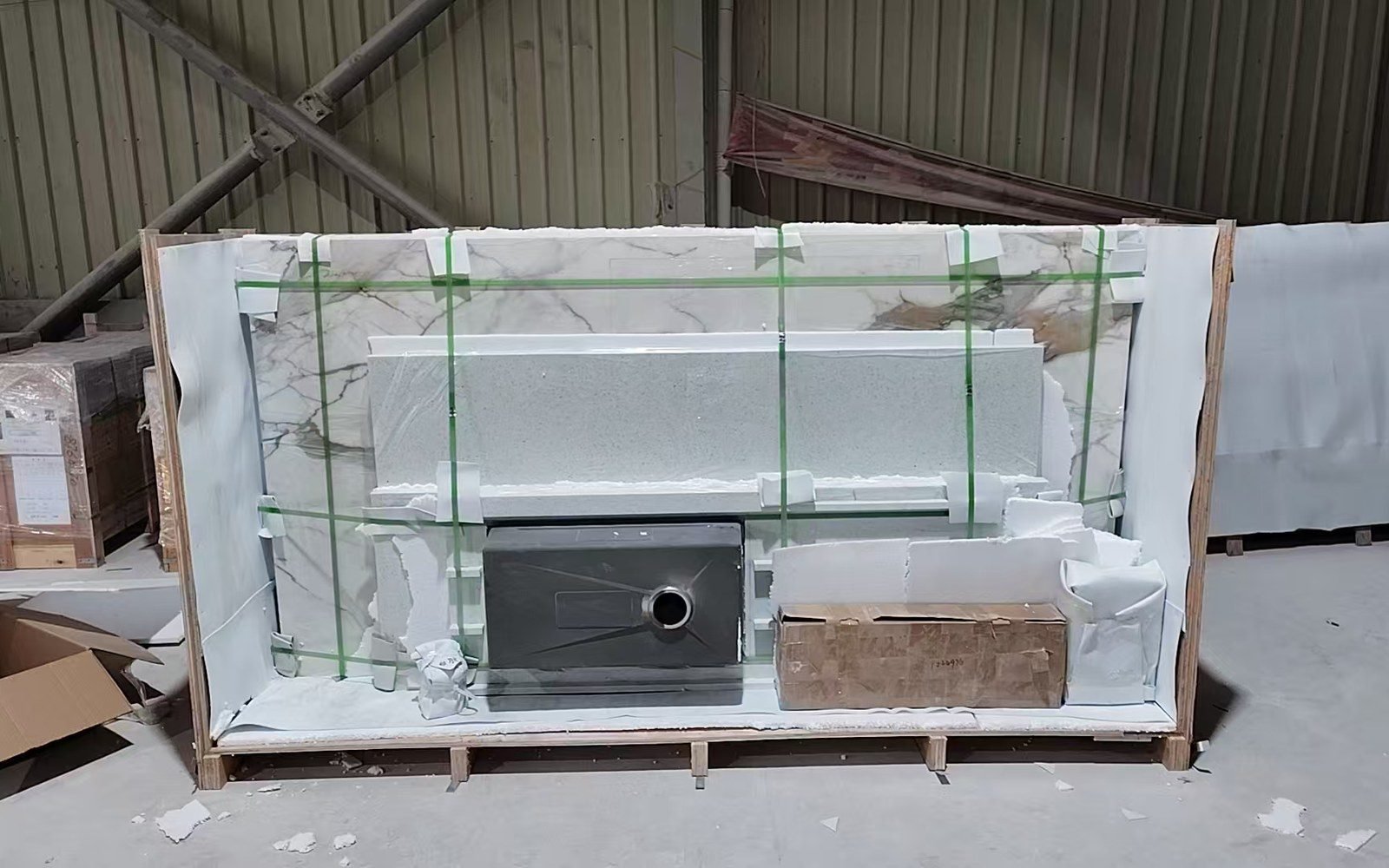
Worktops travel in their own crates, and they are enormous. In Project A’s kitchen sheet, the stone surfaces are packed on timber frames, not in cardboard. The seven worktop groups on that sheet measure about 28 CBM between them, roughly 45% of the sheet’s entire volume. A single crate holding one 2,500 × 1,100 × 1,100 mm worktop group measures 3.025 CBM on its own, and that is before the second and third groups are added.
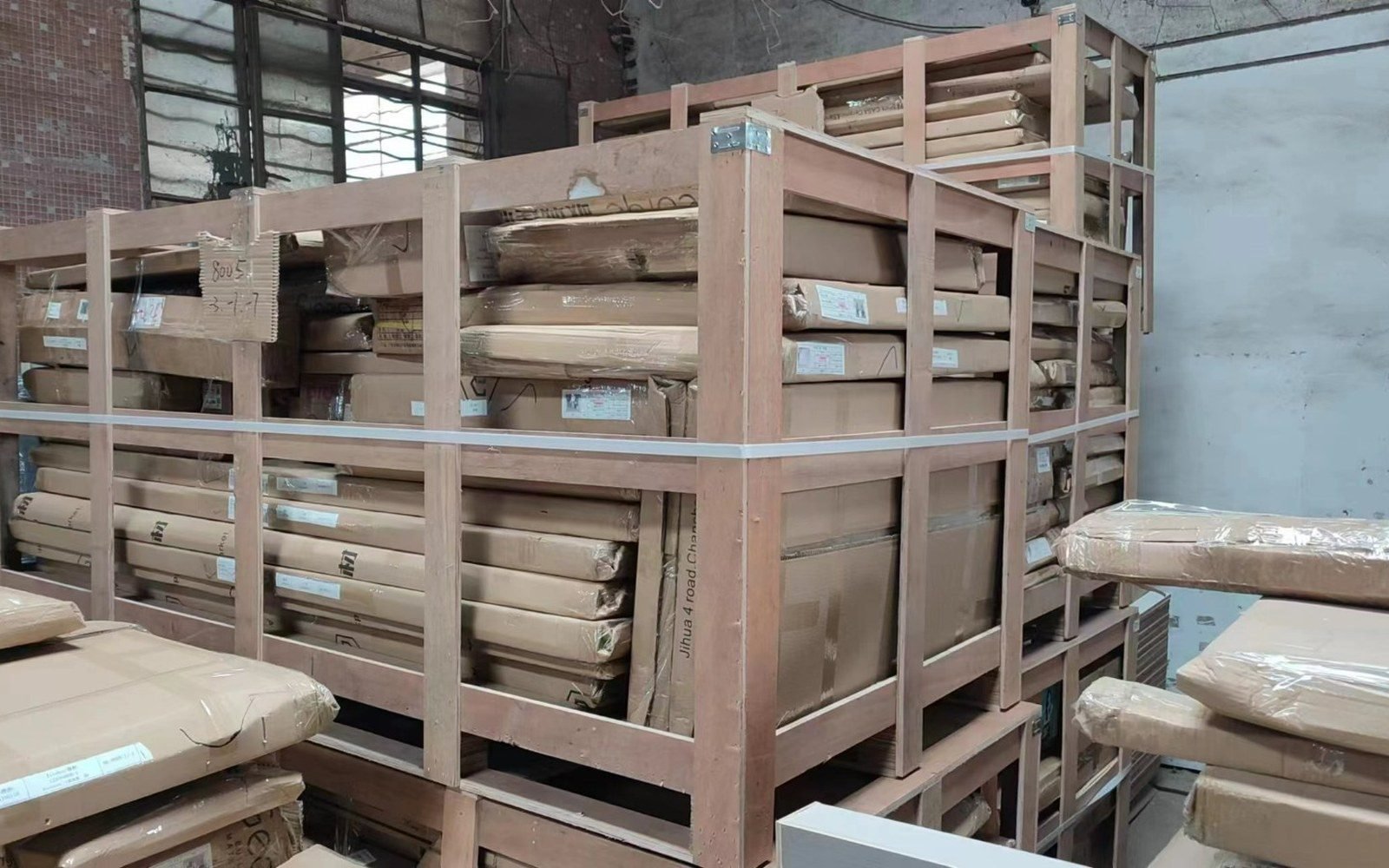
Cabinets travel flat, wrapped. A typical base cabinet measuring 870 × 715 × 95 mm occupies 0.059 CBM packed in cardboard. A wall cabinet at 800 × 410 × 60 mm occupies 0.0197 CBM. Individually these are small numbers; a villa kitchen has hundreds of them. Project A’s main kitchen sheet alone counted 562 packages.
Hardware is almost free, but it cannot be forgotten. All hardware for Project A’s kitchen fitted into ten cartons measuring 0.17 CBM in total. It is negligible in volume and decisive in installation, which is why it is packed by cabinet, not mixed into one box (Quality Check Before Loading).
Crates are heavy cargo. Project A also produced a separate timber list: 21 crates measuring 8.62 CBM, an average of about 0.41 CBM per crate. Multiply that across a project with several worktops and the crate volume alone can approach a small container.
Leftover space is real space. Irregular item shapes, door clearance and load securing all consume cube (PackToolbox, 2026-10-01). A plan that assumes every cubic metre will be filled is a plan that misses its container.
Packing methods, and why you cannot simply choose
Three packing methods appear in our packing lists, and the choice is not a preference. It is decided by what the item can survive.
– Cardboard wrap for panels and cabinet boxes. Light, cheap in volume, and how the majority of a flat-pack order travels.
– Cartons for hardware, accessories and small components. Numbered to the cabinet or room they belong to, which is what makes an overseas install sequence possible (Why We Pack by Room).
– Timber frames and crates for stone, glass and fragile long runs. Expensive in volume, non-negotiable for the items that break.
The temptation, when a project does not fit, is to ask the factory to pack the worktops in cardboard like everything else. That request saves volume and risks a whole consignment, which is why the answer is no. What can be done instead is covered in the next section.
Weight: the limit nobody plans for
Volume gets all the attention because it decides the container count, but weight decides whether the container is legal.
A 40ft high cube is rated around 28,600 kg of payload (Triplicate, undated), and in practice road transport rules often pull the usable figure to somewhere near 26,000 to 27,000 kg (OneBox Container, undated). That sounds generous until you remember what villa interiors are made of: 18 mm particleboard panels, solid timber frames and stone.
The pattern is well documented in freight planning: dense cargo reaches payload limits with significant empty cube remaining (PackToolbox, 2026-10-01). Stone surfaces are the classic case. A worktop crate can weigh several hundred kilograms, and a project with three of them, plus a stone-clad island, plus solid timber, can find itself weight-limited with visible floor space still showing in the container.
Which is why our packing lists carry a weight column alongside the volume column, and why the answer to a tight container is sometimes not a design change but a distribution decision: which items travel first, and which ones wait.
How a loading plan is built
A loading plan is not a diagram of the furniture. It is a sequence, and it starts from the room sheets.
Step one: group by room and unit. Every packing sheet is one room or one functional unit, which is why Project A produced seventeen of them. The container is planned from those sheets, not from a picture of the finished kitchen.
Step two: load in reverse installation order. The room that gets installed first is loaded last, so it comes off the container first. This is also why crates are labelled by room and cabinet number, not by sequence.
Step three: heavy and low, light and high. Dense items go on the floor, light panels stack above them, and the heaviest worktop crates go in first and stay low. A container loaded in the order the boxes arrive, not the order they are needed is a container that gets moved twice.
Step four: respect the door. A 40ft high cube door opening is about 2.34 m wide by 2.60 m high (Triplicate, undated). Any single piece that cannot pass that opening cannot ship assembled, whatever the internal volume says.
Step five: secure and record. Dunnage and load securing consume room (PackToolbox, 2026-10-01), so they are planned, not improvised, and the loaded state is photographed before the doors close. Those photographs are the first link in the evidence chain that runs to your receiving inspection and, if it ever comes to it, to your insurance claim.
Three decisions that change the volume
When a project sits between one container and two, three decisions move it further than any packing trick.
The worktop scope. In our measured kitchen sheet, worktop crates were roughly 45% of the volume. Splitting one long run into two shorter pieces, or moving a second stone surface to a later phase, changes the container decision more than anything else on the drawing.
Flat versus assembled. Some items can ship assembled, and our own packing archive includes fully assembled units leaving the workshop. Assembled furniture is faster to install and far more expensive in container volume, because an assembled wardrobe does not nest with anything. Flat-pack is the default for that reason, not for fashion.
Phase timing. If the project has a second phase, a second property, or a later purchase in the same category, moving it forward into the same container is free efficiency. Two half-containers are more expensive than one full container plus a balance shipment.
The 20ft question
Not every villa package needs a 40ft high cube, and buying capacity you do not fill is the quietest way to overpay for freight.
A 20ft standard carries about 33.2 CBM (PackToolbox, 2026-10-01), which is more than most people expect and less than a full villa. Project B in our measured set, the twenty-two room whole-house package, came to 38.09 CBM. That project does not fit a 20ft container, and it wastes more than half of a 40ft high cube. It is the classic middle case, and there are only three honest answers: accept the wasted cube, split the order into a 20ft plus a small balance shipment, or wait and consolidate with a later purchase.
Where a 20ft does win is on dense, heavy cargo. Because payload can become the limiting factor before cube for dense products, choosing by volume alone is a mistake (ibid.). A compact kitchen package in solid timber, or a stone-heavy order with no bulky panels, can be weight-limited in a 40ft and perfectly suited to a 20ft.
Two 20ft containers are not the same as one 40ft. Internal dimensions and equipment specifications differ, and the 2× rule does not hold (ibid.). We quote the container that matches the measured load, not the one that matches the habit.
The half-container problem
Project A measured 94.77 CBM against a 40ft high cube example capacity of 76.3 CBM. In practice, once you subtract the space geometry, dunnage and securing consume, the project is more than one container and less than two. That gap is the most expensive place to stand in a villa project, and there are four honest ways out.
Add the second container and fill it. If the project has a second phase, or if you can move a later purchase forward, the marginal cost of topping up a second container is usually lower than shipping the balance as loose cargo.
Split the difference with LCL. The balance of a project can travel as less-than-container load. LCL is priced per cubic metre with minimums, and it loses the cost advantage somewhere between a third and a half of a container, depending on the lane and the season. The break-even calculation is a per-lane question, and it is worth running before the order is packed.
Consolidate with another order. If you are building more than one property, or buying cabinetry and doors for the same villa in the same window, merging the two purchases into one load is free volume efficiency.
Reduce at the design stage, not the packing stage. Worktop overhangs, long unbroken island runs and oversized single-piece panels all consume crate volume. If a container decision is tight, the cheapest place to solve it is on the drawing, before anything is cut.
What we do not do is plan the load to a theoretical ceiling. Naming a fill rate above 95% would be a marketing number, not a loading plan, and the difference between a 90% plan and a 98% plan is measured in damaged worktops, not in dollars saved. Once the container decision is made, the same measured sheets tell your installation team what arrives when, which is the second half of a villa project (Install Furniture From China: Who Measures, Who Fits).
What we measure before the quote
The volume figure that matters is measured after packing, not estimated from a floor plan.
Every crate, carton and timber frame is measured as it is packed, and the packing list carries the package dimensions and the resulting volume per line. That is how the numbers in this article exist at all: they come from the same sheets we send with the goods, room by room, so the receiving team can check quantity against the list and stage crates in the right rooms on arrival.
By the time the container is loaded we can state the carton count, the gross weight, the package dimensions and the measured CBM, and those are the figures that go to your forwarder, not the factory estimate (Sea Freight Timeline). It is the same discipline that runs through the whole production file, from drawings to loading photographs (How We Work).
Frequently asked questions
How many containers does a villa interior take?
From our own measured 2025 records: a two-storey villa package with a stone-topped kitchen, laundry and wardrobes measured 94.77 CBM across 1,012 packages, which is one full 40ft high cube plus roughly a quarter of a second. A 22-room whole-house cabinetry package with no stone measured 38.09 CBM across 386 packages, or about half a container. Floor area is a poor predictor; the packing list is the only real answer.
Why is my shipment so much bigger than the furniture I can see?
Because you are shipping packages, not furniture. Cabinet boxes travel flat but numerous, hardware travels in cartons, and stone worktops travel in timber crates that cannot be nested. In our measured kitchen sheet, worktop crates alone accounted for roughly 45% of the volume.
Can the factory make it fit into one container?
Sometimes, by design changes, not packing tricks. Reducing an oversized worktop run, splitting a long island, or moving a second-phase purchase forward can all bring a project under the line. Packing stone in cardboard is not an available option, and a supplier who offers it is transferring risk to you, not solving your problem.
Is it cheaper to ship one full container or a container plus LCL?
It depends on the balance volume and the lane. LCL is priced per cubic metre with minimum charges, and the advantage narrows as the balance grows; somewhere in the region of a third to a half of a container, the second container usually wins. We run that comparison for every villa order before quoting (LCL vs FCL for Villa Interior Exports).
What fill rate should I expect?
Published examples put a 40ft high cube at about 76.3 CBM of internal volume, but that is a ceiling, not a target, because carton geometry, door clearance and securing all consume space (PackToolbox, 2026-10-01). Academic work has treated 95% as the practical maximum. For mixed furniture loads we plan below that, and where the binding constraint is weight or non-stackable stone, the container can be full while the cube is not.
When do I get the real numbers?
After packing, not after the deposit. Our packing lists carry measured package dimensions and volumes line by line, and the final carton count, gross weight and CBM are confirmed when the container is loaded. Those measured figures are what your forwarder and your customs broker need, and they decide the port charges and clearance paperwork on the other side (How Incoterms Change What You Pay).
My supplier says the container will be weight-limited. What does that mean for me?
It means the goods will reach the payload ceiling before the container looks full, which is common with stone, solid timber and dense board. A 40ft high cube is rated near 28,600 kg, with practical road limits often closer to 26,000 to 27,000 kg (Triplicate, undated; OneBox Container, undated). The fix is distribution, not packing: move the heaviest crates into one container, and let the balance travel separately.
Why can’t the worktops simply be packed in cardboard like the cabinets?
Because stone is brittle, heavy and flat, and it cannot nest with anything. Timber framing is what keeps a three metre surface intact across an ocean, and removing it trades container volume for breakage risk. Anyone offering to ship worktops unwrapped is transferring that risk to you, not saving you money.
If you would like your own project measured against these numbers, send us the room list and the worktop scope, and we will tell you honestly whether you are buying one container or two. It takes less time than the argument about it, and it is the only way to price the freight correctly (Shipping Guide).