Complete Villa Interior: What’s Included in a Full Package
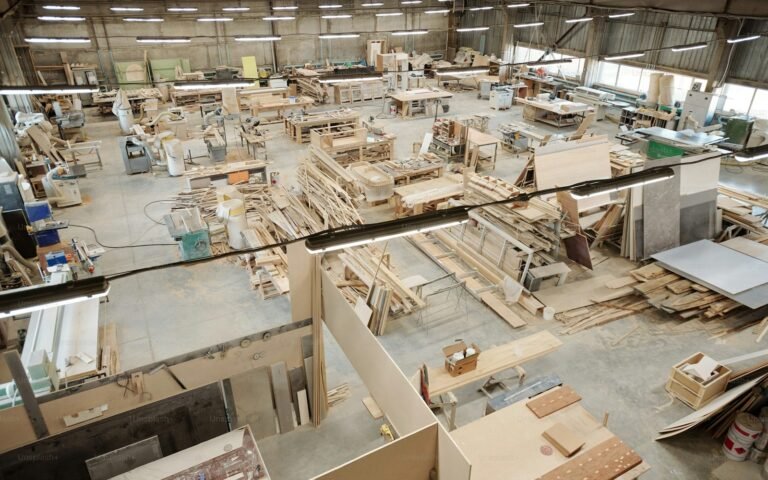
A complete villa interior package is everything the building team does not need to source separately once the shell is finished: the kitchen, the wardrobes and built-in storage, the joinery, and the finishes, hardware and documentation that turn them from drawings into installable units. It is produced as one coordinated set from one factory, numbered and flat-packed so a local team can build the villa’s interiors from crate labels. “Complete” is the word that matters: it means one supplier’s responsibility covers the whole interior fit-out, not you managing a kitchen maker, a joiner, a glass supplier and a hardware importer on your own.
This guide walks through what a full villa interior package covers room by room, the parts you don’t usually see until the doors open, the documents that make it a package, not a pile of crates, and — just as importantly — what a full package deliberately leaves out, so the scope is clear before the first deposit. It fits together with our villa interiors sourcing guide and the pricing guide for what moves the number.
In This Guide
The scope: which rooms a full package covers
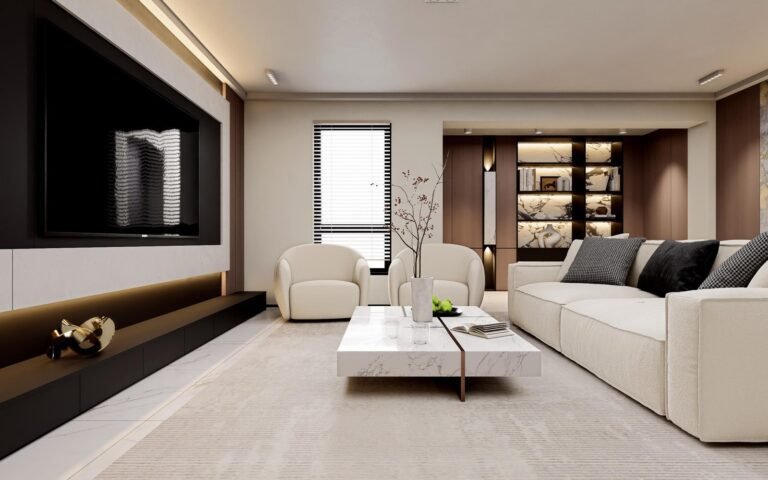
A villa interior package is normally planned around the built-in rooms: the kitchen with its base units, tall units and island; walk-in wardrobes and bedroom storage; the TV wall and media joinery; bar or study units; powder and laundry vanities; and, where the design calls for it, built-in bookcases and display walls. The defining feature is not the list of rooms but their coordination: one factory, one set of confirmed finishes, one hardware system, and a single bill of materials that the whole villa draws from.
That coordination is the actual product you are buying. When the kitchen, the wardrobes and the hallway joinery come from one drawing set, the colours match across rooms, the heights align at every wall, the reveals stay consistent, and nothing depends on two suppliers meeting in the middle of a wall. A villa owner who has split those trades across several makers knows exactly what goes wrong when that happens — and a full package exists to make it structurally impossible.
The kitchen: the most spec-heavy room in the package
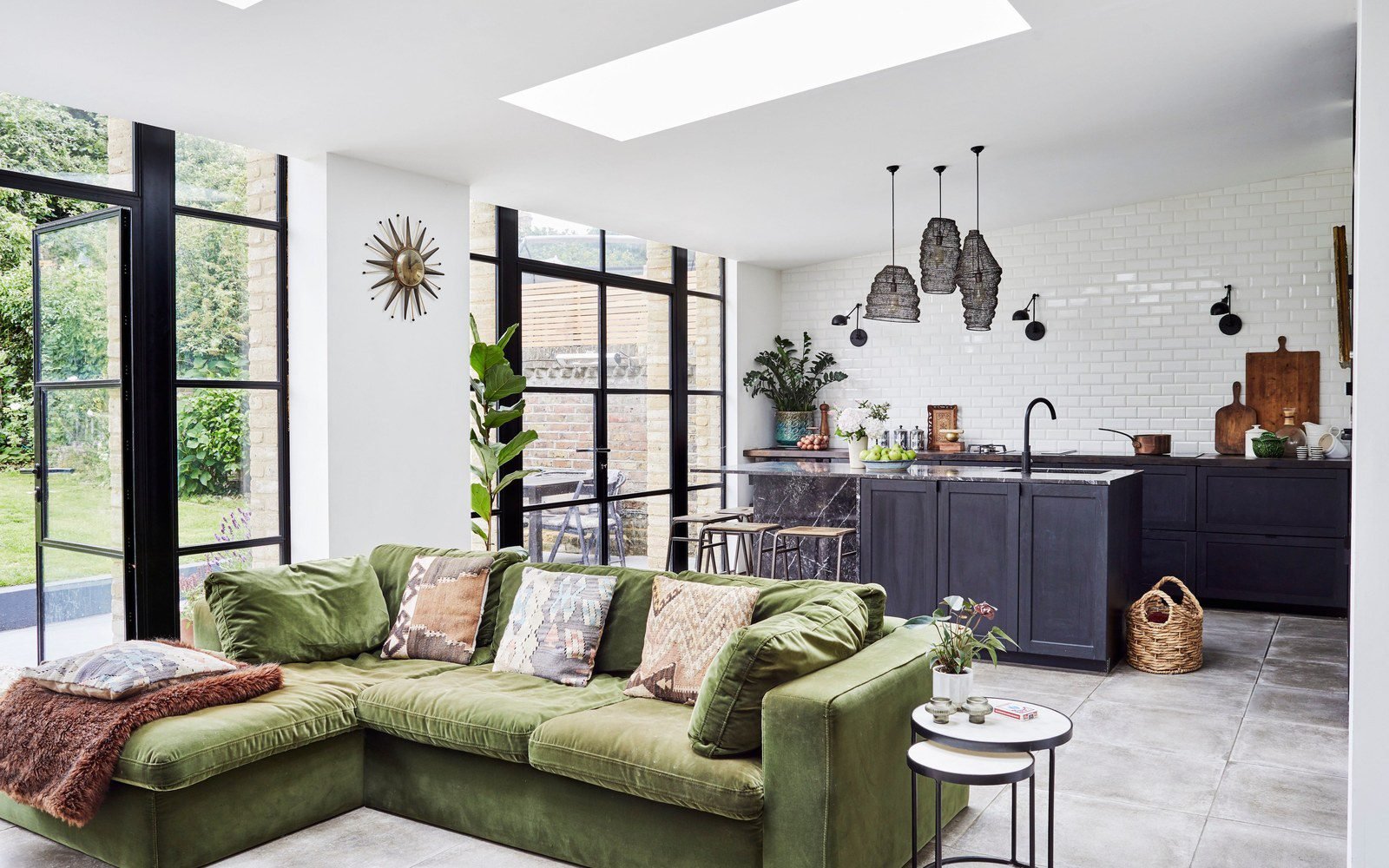
The kitchen carries the most detail per square metre in the whole package: base units, tall units, wall cabinets, the island, appliance panels, and the worktop specification. Every drawer, door and hinge is a line on the BOM, and the kitchen is where finish quality gets judged first, because it is the most-touched room in the house and the one visitors see up close.
A full package specifies the kitchen down to the components, not the look: the board core and its emission class, the finish system on doors versus carcases, the hardware named by brand and model, the handles, and the cut-out provisions for appliances, sinks and cooktops so the openings arrive correct on the first try. Our finish comparison covers how HPL, lacquer and melamine each behave in a kitchen, which is the first decision that ripples through the rest of the BOM.

Wardrobes, storage and built-in joinery
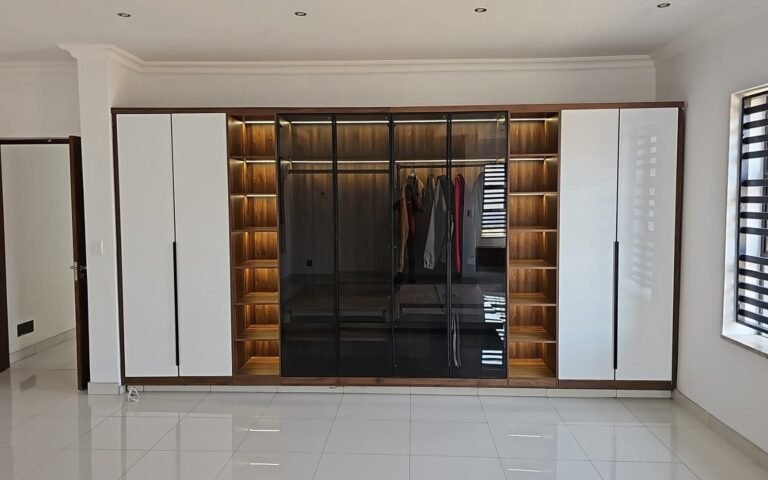
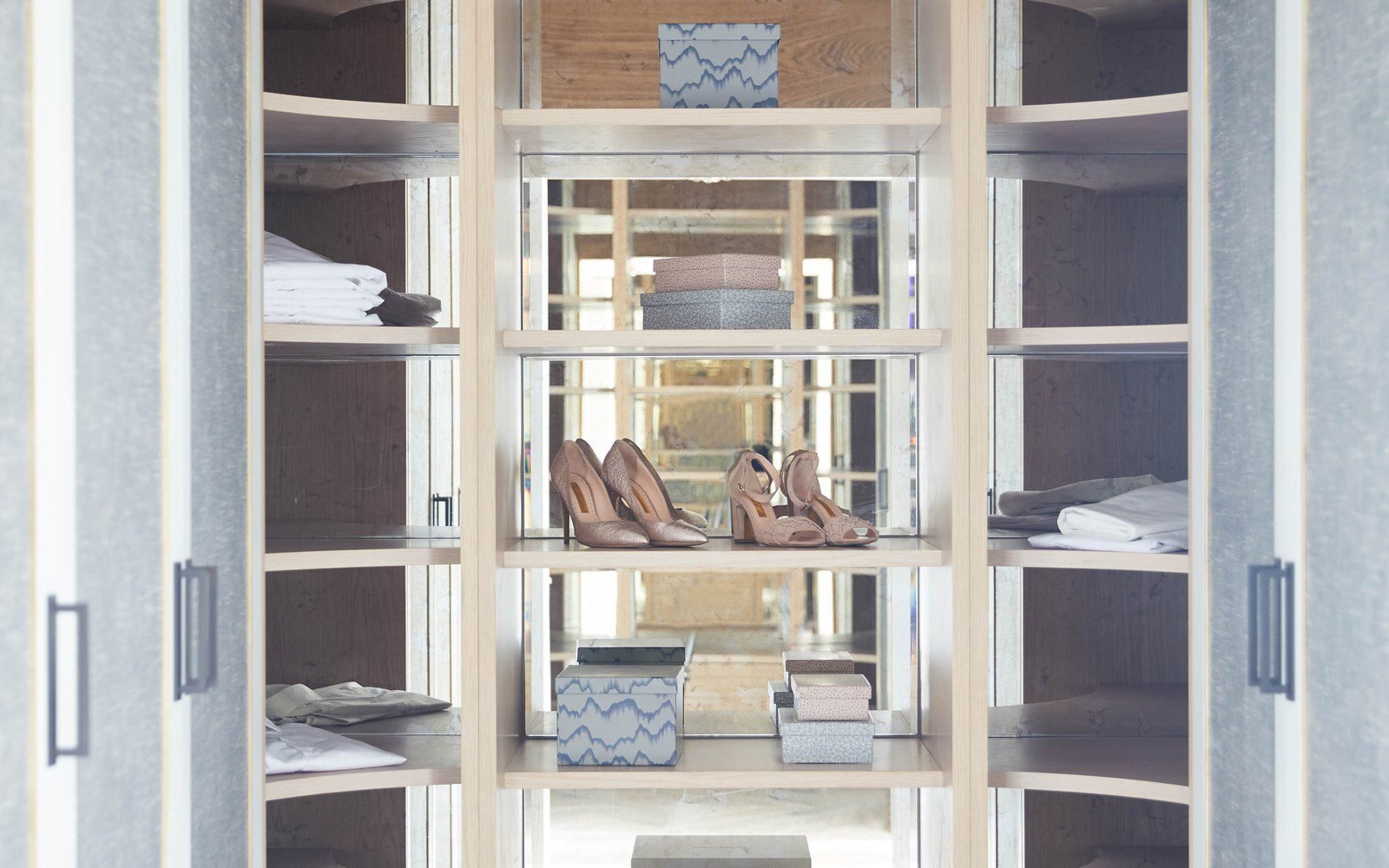
The wardrobes and built-ins are where a full package shows its value over off-the-shelf furniture. A walk-in closet is measured to the room, so every bay, rail, shelf and pull-out is a numbered part, not a catalogue item. The same is true of the TV wall, the bookcases and the bar units, which are drawn around the villa’s actual dimensions instead of the other way round, and fitted to the walls the building team leaves for them.
Because these pieces are made to the room, they are also the parts most sensitive to the drawings being right. That is why the confirmed drawings and the BOM are locked together before production starts, exactly as the BOM reading guide explains: a wardrobe that is wrong is not a wardrobe you can swap, it is a set of numbered panels that would each need a replacement run.
Finishes, hardware and the parts you don’t see
A full package is not only the boxes. It includes the finish system across the whole project, so a door in the hallway and a door in the wardrobe are specified from the same confirmed samples and age in the same way. It includes the hardware set — hinges, runners, lift systems and handles — named by brand and model per position, not described as “stainless” or “soft close”. And it includes the fittings that make five hundred parts into rooms: the plugs, castors, connectors, and the glass, mirrors and stone where the design calls for them.
The “invisible” parts are the ones that age the villa. The hardware is what you feel every day, and the core boards are what keep doors square through seasons of humidity, which is why both belong on the BOM as named specifications instead of assumptions. Both are also what the numbered production process carries from the drawing floor to the crates: the material codes travel with the parts, so what was specified is what gets built.
The documents that make it a package
The thing that separates a full package from a shipment of furniture is the paper that travels with it. A complete set includes the approved drawings, the bill of materials, a packing list that maps every crate to its contents and destination room, and the installation notes that tell the local team how the numbered parts go together. None of it is decoration; all of it is the control system for the project.
The documents are what you use at every checkpoint. The BOM is what you audit the finished goods against before the container seals. The packing list is what the installers work from on site, crate by crate. The drawings are the reference whenever a question comes up on a wall that no longer matches anyone’s memory. A villa interior becomes a “package” the moment its parts can be identified, checked and re-ordered by number — the same logic our Fiji island case relied on to hand the room to a small local crew.
What a full package deliberately leaves out
Honest scope matters as much as the list above. A full villa interior package typically does not include the villa’s electrical and plumbing rough-in, the appliances themselves, or the site works the building team owns, and stone or sintered-stone tops and glass can sit on either side of the line depending on how the BOM is written. The point is not to hide the exclusions but to write them down, in one visible line, so that nothing is “discovered” at the port or in the last week of installation.
When the exclusions are agreed in writing and the inclusions are itemised, the package boundary is clear: everything the BOM says is in the crates arrives in the crates, and every crate can be checked against the list. That boundary is what our pricing guide prices, and it is the scope question the FAQ answers most often.
Frequently asked questions
What is a complete villa interior package?
It is the full set of built-in rooms — kitchen, wardrobes, joinery — plus the finishes, hardware, fittings and documents that turn the design into numbered, flat-packed units from one factory. One supplier’s responsibility covers the interior fit-out, and every part can be identified by its number.
Which rooms are usually included?
The kitchen, walk-in wardrobes and bedroom storage, TV and media walls, bar or study units, and powder or laundry vanities. Built-in bookcases and display walls join the set where the design calls for them, and the room list is fixed in the BOM before production.
Are hardware and glass included?
Hardware is included as a named, modelled set per position. Glass, mirrors and stone can be inside or outside the package depending on how the BOM is written, which is why the exclusions line exists: the document tells you exactly which side of the line each item sits on.
Who installs a full package?
A local installation team, working from the numbered crates and the installation notes. The factory’s job is to make the package self-explaining so the installers need few tools and no guessing, and to stay reachable by number if a part needs tracing.
Can a package be delivered in phases?
Yes. A full villa is often split into phases by room and priority, with the first rooms installed while the shell is still finishing. Each phase is its own coordinated set with its own BOM section and packing list, so the phases never leave a wall half-owned.
How is a full package priced?
From the itemised BOM: the packed volume, the finish system per part, and the named hardware set, plus the lane and container choice for delivery. That is why two villas that look similar on the drawings can price differently — the number is built from the parts list, not from a lump sum.