Villa Interior Trends 2026: 7 Directions to Specify
“Villa interior trends 2026” is not one look. It is seven directions moving the same way: from showy luxury to quiet, material-honest interiors. Warm wood replaces cool grey as the anchor tone; clay, olive and burnt-brick accents come in; sharp 90-degree corners give way to arches, curves and rounded forms; integrated LED lighting moves from add-on to standard; and the walk-in closet becomes a retail-style room of its own. The seventh direction is not a look at all: buyers in 2026 are specifying the whole villa as one coordinated package, not seven separate orders.
For anyone sourcing a villa interior from China, that is the news that matters most. Every one of these trends translates into a specification line — a finish system, a veneer batch rule, a panel profile, a lighting plan, a hardware list — and the trends reward the manufacturers who can write those lines down and hit them across a full container. This guide walks the seven directions, and for each one says what to specify.
In This Guide
- Quiet Luxury: The 2026 Baseline
- Warm Wood as the Anchor Tone
- Earthy Accents: Clay, Olive and Burnt Brick
- Curved Forms and Organic Modern
- Integrated LED Becomes Standard
- The Retail-Style Walk-In
- One Coordinated Package, Not Seven Suppliers
- The 2026 Trends at a Glance
- Frequently Asked Questions
- What is the biggest villa interior trend in 2026?
- Do the 2026 trends cost more to manufacture?
- Can a China factory actually produce curved and custom-colour furniture?
- How do I keep the same wood tone across every room?
- Is integrated LED lighting worth specifying in a villa?
- Should I follow the 2026 trends, or keep the design classic?
Quiet luxury: the 2026 baseline
Quiet luxury is the umbrella under the other six trends. In 2026 villa interiors, the message of the room comes from material and proportion, not from logos, glossy drama or busy detailing: calm palettes, honest surfaces, hardware you notice with your hand before your eye. The shift is visible across the 2026 design coverage — fewer decorative accents, more long horizontal lines, more natural texture, and a comfort level that reads expensive without advertising it.
Why it matters at specification: matte and low-sheen surfaces are unforgiving. A sprayed matte lacquer that would pass under a gloss finish reveals dust, orange-peel and ripples at room light, so quiet-luxury projects push the finish system up a grade. When you brief a factory on this direction, be explicit about the finish, not just the colour: the difference between HPL, melamine and lacquered doors is the difference between a trend you can hold and a trend that fades. The HPL vs lacquer vs melamine breakdown covers the trade-offs in detail — and the sheen level belongs in the BOM, written down, because it is the line that separates the two.
Warm wood as the anchor tone

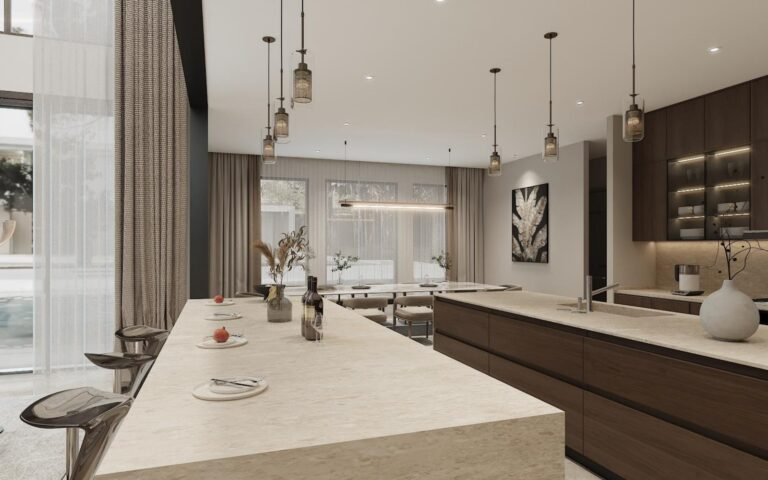
Walk through any strong 2026 villa interior and the anchor is wood — oak, walnut, white oak and ash in warm honey-to-cognac tones, used as wall panelling, casework fronts and table surfaces. The cool grey-and-white palette of the last decade has effectively retired: in 2026 the walls and the built-ins carry the warmth, and the stone, the bouclé and the metal accents play against it.
The manufacturing implication is a batch problem, not a colour problem. Wood is a natural material, so two doors cut from different veneer rolls can sit visibly apart in a run of twelve. When specifying warm wood across a villa, the line that protects you is the batching rule: same veneer species, same grade, same batch, cut in one nesting run, with a matched sample signed off before production starts. Ask the factory how it sequences the cut, and insist on the sample sign-off in writing. Warm wood is the trend that most rewards a factory with controlled material flow — and the one that most punishes a factory that mixes batches to hit a delivery date.
Earthy accents: clay, olive and burnt brick
The second colour movement of 2026 is the earthy accent: clay, terracotta, burnt brick and olive green appearing as painted doors, fluted panels, islands and feature walls. In the finished room the effect is a Mediterranean warmth — the arch and the terracotta wall doing the talking — while the rest of the palette stays quiet. Fluted and grooved panel profiles are the most repeated hardware of the trend, because the pattern carries the accent without the painted surface getting busy.
From the factory floor this is a colour-and-profile specification. Custom painted colours need the paint system specified together with the colour: waterborne and PU systems age and shift differently, and a clay or olive tone mixed once and sprayed across two weeks will drift unless the recipe is locked and batch-recorded. Fluted profiles need the groove spacing, the depth and the edge treatment written into the BOM, because a two-millimetre change in groove spacing reads as a different product on site. Order the accent-colour samples early — custom colour matching is one of the few steps in a villa run that genuinely needs lead time, and it is the step that is impossible to fix after the finish is sprayed.
Curved forms and organic modern
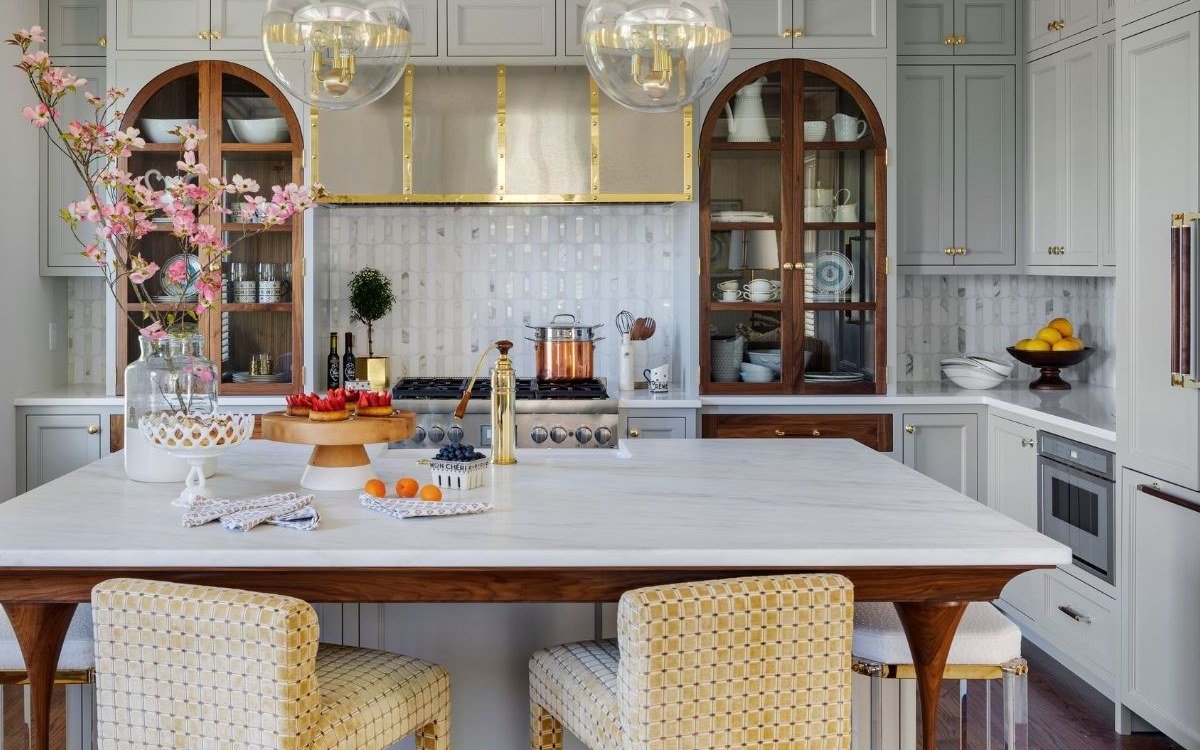
The geometric shift of 2026 is the retreat of the right angle. Arched door openings, rounded cabinet fronts, curved islands, bowed glass-front displays and softly rounded edges are now standard in the walk-in, the kitchen and the living room — and together with the warm palette they define the organic-modern look that dominates the 2026 coverage. The arch in a display cabinet is doing real work: it is one of the most photographed details in current villa interiors, and the shape that sells the whole room in the listing.
Curves are also where a quotation hides its risk. A 90-degree case is cut from straight panels; a curved case needs bent or CNC-formed panels, a curved edge band, and joinery that tolerates the arc. Specify the radius, the panel thickness and the edge treatment, and ask the factory to state how the curve is produced — bent board, CNC-cut, or assembled from ribs — because the method decides the surface quality and the yield. Curved parts carry higher scrap rates, so a factory that quotes them at the same margin as straight parts is underpricing the risk; the ones that price it honestly are the ones likely to hit the tolerance when the crates open.
Integrated LED becomes standard
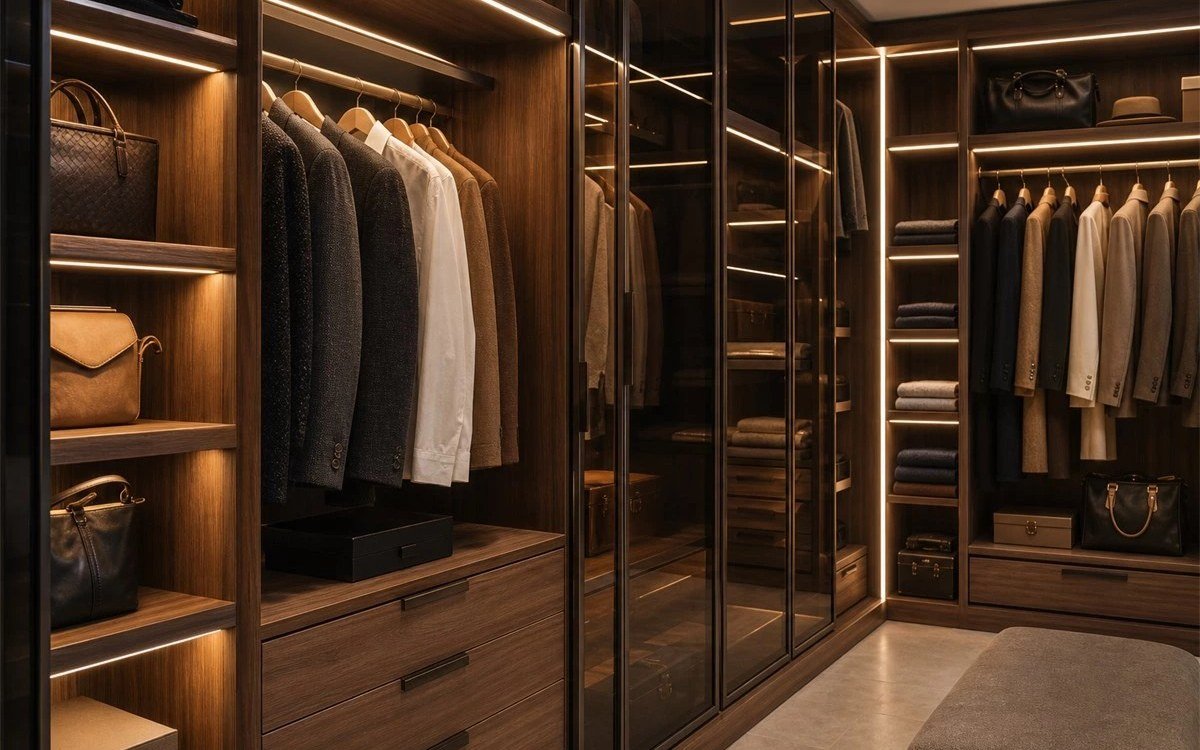
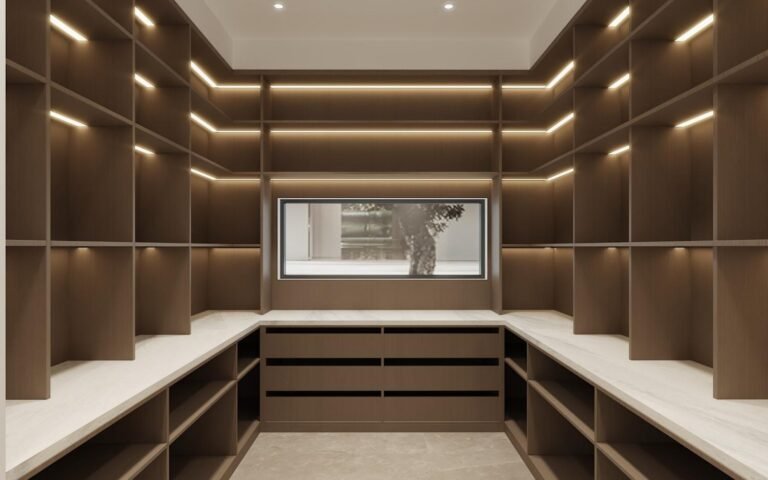
The lighting change is the quietest of the seven and the least reversible: in 2026 villas, LED is no longer a decorative add-on, it is part of the furniture specification. Sensor-activated lighting in the walk-in — doors open, light follows you to the shelf — is the most-requested upgrade in current closet-design coverage, alongside toe-kick lighting, glass-front display lighting and island perimeter lighting. Buyers now ask for the lighting plan the way they ask for the hardware list.
That changes what you should specify, and what you should inspect. Write the lighting into the BOM as its own line: strip type, colour temperature (3000 K for the 2026 warmth), CRI of 90 or above for displaying wood and fabric, sensor type, driver location and the IP rating for any wet-room application. Then add the LED circuits to your pre-shipment check: every strip powered, every sensor cycled, while the crates are still open and the fix is a ten-minute swap. A dead strip found after the container seals is a rework across an ocean. The pre-shipment inspection guide is where that check belongs, because it is the last moment the light is still reachable.
The retail-style walk-in
The walk-in of 2026 is designed like a concept store, not like a box. The centre island anchors the room — velvet-lined drawers, a stone or marble top, room to lay things out; the glass-front display sections show the shoes, the bags and the kept few; a vanity corner handles grooming; and a two-tier layout separates everyday hanging from the curated wall. The result is a room where the storage is the decoration, which is exactly the quiet-luxury logic applied to a single room.
For the manufacturer, the walk-in is where the BOM gets long. Glass-front doors carry their own hardware line — hinges, closers, glass panel thickness and frame profile. The island is a separate structural item with its own top material and its own load case, and the internal fittings — valet rods, tie rails, tray systems, jewellery inserts — arrive as a fitted list that must be counted piece by piece at inspection. If you are comparing factories on a walk-in, compare the internal fittings list, not the cabinet quote: the fittings are where the retail feel actually lives, and they are where a lesser quotation silently substitutes.
One coordinated package, not seven suppliers
The direction underneath all six is the shift in how 2026 villas are bought: one coordinated package instead of a kitchen from one supplier, a walk-in from another and loose furniture from a third. The look depends on coordination — the same wood tone, the same finish, the same hardware family repeating from the living room to the master suite — and each extra supplier is another chance for that coordination to break. Industry research puts the flat-pack and modular furniture market at roughly USD 18.6 billion in 2026, growing at about 7% a year to USD 33.9 billion by 2035, and the growth is concentrated in exactly this coordinated, full-interior segment.
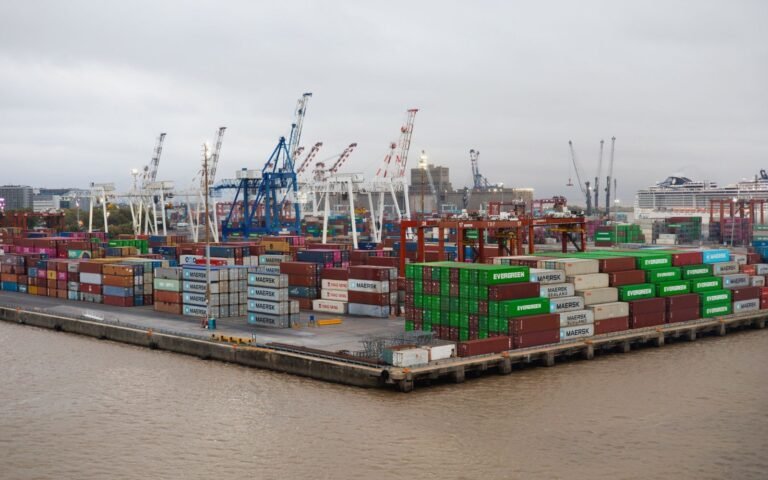
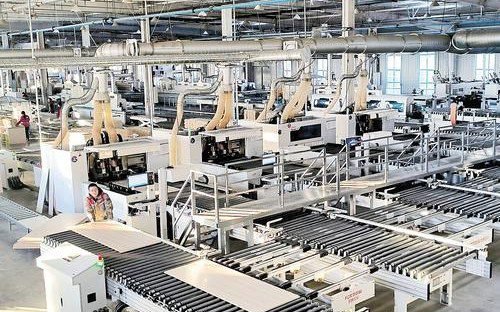
On the supply side, the high-end villa work is increasingly concentrated in Foshan, the cluster behind the large majority of China’s premium furniture production around the world’s largest wholesale market — and the factories that have earned the full-package work run it as one document: a single BOM across every room, one veneer batch plan, one hardware family, one packing regime and one inspection gate before the seal. That is the difference between a complete villa package and a container of good-looking parts: the package is what keeps the trends looking like one house when they arrive. The numbered factory case, the Fiji island install and the shipping guide show the same chain at working scale.
The 2026 trends at a glance
The seven directions reduce to seven specification lines. That is the practical test of a trend: if it cannot be written into a BOM, it is a photo; if it can, it is a product.
| Trend | What it looks like | The spec line that locks it in |
|---|---|---|
| Quiet luxury | Matte surfaces, calm palette, no logos | Sheen level + finish system in the BOM, sample sign-off |
| Warm wood anchor | Oak and walnut panelling, honey-to-cognac fronts | Same-veneer batch rule, one nesting run |
| Earthy accents | Clay, olive, burnt brick; fluted profiles | Locked paint recipe + groove dimensions |
| Curved forms | Arches, rounded fronts, curved islands | Radius, production method, edge banding |
| Integrated LED | Sensor lighting, glass display lighting | CCT 3000 K, CRI 90+, sensor and IP rating |
| Retail walk-in | Centre island, glass displays, two tiers | Fitted hardware list, glass door spec |
| Coordinated package | One house, one material language | Single BOM, one batch plan, one inspection gate |
The common thread: 2026 rewards the manufacturer that treats the trend as a tolerance problem rather than a style problem. Every direction above is a measurable property — sheen, batch, recipe, radius, lumens, piece count — and the villa that survives the container is the one where those properties were written down first and checked last, at the gate in the production run.
Frequently asked questions
What is the biggest villa interior trend in 2026?
Quiet luxury, expressed through the six concrete directions in this guide: warm wood as the anchor tone, earthy clay and olive accents, curved and arched forms, integrated LED lighting, the retail-style walk-in — and the one that matters most at ordering time, buying the whole villa as a single coordinated package rather than separate room orders.
Do the 2026 trends cost more to manufacture?
They change where the cost sits rather than the total. Matte finishes, curved panels and custom colours all carry more production care than gloss and straight runs, so a quotation that prices them identically to standard work is underpricing the risk. The cost that never appears in the unit price is the coordination cost of separate suppliers — which the single package removes.
Can a China factory actually produce curved and custom-colour furniture?
Yes — it is core work in the high-end cluster. Bent and CNC-formed curves, custom-mixed paint colours and fluted profiles are routine in the Foshan premium factories; what varies is tolerance discipline. The specification is the test: radius, method and edge treatment written down, and a sample signed off before production. A factory that pushes back on writing the curve spec is telling you where the risk will land.
How do I keep the same wood tone across every room?
Write the batch rule into the agreement: same veneer species and grade, one batch, one nesting run, and a signed sample before cutting starts. Rooms ordered in separate containers or from separate factories cannot share a batch, which is the structural reason the coordinated package exists.
Is integrated LED lighting worth specifying in a villa?
If the villa is bought as it will live, yes: the lighting is part of the 2026 look, and retrofitting it later costs more than wiring it at production. Specify the colour temperature, CRI 90 or above, the sensor type and the IP rating in the BOM — and test every circuit at pre-shipment inspection while the crates are still open.
Should I follow the 2026 trends, or keep the design classic?
The trends are not a costume; they are the direction the baseline has already moved, and a “classic” villa ordered in 2026 that ignores warm wood and integrated lighting will read dated at handover. The durable play is to specify the trends as materials and systems — wood tone, finish, curve, lighting — rather than as decorative signatures, so the house ages with them instead of against them.
Send us your moodboard or your drawings and we will map the 2026 trends onto a specification sheet: finish, wood batch, curves, lighting and hardware, room by room.