Fiji Island Villa: Delivering a Full Interior Package Across 8,000 km
You can deliver a complete villa interior — kitchen, wardrobes, joinery and finishing — to a remote Pacific island, and have it install cleanly, if three things are right: the materials are chosen for heat, humidity and salt air, the package is numbered and packed so a small local team can build it, and the paperwork clears customs without losing a month at port. Distance is not actually the hard part. Fiji sits some 7,000–8,000 km from our Foshan factory and the container is at sea for around a month, but neither is unusual. What is unusual is that there is no easy way to go back and fix a mistake, so almost every decision has to be right before the container is loaded.
This is what a Fiji villa project looks like from the first drawing to the day the installers close up the last unit. For the full client workflow from drawings to delivery, see our villa interiors sourcing guide.
In This Guide
- What Makes an Island Villa Different From a Mainland One
- Choosing Materials That Survive Heat, Humidity and Salt Air
- Packing a Villa So a Small Local Team Can Install It
- The Sea Leg: Transit Time, Transshipment and Timing
- Getting It Through Fiji Customs Without Delays
- What the Client Experiences From Order to Keys
- Frequently Asked Questions
What makes an island villa different from a mainland one
On a mainland project, if a part arrives wrong or an installer is unsure, you call the supplier or the cabinetmaker and it gets sorted the same week. On a Fiji island villa the factory is on another continent, the sea crossing has already happened, and the local crew may be the only people who can act. So the whole project is designed to remove the need for a callback.
Every part is numbered and pre-drilled so the room rebuilds itself from its labels, and every material is chosen to survive the climate without a second visit. The constraint changes the entire approach: you are not shipping furniture to a site, you are shipping a self-explaining kit to a site that is slow and expensive to reach again. Every choice on the project, from the joinery details to the packing method, is made with one question in mind: can this be completed correctly without us being there?
Choosing materials that survive heat, humidity and salt air
Fiji is warm and humid, and a coastal villa sits in salt air that quietly attacks finishes and hardware. That combination drives three specific choices.
First, the panel substrate. We favour dimensionally stable, moisture-rated engineered panels over plain solid boards that swell with the humidity, because a door that moves with the seasons is a door that sticks and jams. Second, the finish. A durable protective topcoat is specified to resist moisture and UV, not just to look good on the first day. Third, the hardware. Hinges, runners and connectors are selected in corrosion-resistant grades, because on a coastal island the hardware is usually what fails first, long before the wood does.
None of this is exotic — it is the standard fix for a humid coastal climate, applied before production so it is a design decision rather than an afterthought.
| Consideration | Mainland villa | Remote island villa |
|---|---|---|
| Panel substrate | Mixed solid & engineered | Moisture-rated, dimensionally stable panels |
| Finish | Standard topcoat | Durable, moisture- and UV-resistant topcoat |
| Hardware | Standard steel | Corrosion-resistant (stainless) grades |
| Packing | Standard export crates | Numbered, pre-drilled, flat-packed for a small crew |
| Documentation | Commercial invoice | + ISPM-15 wood treatment, SAD customs entry, VAT/duty |
| Fixing a problem | Call the supplier | Must be right before the container loads |
Packing a villa so a small local team can install it
Because the local crew may be small and may have never seen the design, the packing is treated as part of the product, not an afterthought. Parts are cut, numbered and pre-drilled on the factory floor, then flat-packed into crates labelled with the same numbers, so an installer can open a crate and know exactly which room and which unit it belongs to. This is the same numbered, pre-drilled process we walk through on our factory page.
The goal is a fast, low-dust install with few tools and no guessing — which matters even more when the people doing the installing are far from the people who made the parts. It also keeps the on-island labour budget honest: fewer skilled hours spent problem-solving and more spent finishing, which is exactly what you want to pay for on a remote site. When the crates carry the instructions, the distance stops being a problem.
The sea leg: transit time, transshipment and timing
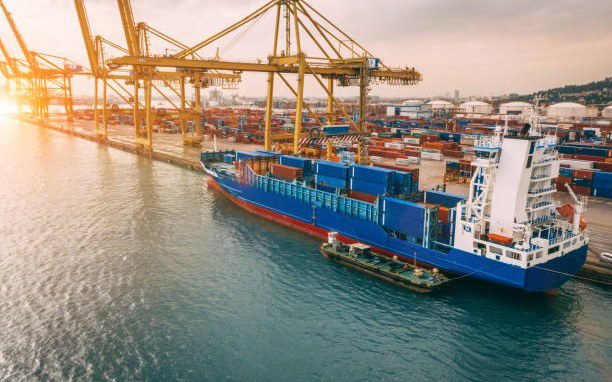
The container leaves our factory’s port and crosses to Fiji in roughly four to five weeks, usually with at least one transshipment, because Fiji is not on a direct China mainline. That transit time has to sit inside the villa’s overall schedule.
The interior should arrive when the shell is ready to take it — not a month early, where it would sit unpacked and absorb island humidity, and not a month late, where the handover slips. We plan the loading date backwards from the target install, and we keep the client a simple running schedule: production, load-out, at-sea, and on-island install — so nobody is guessing when the crates are on the water. We also build a little slack into the crossing itself, because weather and port congestion are normal on long island routes, and the final stretch of the schedule is the one you cannot control from the factory. For how the full timeline works, see our shipping guide.
Getting it through Fiji customs without delays
This is the step that most remote deliveries underprepare for. Fiji import clearance runs on a Customs entry — the Single Administrative Document — and goods clear against an accurate declaration plus the applicable VAT and duty for the commodity code.
Two things in particular matter for a villa interior. Wood packaging must meet ISPM-15 (heat-treated and marked), because non-compliant wood packaging is one of the common causes of fines and port delay. And any restricted items need prior approval before they arrive, not after. Getting the wood treatment, the documentation and the duty classification right before loading is what keeps the container from sitting at the port while a fix is worked out. One missing stamp or one mis-classified line can hold a full container. It is unglamorous, and it is exactly the kind of detail that decides whether a remote project lands on time.

What the client experiences from order to keys
From the client’s side, a Fiji villa interior is a short list of decisions and a long, quiet stretch of production. They confirm the drawings and the materials, we produce and pack the numbered set, the container crosses, customs clears, and a local team installs from the crate labels.
The client’s part is mostly done by the time the container is loaded; what remains is watching the schedule and confirming the install. The payoff is that the hard, detailed work happens in the factory, where it can be checked, and the island receives a package that explains how to build itself. That is what makes a full interior workable across 8,000 km: not that the distance is short, but that almost nothing has to be improvised at the other end. To see more delivered projects, browse our projects — and for the questions most clients ask, the FAQ covers them.
Frequently asked questions
Can you really ship a complete villa interior to Fiji?
Yes. A full interior package — kitchen, wardrobes and joinery — is produced, numbered, pre-drilled and packed for export, shipped by sea, and installed by a local team working from the crate labels.
How long does the shipping take to Fiji?
Plan for roughly four to five weeks at sea, usually including a transshipment, on top of production time before loading and customs clearance on arrival.
What are the main import requirements in Fiji?
A Customs entry (the Single Administrative Document), the applicable VAT and duty for the goods, ISPM-15 treatment for any wood packaging, and prior approval for any restricted items.
How do you protect the finishes and hardware against the climate?
With dimensionally stable, moisture-rated panels, a durable moisture- and UV-resistant topcoat, and corrosion-resistant hardware — all specified before production rather than added later.
What if a part is damaged in transit?
Because the parts are numbered and the crate labels match the contents, a damaged or missing piece can be identified quickly and re-worked or replaced without holding up the whole install.
Do we need to be on the island to receive it?
No. The client confirms the design and materials up front; production, packing, shipping and installation then proceed on a shared schedule, with the install team working from the numbered set.