Malaysia Villa Interior: Hot-Humid Material Choices and the Showroom Visit
Southeast Asia has quietly become one of the fastest growing corners of our order book, and most buyers still picture the region only as a shipping destination. A villa interior project for Malaysia, the Philippines, Indonesia or Singapore fails or holds up on two decisions made before any steel is cut: the material list, and whether the buyer has actually seen the hardware in a room. This article walks through both, with the transit times, duty facts and material specs we use on our own Southeast Asia shipments, and it ends with a practical guide to the furniture showroom foshan visit that more and more Malaysian buyers are making this year.
The Projects: What We Build in Southeast Asia
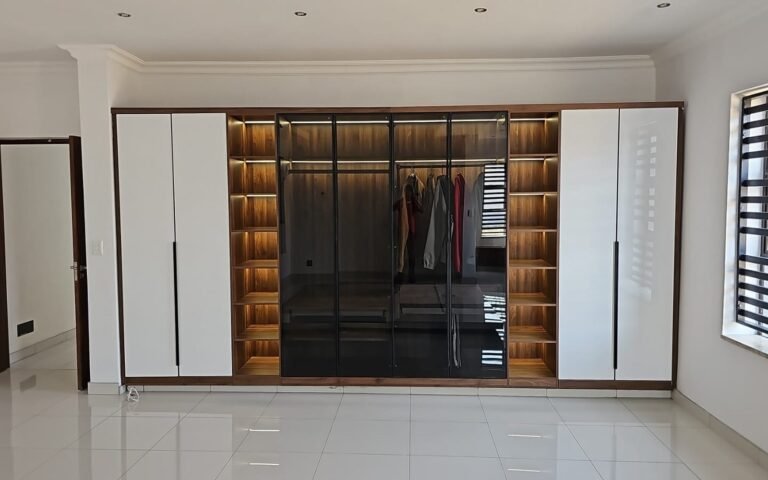
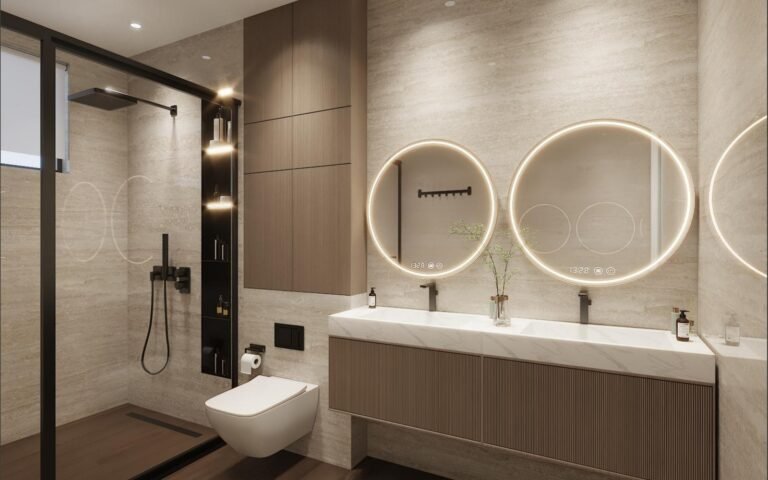
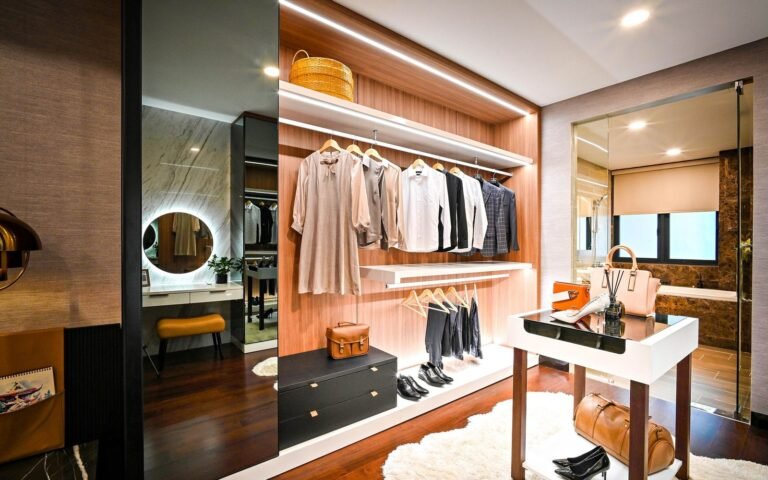
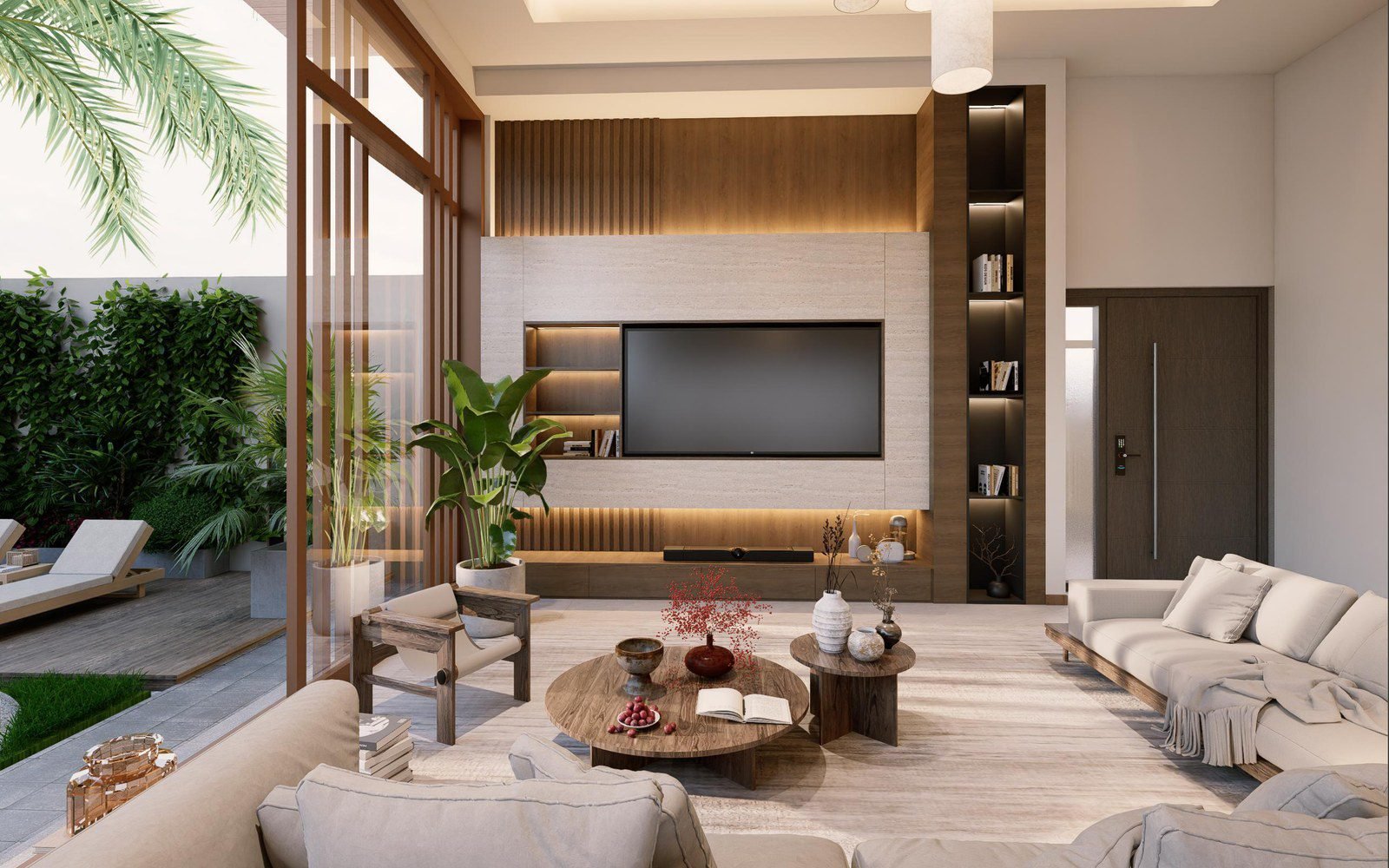
Most of our villa interior Malaysia work runs through the project archive at Georges Villas, and the pattern is consistent. We have delivered four villa projects in the Philippines, three residences in Singapore, two in the Maldives and one double-height villa in Indonesia, with each set photographed after installation rather than in the workshop.
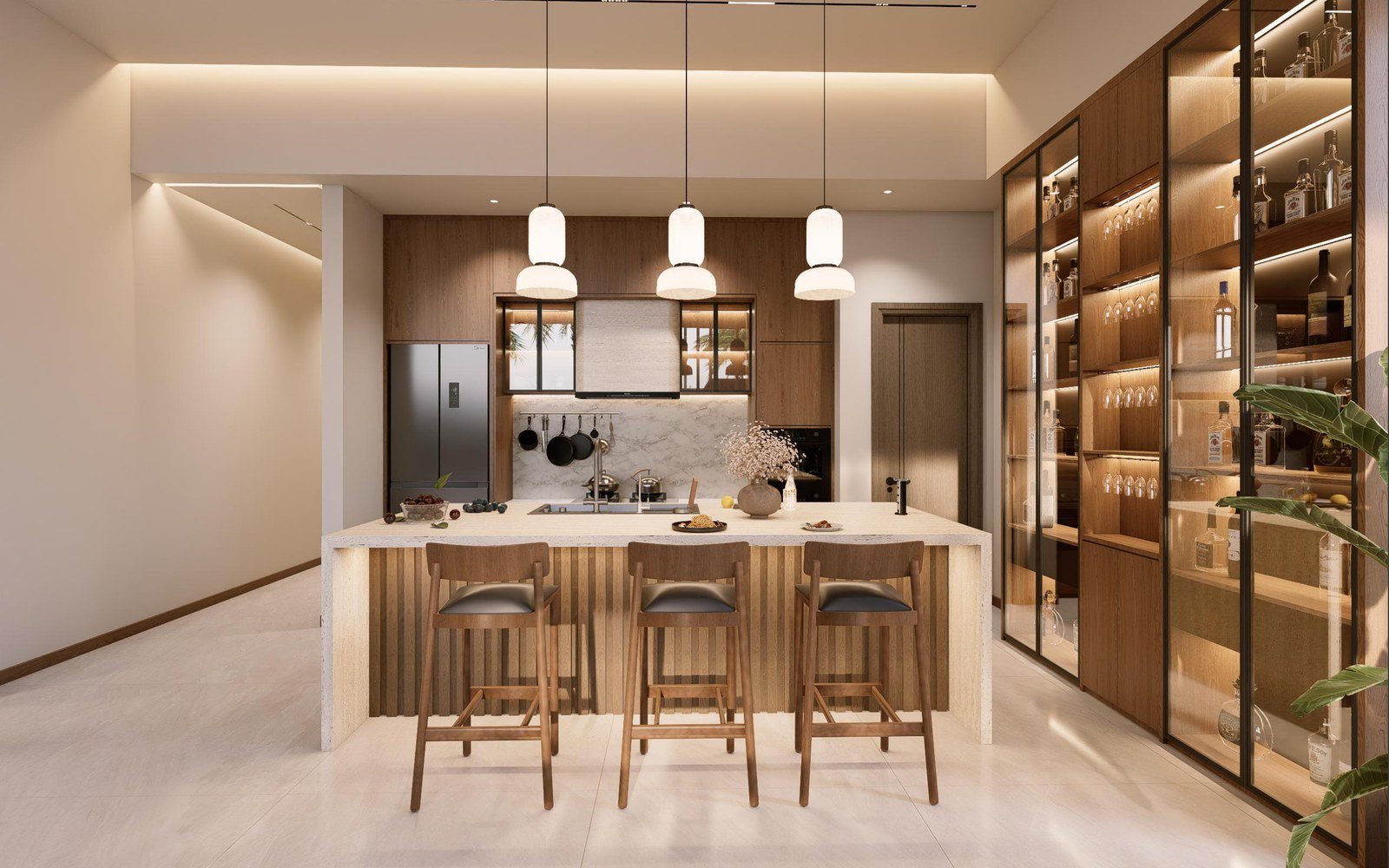
The Philippines set is the clearest example of climate driving the spec. Philippines villa interiors in the coastal belt sit in near-saturated air year round, which is why the kitchens in our latest set use solid wood fluting on the island fronts and sealed worktops, and why the living rooms open fully onto the pool deck with furniture that has no bare substrate. The wood-grain fluted kitchen below comes from one of those coastal builds: note that there is no painted MDF anywhere the eye can see.
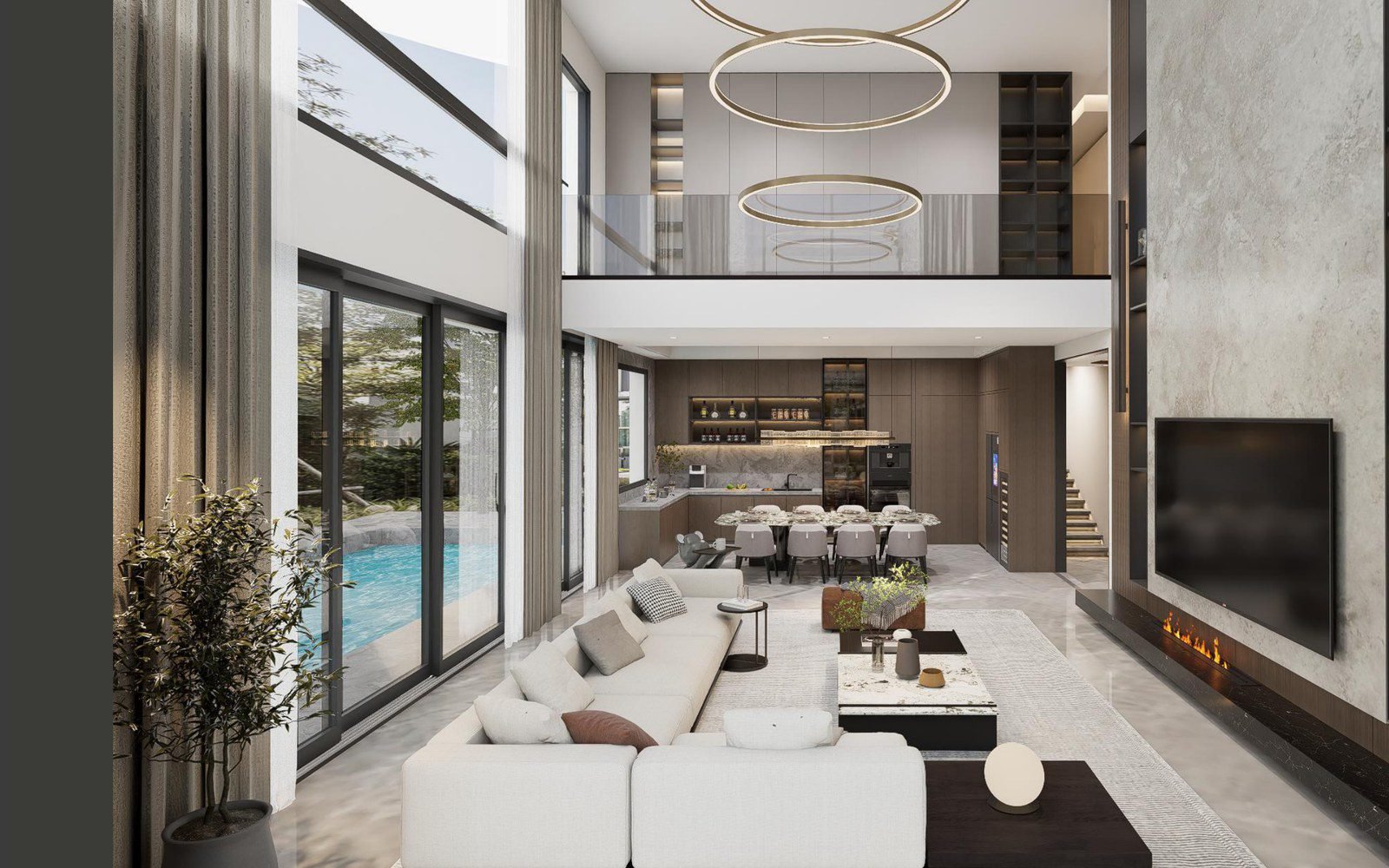
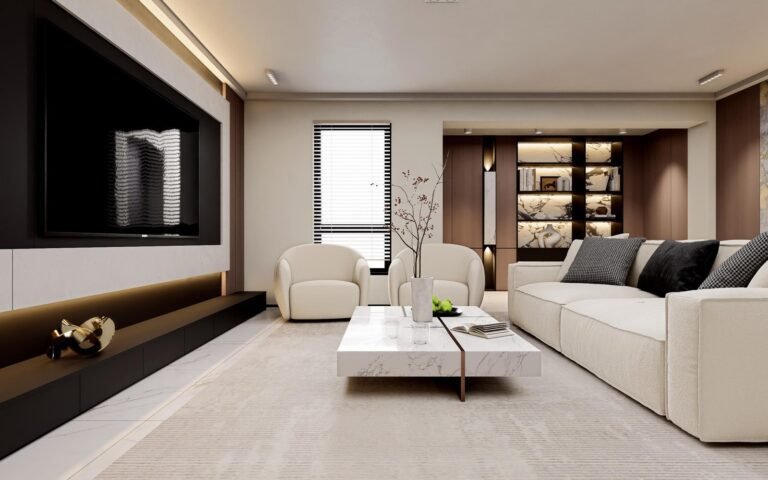
Our Dubai villa interiors were built for dry heat, where the edge tape problem largely disappears and the spec flips to UV and thermal movement. Singapore projects follow a different logic. Three of our Singapore residences sit in high-rise settings where the salt air still reaches the windows, so we specify more metal in the hardware and simpler stone. The Indonesia villa in the last image is the one we get asked about most: a double-height hall with marble floors, a linear fireplace and walnut fluted fronts that has passed two monsoon seasons without a single warped front.
Malaysia is where the story bends. We do not yet count a Malaysia installation in the archive, and we want to be straight about that. What Malaysia gives us instead is a buyer profile: owners of new villas in the Klang Valley and the north who want Chinese custom furniture, who now need no visa to cross the border, and who would rather spend three days in our factory than sign a contract from a photo. That is the audience for the rest of this article.
Heat, Humidity and Termites: The Real Stress Test
Tropical air carries a lot of water. Indoor relative humidity in a coastal Southeast Asian home swings between roughly 60 and 90 percent across the seasons, and the panels your furniture is built on expand and contract with every swing. Three stressors do most of the damage.
The first is the humidity cycle itself. Every day the air dries a little, every monsoon night it soaks back in. Panels that are fine in a dry warehouse will wick-mold their edges within a season in a Malaysian garage. The second is UV and salt. Homes near the coast pull salt into the air, and salt plus moisture is a fast corrosion path for anything steel that was not meant to be outdoors. The third is the one most quotes skip: termites. Southeast Asia is home to drywood species that never need soil, and they will eat a beautiful solid-wood piece in place if the wood species was a preferred food and the finish left any soft channel.
None of these stressors can be engineered out of the climate. What you can control is the panel, the edge, the hardware and the species, and the next section turns each of those into a checklist item.
Materials That Hold Up in a Hot-Humid Climate
This is the part we would send to any buyer in the region who is comparing factories, and we have tightened it over four years of regional installs.
| Component | Hot-humid choice | Check before you buy | How it usually fails |
|---|---|---|---|
| Panel | Tropical hardwood ply, WBP phenolic, no core voids | Cut a corner off a sample and look inside | Cheap particle board swells at the edge within one season |
| Edge banding | PUR bond, moisture cure, 1.5-2mm | Run a finger along the joint on a sample door | EVA tape lifts in humid air and lets water in |
| Hardware | Stainless or brass slides, hinges and pulls | Open and close ten times, feel the damping | Unprotected steel oxidizes and starts to bind |
| Stone | Low-porosity marble or quartzite, sealed | Wipe a sample and watch the water bead | Unsealed stone pulls in the moisture and dulls |
The panel row is the one that separates a hot humid climate furniture spec from a generic one. We build on tropical hardwood ply to marine-adjacent standard: waterproof phenolic adhesive, zero core voids, and a face veneer thick enough to survive a sander. The edge row is the one that surprises people. Two cabinets can use the same panel and the same paint, and the one with the weaker edge tape will lose its front within a couple of seasons. The hardware row is about longevity, not looks: a slide that binds in a humid air forces every door on the row to be opened by hand. The stone row is about maintenance: a sealed stone surface in a humid room keeps its finish; an unsealed one drinks the air.
For buyers who want to go deeper on the stone side, our marble and stone hub covers the grades we actually ship, the sealants we apply, and the difference between a slab and a book-matched set: marble and stone for villas.
Shipping and Entry: The Timelines We Plan With
The freight math is the least dramatic part of a Southeast Asia build, which is why buyers usually skip it, and why it is the first place schedules slip. Every villa interior in Malaysia or the wider region leaves on the same consolidated sea freight from our Foshan yard, and the ranges below are what we plan to, not the best case the forwarder quotes you on a Monday morning.
| Destination | Port to port | Door to door, with LCL |
|---|---|---|
| Port Klang, Malaysia | 5-10 days | 13-23 days |
| Singapore | 4-8 days | 12-22 days |
| Manila, Philippines | 4-9 days | 15-24 days |
| Jakarta, Indonesia | 7-12 days | 18-28 days |
Consolidated LCL adds two to four days over FCL, and one transshipment adds another two to three. The full breakdown, with the port logic and what slips when, is in our sea freight furniture timeline, and the entry paperwork side, including Form E and the duty bands by country, lives in the shipping guide.
Three regional quirks are worth knowing before you book. Manila runs congested on peak weeks, which is why the Philippine door-to-door range carries the widest spread in the table. Indonesia can hold a container for a Red Channel inspection under its customs risk system, and when it does, the add is days, not hours. Singapore is the most predictable of the group, and the fastest for FCL. Plan the install window against the wide end of each range, and the schedule will still hold.
Local Installation: What the Team Needs to Start
Freight is the easy half. A villa build only looks finished when a local crew has assembled it, and the two or three days after the truck parks outside the villa decide how the room ages. Our furniture installation checklist covers the sequence we send with every container, and the short version is this.
Before delivery, the team confirms the floor is level to a few millimetres over the run and that every doorway clears the largest cabinet. The day the container lands, the panels rest for a day or two to come to the room’s humidity before anything is screwed together. Assembly then follows a fixed order: base cabinets, then doors and drawers, then stone tops, with the client’s supervisor checking each stage before the next begins. In a humid climate we also set the door gaps a touch tighter than in a dry one, because the panels will settle over the first month, and we re-check the fit after two weeks and again after the first heavy rain. The same two week and post rain re-check cadence is what we send with East Africa villa builds, because those coastal sets age in the same wet-dry rhythm.
The install crew also does the termite handover. If the set was treated before export, the treatment certificate rides in the documentation pack, and the local team confirms the species and the round count with the buyer’s own pest control contractor, because a second local round after a season of humid air is standard practice in the region, not a warranty trick.
Visiting the Factory and Showroom in Foshan
The last piece of this article is the trip itself, and it is easier for Malaysian buyers than it has ever been. The China-Malaysia mutual visa exemption took effect on 17 July 2025, so a Malaysian passport holder can fly to Foshan for business and stay up to 30 days per entry with no visa stamp, and Singapore’s mutual arrangement works the same way for our Singaporean buyers. A typical Foshan furniture showroom visit runs two to three days: a day in the showroom, a day on the production floor, and a day to decide. It is also the single best way to judge a villa interior Malaysia spec, because the edge tape is invisible in a catalogue photo.
What to bring. The floor plan of the villa, the written dimensions of every opening the furniture has to pass, photos of the rooms as they stand, and a list of the finishes you are considering. The showroom has samples, but your villa is not a sample room, and the dimensions are the only thing that cannot be approximated.
What to check on site. Run a finger along the edge of a sample door and look for any gap or lift at the corner, because that joint is the first place a weak tape lets water in. Open a drawer slide ten times and feel the damping close, because a slide that binds in the showroom will bind in your kitchen. Wipe a marble sample and watch how the water beads, because that is the seal doing its job. And cut or ask for a cut corner of the ply, because the core is the only place a panel is truly honest.
What to decide on the trip. The panel and edge spec for each room, the hardware finish, the stone grade, and the sample list that ships home before production. The visit should end with a written confirmation of every choice, and once that confirmation is in, the factory builds to it and the freight window in the table above is all that stands between the showroom and your villa.
FAQ
How long does sea shipping from China to Southeast Asia take?
For a villa set moving by sea from Foshan, plan the port-to-port window first: roughly 4 to 10 days across the region, depending on the port. Add consolidation, clearing and the inland leg, and door-to-door time runs about 12 to 22 days for Singapore and 15 to 24 for most of the region.
Will humidity warp my furniture once it arrives?
The panel can survive a humid room. The edge banding usually cannot. PUR bonded, moisture cure tape holds where cheap EVA tape lifts, and tropical hardwood ply with waterproof adhesive resists the daily wet-dry cycle that fails particle board. Specify the edge as seriously as the carcass and the warping risk drops sharply.
Are termites a realistic risk for imported furniture?
In Southeast Asia, yes, because the region is home to drywood species that never touch soil. They favour softer furniture woods, so the defence is species choice and a chemical treatment before export, with a local follow-up round after the first season in place.
What documents and certifications do I need for import?
For Malaysia, a Form E certificate of origin is the load-bearing one, and it drives the preferential duty rate on qualifying goods. Singapore and the Philippines each have their own customs documentation, and a local broker prepares the correct set before the container clears.
What should I actually look at during a showroom visit?
The things photos hide: the edge banding joint on a sample door, the drawer slide damping over ten slow opens, how water beads on a stone sample, and the inside of a cut ply corner. Those four checks separate a factory that builds for humidity from one that builds for showrooms.
Can I have a sample shipped before I commit?
Yes, and for a villa order we usually recommend it. A sample box with the ply corner, edge profile, hardware set and stone chips ships by sea alongside your freight, typically reaching the region within two weeks, so you can approve the material in your own light before production locks.
Planning a villa set for a hot-humid market? Send us your room photos and dimensions and we will build the material list, the duty plan and the freight window in one reply.
Replies within one business day. We answer in English or Mandarin.