East Africa Furniture for Villas: Humidity, Power and Inland Delivery
East Africa furniture for a villa has to survive three things before it survives the client’s taste list: coastal humidity, an unreliable power grid, and an inland delivery leg that can add weeks after the ship has already discharged. The finish and the layout matter, but the edge seal, the lighting driver and the clearance paperwork decide whether the furniture arrives working or arrives as a repair job. Our Africa portfolio covers villa and apartment interior projects in 18 countries, and the full case set is in the projects overview, with the Africa pages in projects in Africa. This post works through the East Africa subset, the five countries where our projects sit closest to Mombasa and Dar es Salaam, and writes down the numbers the delivery runs on.

The Project: Scope and Constraints for East Africa Furniture
The East Africa subset of our portfolio holds 15 villa and apartment projects across five countries: Kenya 2, Tanzania 6, Zambia 5, Rwanda 1 and Ethiopia 1. The designs are the same class as anywhere else in our work, full case runs, bedroom suites, kitchens and study rooms, and none of the drawings would look different in a European portfolio. What is different is the constraint stack that sits on top of the drawing.
Two ports serve the region. Mombasa on the Kenyan coast takes containers bound for Nairobi, and through it for Kampala and Kigali. Dar es Salaam takes the Tanzanian market and, by road, Kampala as well. Nairobi sits about 470 km overland from Mombasa, which is close enough that the rail line between them now carries container freight, and far enough that the inland leg still gets its own line on the schedule. Lusaka and Kampala are the longer road hauls.
For villa interiors kenya, the constraint order is humidity first, power second, clearance third, because the coast and the inland plateaus do not experience the same climate, and a container that clears Mombasa on schedule can still sit in a customs yard through the wet season. The rest of this post is the constraint stack written out as a checklist: what the air does to the boards, what the grid does to the fittings, what the port does to the schedule, and what the paperwork has to carry. That is the east africa furniture specification in one line: the drawing plus the climate, the power and the port, all on the same sheet.
Climate: Humidity, Mold and Termites
Mombasa sits in a tropical savanna climate that the Köppen scale classifies as Aw, one step from the savanna monsoon end. The long term climate record behind the Mombasa reference table runs monthly average relative humidity between 75 and 82 per cent, an annual average of 80 per cent, with the May through June and November peaks at 82. Nairobi is cooler and drier, but the plateaus of Kenya, Tanzania, Rwanda and Ethiopia all run a long rainy season and a short one, and the wet season is when furniture problems declare themselves.
The first failure mode is the edge. Engineered board holds its shape by keeping its cut faces sealed, and a panel that arrives with any exposed edge tape lifted, chipped or cut through starts absorbing the wet season. The boards swell at the edge, the veneer around it cups, and the failure walks slowly inward through the carcass. Our practice for the region is full edge sealing on every board face, including the ones the installer will never show, because a drawer side that spends two wet seasons next to an external wall is an exposed edge by behaviour if not by appearance.
The second failure mode is mold, and it is a crate problem more than a furniture problem. A 40 foot container in the wet season carries a stack of desiccant, and the crates are packed to let air pass while keeping water out. Paper, labels, foam and the cardboard inside a crate are the first things the mold finds, and the mold that starts on the paperwork finishes on the boards if the crate stays closed and damp for weeks in the yard. The crate plan is the mold line of any east africa furniture shipment, and it costs less than the first repair.
The third is the one the finish cannot fix: termites. East Africa runs subterranean termite populations across the region, and the western Kenya study behind the regional population data records three abundant species with swarming activity that tracks the rainy seasons. The Kenyan trade literature is blunt about the control: termite damage to houses is managed through regular inspection of the major timber components, not through any single treatment. For a villa that means the furniture specification does what it can, sealed edges, no bare board face, desiccant in transit, and a site treated to local practice before the installers arrive, and the owner’s plan takes the first inspection into the next swarming season. The hot and humid material logic from the Gulf is written up in Dubai villa interiors, and the East Africa version adds the pest line to the same checklist.
Power: What Unstable Supply Does to Your Interiors
The power grid in Kenya has run short of generation for the better part of two years. Since late 2024 the blackouts have been described as the new normal, with the government moving to scheduled, daily load shedding to ration a shortfall rather than a single storm, and the large blackout of August 2024 darkened Nairobi and most of the country’s regions in one event. Tanzania and the other regional grids carry the same risk class.
The grid does not damage the furniture. It damages everything the furniture is wired to, and the first casualty is the built-in lighting. A wardrobe or kitchen with low-grade LED drivers in the run will drop strips one at a time on every brownout, and in a villa the owner notices within the season. The specification answer is the one we now write on every East Africa lighting schedule: 12 or 24 volt LED with drivers rated to ride through dips and inverter switching, and surge protection at the distribution board for the kitchen appliances, which the client’s electrician plans with the generator or inverter that the house already carries.
The second power question is the appliance in the cabinetry. A wine fridge or a refrigerator built into the kitchen run sees the full swing of an unstable grid, and the compressor is the part that fails, not the cabinet. Our drawings note the appliance position and the protection requirement on the same line, so the installer and the electrician read the same instruction. The carcass, the hinges and the edge tape do not care about the voltage, which is why the power line on a spec sheet is short, and why it is worth writing.
Ports and Inland Delivery
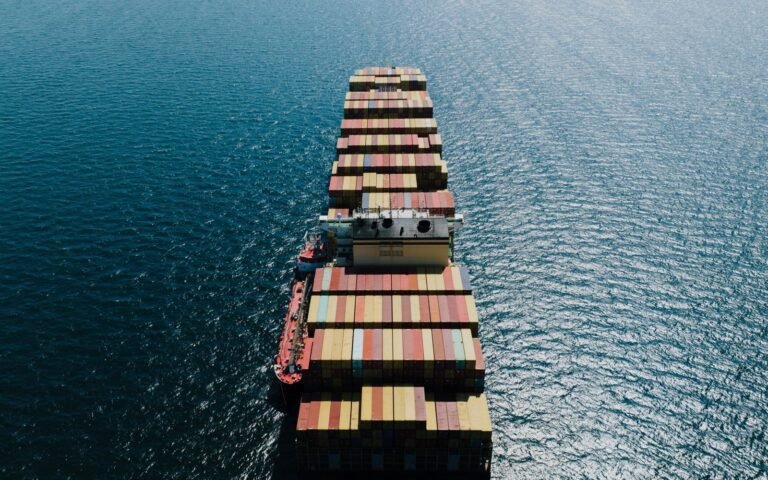
Mombasa is the largest port in East and Central Africa, and the gateway for the Kenyan market and, through the Nairobi yards, for Kampala and Kigali. Dar es Salaam serves Tanzania and the road to Kampala. The sea leg from the Chinese east coast is the predictable part of the schedule: a 40 foot container from Ningbo to Mombasa runs 30 to 50 days on the published FCL transit, and the door to Nairobi inland point runs 35 to 55 days once the rail or road leg is in. For east africa furniture, the port is the half of the route that gets quoted, and the inland leg is the half that gets felt.
The inland leg is where the schedule lives or dies, and mombasa inland delivery is the line buyers quote last and that moves first. Port dwell, the container freight station, the customs yard, the border: each one adds days, and each one is a separate line on the schedule. The standard gauge railway that opened in 2017 changed the Nairobi part of it. Freight trains run between Port Reitz at the Mombasa port and the Embakasi ICD in Nairobi over 472 km, at a freight speed of 80 km/h, and the line has carried double-stack container traffic since 2018. That leg is a matter of days instead of the long coastal road, and it is the default for Nairobi-bound cargo now.
| Route | Mode | Published time |
|---|---|---|
| Ningbo to Mombasa port | 40ft FCL, sea | 30 to 50 days |
| Ningbo to Nairobi ICD | FCL plus rail or road inland | 35 to 55 days |
| Mombasa (Port Reitz) to Nairobi (Embakasi ICD) | SGR freight, 472 km | 80 km/h freight speed |
| Dar es Salaam to Kampala | Road via Malaba border | 1,681 km, 21 hours 42 minutes pure driving |
The furniture to uganda trade runs two ways, and the choice is made on the container’s port of arrival. From Mombasa the cargo moves to Nairobi and then over the Malaba border to Kampala, a road leg measured in days with a border queue in the middle of it. From Dar es Salaam the truck drives the full distance to Kampala, over 1,680 km and about 22 hours of pure driving, with the same border logic at the other end. Kigali from Nairobi is the shorter of the two regional hauls. Either way the container is broken down at a CFS or ICD, and the crates travel the last stretch on local trucks, which is why the crate plan is sized for a second road leg, not one. The full sea schedule, booking to discharge, is in the sea freight furniture timeline.
Compliance: What the Container Needs
Both Kenya and Uganda run pre-export verification of conformity, and the certificate is issued before the ship sails, in the exporting country, by an authorized inspection agent. For Kenya the program sits under the Kenya Bureau of Standards, and the current mandate runs on a three year cycle for 2026 to 2029. The certificate of conformity is required per consignment, the goods are checked against the Kenyan standards by physical inspection and accredited laboratory testing, and a consignment that arrives without the certificate faces refusal at the border and a penalty set at 5 per cent of the CIF value, a figure KEBS cut down from 15 per cent when it tightened the program in 2022. Import VAT at 16 per cent lands on top at the customs stage. The certificate is the line that decides whether the consignment becomes east africa furniture in the villa, or stays cargo in the yard.
Uganda’s program is the same shape under the Uganda National Bureau of Standards: products with applicable compulsory standards go to an accredited laboratory, the inspection agent issues the certificate pre-shipment, and the non conforming consignment does not clear. Wood packaging is the common line across both: every crate and pallet that travels is wood packaging under the phytosanitary rules, so the spec is treated and marked to ISPM 15, which is the reason our Africa containers have not run a single green pallet.
The document set is where the container sits. The certificate, the packing list and the commercial invoice have to agree, line for line, because the mismatch is the one that holds cargo in the yard while the ship is long gone. We build the document set from the same numbered module list that packs the crates, and the crate and packing side of it is covered in the shipping guide.
What Went Right, What We Would Change
The full edge sealing and the desiccant in the crate worked, and they are the reason the climate section above exists. Across the 15 East Africa projects there has been no post-arrival complaint about edge tape, mold or delamination, which is the result the specification is there to defend, and the cheapest defense is the one done in the factory, not the one retrofitted in the villa. The rail leg worked too. Booking the Port Reitz to Embakasi ICD service on the Nairobi-bound cargo kept the containers off the congested coastal road, and the inland line came in over a day or two instead of the all-road alternative.
What we would change is the power assumption. The early projects specified built-in lighting without a brownout line on the schedule, and the driver failures in the first season were the price of the omission. That line is now standard on every East Africa lighting schedule and should not be negotiable. For the Kampala cargo we would book the trucking leg before the container lands, because the border queue is the one variable a forwarder cannot control and a schedule cannot absorb. The same shape of compliance checklist, written for a different regulatory regime, sits in the Australia case post, shipping furniture to Australia, and the numbered module system that carries both is the numbered packing and install method. The discipline is the point: the east africa furniture delivery holds when the climate, power and logistics lines are written into the drawing before the finish is chosen, not after the first complaint.

Frequently Asked Questions
How long does sea freight take from China to Mombasa?
A 40 foot container from a Chinese east coast port such as Ningbo to Mombasa typically runs 30 to 50 days at sea, and the door to door time to a Nairobi inland point runs 35 to 55 days once the rail or road leg is in. Those are the published FCL transit ranges we plan against, and the booking confirms the actual vessel schedule for the season.
How does inland delivery work from Mombasa to Nairobi?
Freight trains on the standard gauge railway run between Port Reitz at the Mombasa port and the Embakasi ICD in Nairobi, a 472 km line that the freight service covers at 80 km/h, and trucks take the cargo from the ICD to the site. For Kampala the route is Mombasa to Nairobi and then across the Malaba border, or Dar es Salaam to Kampala by road, a haul of over 1,680 km.
How do you protect villa furniture from termites?
The protection is in the spec. Every board face is edge sealed so there is no exposed panel for the insects to work on, crates carry desiccant through the wet season, and the site is treated to local practice before installation. Swarming in Kenya tracks the rainy seasons, so the first inspection is scheduled into the next one, and the ongoing control is regular inspection of the major timber components, as the Kenyan trade guidance puts it.
Does unstable power damage cabinets and built-ins?
The grid does not damage the cabinetry; it damages what is wired to it. Built-in lighting is specified as 12 or 24 volt LED with drivers rated for brownouts and inverter switching, and the kitchen appliances carry the surge protection line on the same schedule. The compressor in a built-in fridge is the part that fails on a hard grid, and the carcass, the hinges and the edge tape ride it out unchanged.
What certification does a furniture container need for Kenya or Uganda?
Both countries run pre-shipment verification of conformity. Kenya’s certificate is issued by an authorized inspection agent under the KEBS program, now on a 2026 to 2029 mandate, and a consignment that arrives without it faces refusal and a penalty of 5 per cent of the CIF value. Uganda works the same shape under UNBS, with accredited laboratory testing. The wood packaging is ISPM 15 treated and marked in every case, and the documents have to agree line for line.
Who installs the imported villa furniture in East Africa?
The local team does. The factory ships numbered, crated modules with a hardware bag per module and a document set that matches the packing list, and the local installer or contractor measures, positions and closes out the run. That is the same split we write for the American villa projects, and it is why the packing list is numbered to the module rather than the room.