
Solid Wood Kitchen Cabinets
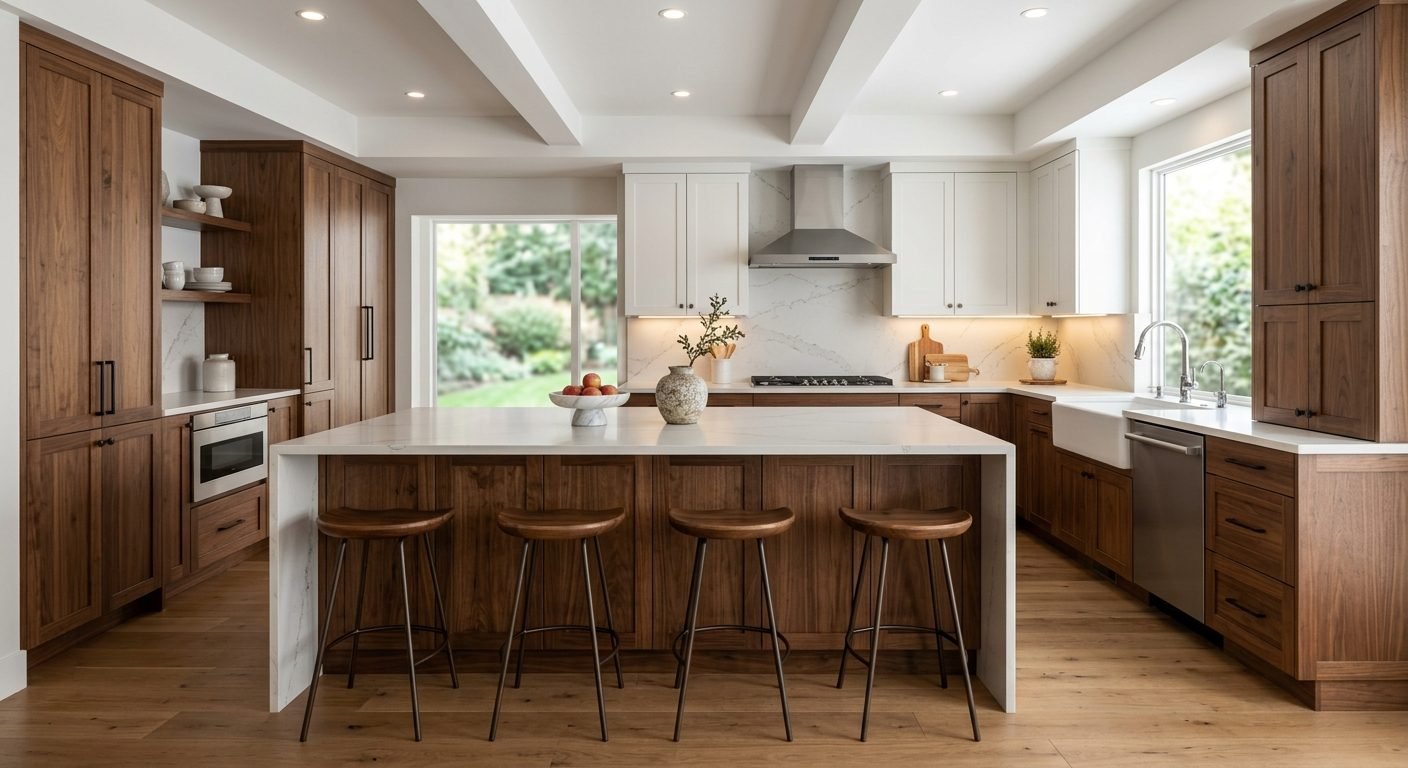
Solid wood kitchen cabinets are built from real timber — oak, walnut, ash or cherry — for a kitchen with depth, grain and warmth that no laminate can copy. At George Villa we produce solid and wood-veneer kitchens in our Foshan factory: frame-and-panel or slab fronts, solid-wood worktops, straight or carved lines, and oil or matte-lacquer finishes. Wood moves with humidity, so every door is kiln-dried, acclimatised and joined for seasonal movement, then fitted with adjustable European hardware. Send your wood species, finish and room measurements and we return a production drawing, a sample plan and a quotation within 24 hours.
Solid Wood, Veneer — or Both
A solid-wood front is cut from the timber itself: full grain depth, and a piece that ages and can be re-oiled over decades. A veneered front uses a thin slice of the same species over a stable board core: identical appearance at arm’s length, less movement, larger clean panels. Most of our wood kitchens combine the two — solid for the statement pieces, veneer for the full run.
Species and finish do the design work: oak runs light and strong-grained, walnut dark and quiet, cherry deepens with light over the years. Every door is frame-and-panel built with a floating panel that moves 2–4 mm seasonally, which is what keeps a solid door flat from year to year.

Technical Specifications
Standard specification for solid and wood-veneer kitchens. Species, finish and dimensions are confirmed per project before production.
Full specification
- Species
- Oak, walnut, ash, cherry, teak; other exotics on request
- Construction
- Solid frame-and-panel, slab fronts 18–25 mm, or veneered stable core
- Pre-conditioning
- Kiln-dried to 8–10 % moisture content, acclimatised before finishing
- Joints
- Dado and rabbet joints with floating panels for seasonal movement
- Finishes
- Natural oil, matte lacquer or open-pore stain, matched edges
- Worktops
- Solid wood 30–40 mm, or stone to contrast the timber
- Hardware
- European soft-close, brass or matte metal on request
- Drawings
- Per-room numbered assembly drawings and acclimatisation guide
Wood Species and Finishes We Produce
Light oak is the default for bright villas — strong grain, easy to match across rooms, warm under daylight. Walnut is the dark statement species, a natural fit with stone worktops and matte hardware.
Finish changes the feel as much as species: natural oil keeps the grain tactile and can be re-applied locally; matte lacquer is the easier wipe-down; open-pore stain darkens the grain while keeping the surface light. Most requested wood schemes:
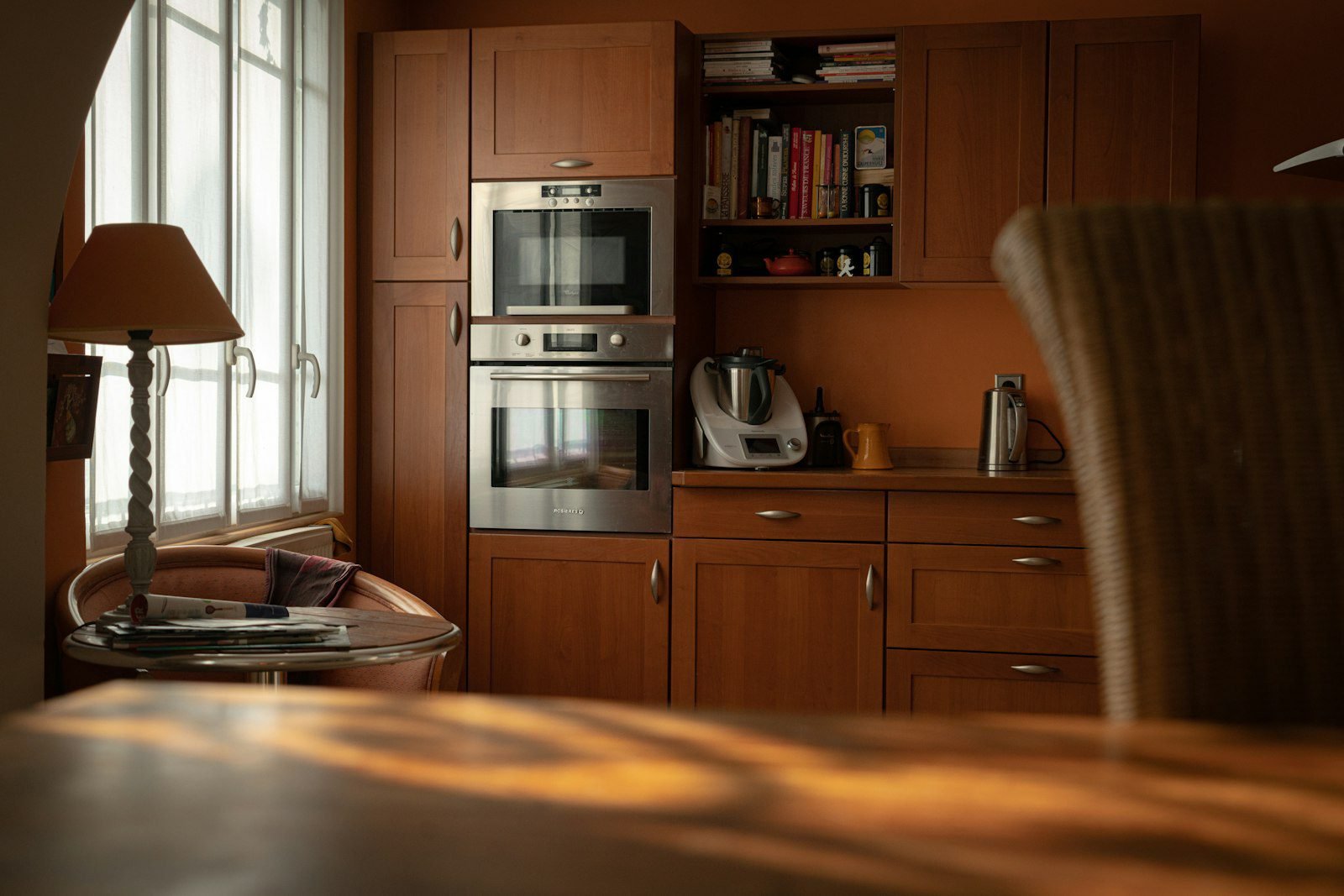
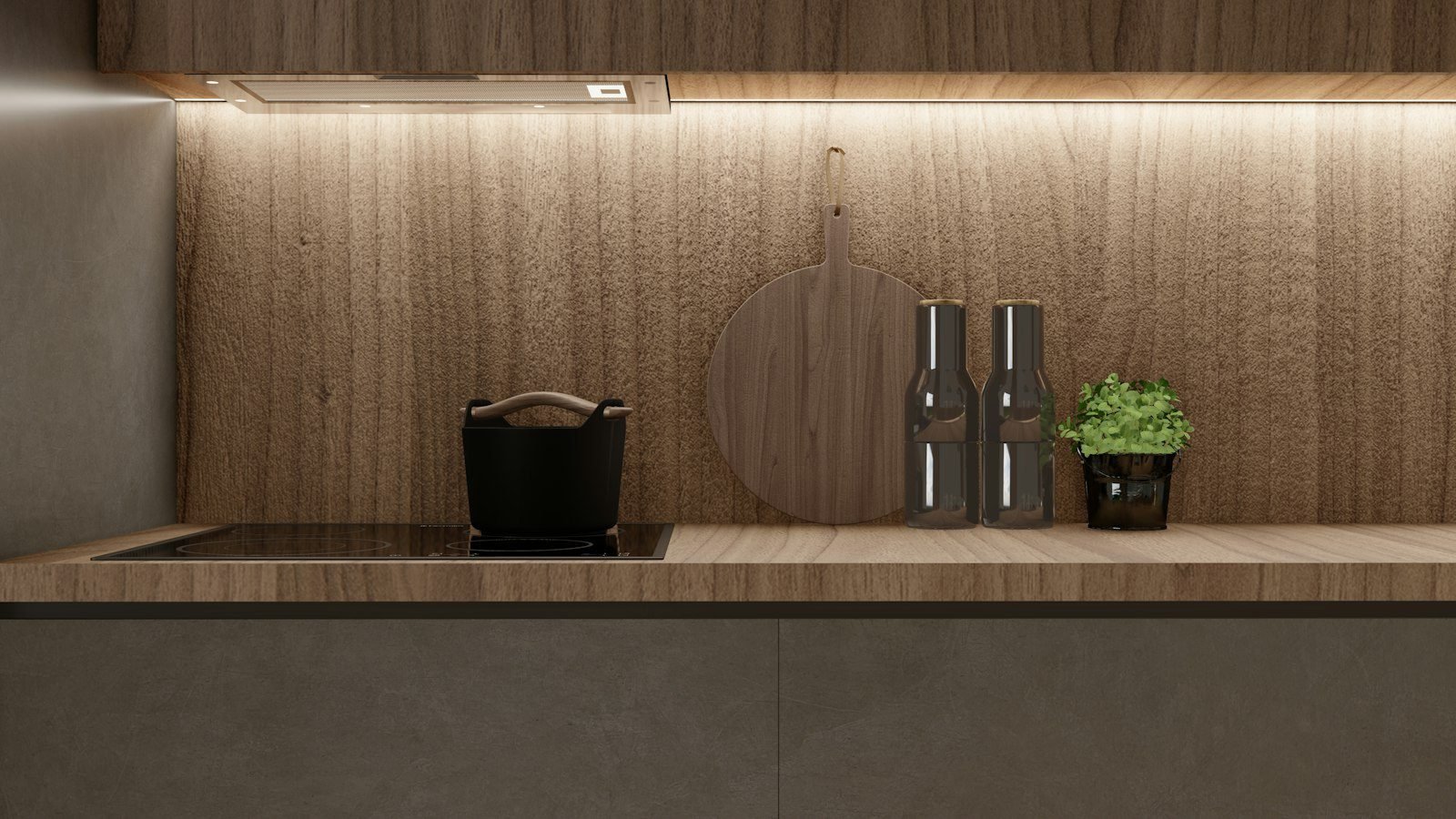
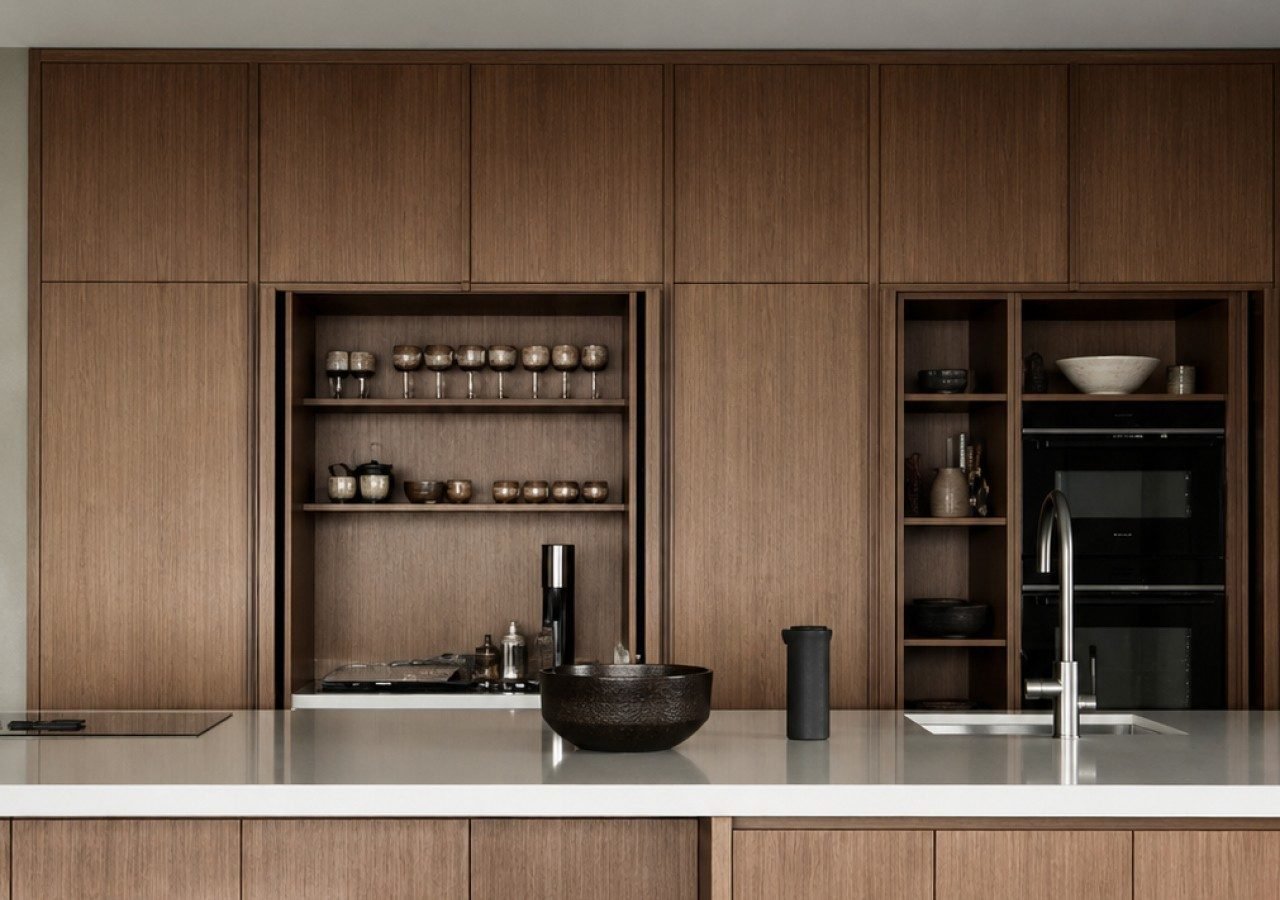
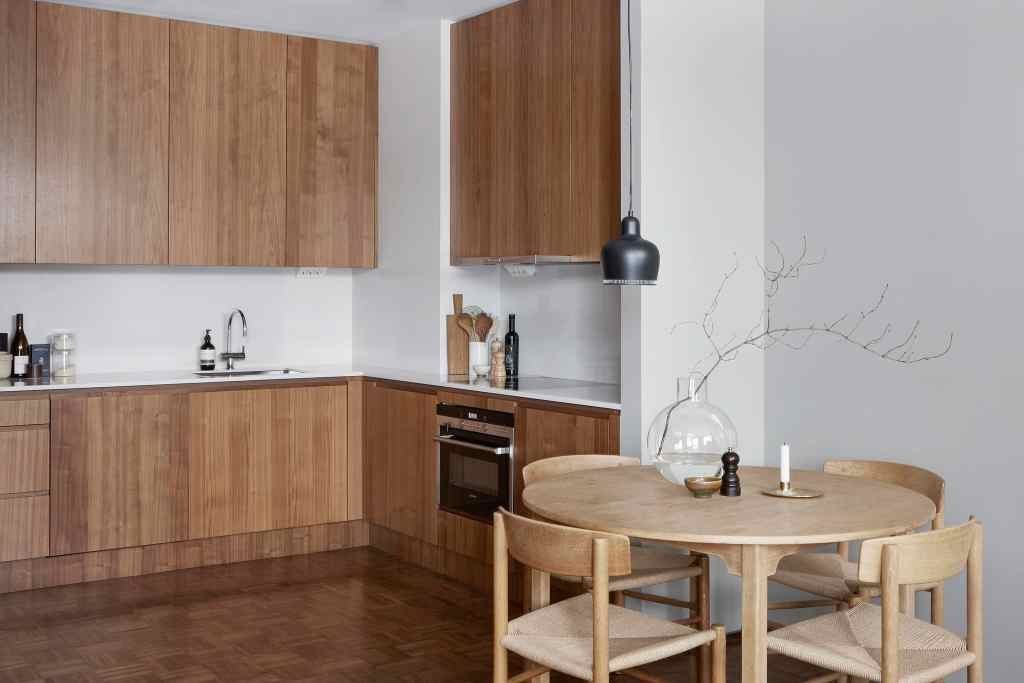
Solid Wood Kitchen Examples
Wood-scheme kitchens from completed villa projects and client orders:
Solid Wood Movement: Why We Acclimatise Before Packing
Wood is not a dead material. It exchanges moisture with the air, and a panel that is stable in our factory will move in a room with a different climate. We manage that in three steps:
Acclimatisation
Before packing, boards are held in a controlled environment so they reach a stable equilibrium moisture content. Shipping a panel that is still drying is the most common cause of a warped door on arrival.
Detailing for movement
The cabinetry is detailed with shadow gaps and loose-fit door edges so the wood can expand and contract without forcing the doors. The gaps are in the drawing, not left to the installer.
Edge banding
Solid wood doors carry a solid wood edge, not a thin band, so the edge is as stable as the face and the door reads as one piece of timber all the way around.
Species
Walnut is the most dimensionally stable species we produce and the one we recommend for tall units. Oak is stable with a stronger figure, ash a lighter, paler alternative. We match species to unit height.
Finish
An oil finish lets the wood move more naturally and shows the grain; a lacquer seals the surface and is easier to wipe down. For daily-use kitchens we usually specify matte lacquer on worktop faces and oil on display surfaces.
At the destination
The on-site team holds the packed units in the room for a few days before final installation, so the wood reaches the destination climate first. That step is in our installation notes.
Care
The project documentation includes a one-page care note: keep the room between roughly 40 and 60 percent humidity, wipe with a damp cloth, never let standing water sit on a wood face.
What you send
The species, the finish and the destination country. We confirm the acclimatisation plan and the movement detailing in the production drawing before the first cut.
Solid Wood vs Veneer vs Laminate
Solid for statement pieces, veneer for full kitchens, laminate for tight budgets.
| Solid wood | Veneer | Laminate | |
|---|---|---|---|
| Grain | Full-depth grain, unique per door | Real grain slice over a stable core | Printed pattern, repeats |
| Movement | Managed by frame-and-panel joinery | Minimal movement | No movement |
| Repair | Can be re-oiled or refinished | Surface repair only | Not repairable |
| Best for | Islands and statement units | Full kitchens | Budget or high-humidity zones |
How Ordering Works
The same four-step process we use for every kitchen — from the first drawing to your loading port:
Step 1: Share Your Floor Plan
Send your villa drawing, room photos or wood reference images by email or WhatsApp.
Step 2: Confirm Species and Finish
Choose species, construction and finish — oil, matte lacquer or stain — with our team.
Step 3: Approve Sample and Drawings
We post a wood/finish sample panel and return production drawings before production.
Step 4: Production and Transport
We produce, quality-check, humidity-buffer the crates and ship to your country.
Ordering & Delivery Specs
Factory-direct from Foshan, China — the same published numbers on every product page, for easy comparison.
| Order / MOQ | No rigid minimum — orders start from a single room; whole-house consolidation available |
|---|---|
| Factory price | Factory-direct pricing, up to ~30% below retail; interior design fee $5–12/㎡ by area (tiers on the pricing page) |
| Production lead time | 45–50 days standard, varies with project scale and material selection |
| Shipping | FOB / CIF / DDP door-to-door · FCL container consolidation · room-by-room labeling & export packing |
| Origin | Foshan, Guangdong, China — 20 years of export experience |
| Certifications | ISO 9001 · ISO 14001 · CE · SGS · SASO · Intertek |
| Warranty | 2–5 years depending on category |
| Pre-shipment QC | Quality inspection report + container loading photos with every shipment |
Frequently Asked Questions
Will solid wood doors warp in a humid climate?
Doors are built frame-and-panel with a floating panel that moves 2–4 mm seasonally. Combined with kiln drying to 8–10 % moisture content and adjustable hinges, a correctly built solid door stays flat year after year.
Solid or veneer — which should I choose?
Solid for the statement pieces — island, tall units, doors you will touch daily. Veneer for the full run, where panel size and stability matter. Veneered doors look the same from 50 cm and move less between seasons.
Can the wood be oiled instead of lacquered?
Yes. Oiled finishes keep the grain tactile and can be re-oiled locally after a decade of use. Matte lacquer is the easier wipe-down after spills — we quote both for the same door.
Do you ship solid wood internationally?
Yes. Crates are humidity-buffered, doors ship flat with corner protection, and the packing list includes acclimatisation instructions — 48 hours in the room before fitting, which is what keeps the joinery true.
What woods do you use?
Oak, walnut, ash, cherry and teak are standard; other exotics are available on request. Every board is kiln-dried to 8-10 % moisture content and acclimatised before finishing.
Can the worktop be solid wood too?
Yes. 30 to 40 mm solid wood tops in the same species, or stone to contrast the timber. The join between top and carcase is drawn first, so the overhang and edge profile are fixed before any cutting.


Ready to Plan Your Solid Wood Kitchen from China?
Send your species, finish and measurements — we return a sample plan, production drawings and a landed quotation within 24 hours.
Send Your Wood ChoiceView How It WorksKitchen & Wardrobe Overview
Maintained by the George Villa design team — ISO 9001-certified villa interior factory, Foshan, China. Updated September 2026. See how it was delivered — 347 delivered villa projects — or how your order ships door to door.